Views: 0 Author: Site Editor Publish Time: 2026-10-21 Origin: Site
Picture a Saturday evening in your backyard. Friends gather around the outdoor table with plates, glasses, and laughter. Morning coffee lands there too. So does the late-night card game.
Outdoor living in 2026 looks different. The table now anchors the whole scene. It is a design statement, not an afterthought. A 2026 survey of over 1,000 homeowners found that 84% planned at least one outdoor upgrade this year. That is real momentum behind outdoor living trends.
You can refresh your outdoor living space for spring with confidence. This guide looks through three lenses: style, material, and design. You will also see how performance, fit, compliance, and cost shape smart picks. Ready to explore the styles leading backyard trends?
Choose organic curves and soft shapes for a relaxed, conversational outdoor space.
Pick modular or drop-leaf tables to adapt to different occasions and save space.
Select teak for long-lasting durability and natural weather resistance.
Consider stone tabletops for heat and scratch resistance with low maintenance.
Opt for powder-coated aluminum in humid climates for rust resistance and light weight.
Use solution-dyed acrylic fabrics for fade resistance and easy cleaning.
Measure your space carefully to ensure comfortable clearance around the table.
Match the table material and style to your climate and how you will use it.
Style sets the mood before anyone sits down. The outdoor furniture trends for 2026 lean toward soft shapes, flexible layouts, and finishes that feel at home indoors. Woven rope seating and European influences shape many of these pairings. Here is where each look fits best.
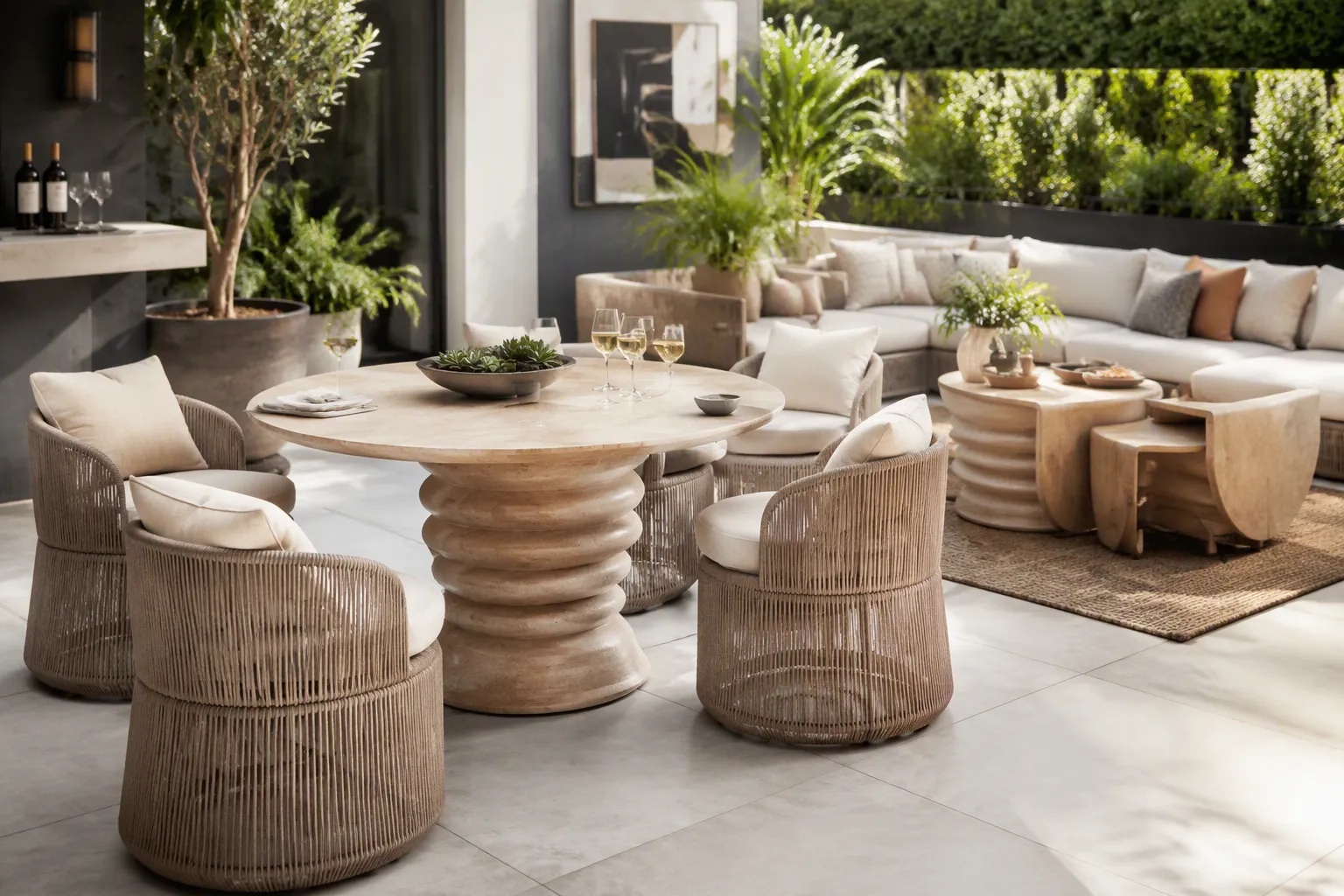
Sharp corners are giving way to gentle lines. Curved, pebble-shaped pieces invite face-to-face conversation, and they soften the whole scene. This is one of the clearest outdoor living trends for 2026.
A rigid rectangular table can feel stiff next to sweeping, curved seating. Round, oval, and irregular tops follow the movement of the chairs instead. They also remove sharp corners from walkways. Choose a round top when you want a balanced center point. Pick a freeform shape when you want personality or more surface area without rectangular visual weight. Keep the table proportional to the seating around it.
A sculptural base turns the outdoor table into a visual anchor. Think low concrete designs with curved layers and faux travertine or faux wood finishes. One example, the Splendido Geddes Layered Freeform Coffee Table, measures 60 inches wide by 38 inches deep by 15 inches high. It works indoors or out. A pedestal base also frees up legroom, which matters when friends pull up chairs on a modern patio.
Larger-scale patio designs and outdoor entertainment drive this shift. Hosts need furniture that adapts from a quiet coffee for two to a full dinner party. Modular pieces deliver that range.
Drop-leaf designs shrink for everyday use and expand for guests. Nesting tables tuck away when the party ends. Both suit a compact balcony or a busy backyard alike. You get more function from less floor space.
Reconfigurable seating, ottomans that double as tables, and stackable chairs are dominating the scene. Modular outdoor furniture adapts to entertaining, relaxing, or dining. It suits small patios and large decks. You can update the layout without replacing the whole set. Pieces look complete on their own, so you can start small and add modules over time. That flexibility saves both time and money.
Outdoor living spaces now act as extensions of indoor rooms. Homeowners want the same comfort, durability, and versatility on both sides of the door. The International Casual Furnishings Association 2025 Outdoor Living Trend Report found that 77% of homeowners wish they spent more time outdoors. That desire pushes patio furniture toward living-room quality.
Earth-inspired palettes, warm neutral tones, natural wood finishes, layered textures, and stone-inspired surfaces lead the way. Teak remains popular for its beauty and graceful aging. Performance fabrics such as solution-dyed acrylics handle weather while feeling soft to the touch. Cool gray interiors and matte black hardware are fading in favor of warmer, timeless finishes. Continuous flooring and repeated light fixtures complete the seamless look.
European design brings relaxed elegance to modern patios. Expect low, lounge-like proportions, tactile mixed materials, and hand-finished details. Hand-woven rope and mixed media, such as teak paired with aluminum or stone, create a layered, curated feel. These cues pair well with organic curves. Together, they define a leading outdoor patio trend for 2026.
Whether you favor soft curves, modular pieces, or indoor-style finishes, the right style depends on your space and how you live. Next, let's look at the materials that make these looks last.
Wood brings warmth that no metal or stone can match. It also anchors the organic look driving so many 2026 trends. Here is how the leading hardwoods compare, and how to keep yours looking great.
Teak earns its reputation honestly. Grade A teak is among the most durable outdoor hardwoods. Its natural oils resist moisture, insects, decay, and weather without chemical treatments. That makes it a fit for year-round use in virtually any climate.
The benefits stack up quickly:
Natural oils resist cracking and warping from rain, sun, and temperature swings
Dense grain delivers solid, lasting durability
It stays cooler to the touch than metal or plastic
A neutral tone blends easily with wicker, fabric, and metal
Teak handles seasonal temperature swings with ease. Rain only slightly lifts the grain without affecting strength. The wood also resists water and many chemical reagents, including acids. Untreated, a teak table can last 30 to 35 years outdoors.
Left alone, teak slowly turns a sought-after silver-gray patina. Many homeowners love that weathered look. Others prefer the original honey-gold, which occasional teak cleaner or protector preserves. Either way, the wood ages gracefully and needs only periodic cleaning.
Eucalyptus grows quickly, so it is often considered a renewable choice. Its natural oils resist moisture, rot, and decay. With proper sealing and treatment, eucalyptus outdoor furniture can last several years, and it usually costs less than other sustainable hardwoods.
Acacia balances affordability, sustainability, and durability. It resists decay and insects naturally, though it may not match teak's longevity. A well-built, well-maintained acacia piece can still outlast a neglected teak one. For sustainable and purposeful backyard design, favor pieces built for repair and long use.
Neither species is automatically sustainable. Verify the species, origin, and chain-of-custody certification for the exact product you buy. That habit supports responsible forestry and protects your investment.
Look for FSC-certified products when you shop. The label signals responsible forest management and gives you confidence in your outdoor living spaces.
Regular care keeps any wooden table in shape. Clean with pH-neutral cleaners and a soft cloth to avoid scratches. Blot stains right away, and skip harsh chemicals and abrasives.
Seal or oil eucalyptus and acacia on a routine schedule to preserve the finish. Teak needs little beyond cleaning, though a protector keeps its golden color.
Before off-season storage, clean each piece thoroughly, inspect for worn parts, and replace them. Store your furniture in a dry, ventilated place, and cover it where designed. A little effort now protects your backyard centerpiece for years.
Stone brings weight and presence to outdoor furniture. It also shrugs off sun, rain, and hot plates. Here is how the leading surface options compare.
Natural stone ranks among the best outdoor choices for durability. Granite stands out as one of the strongest natural-stone options. It pairs that strength with resistance to everyday environmental exposure. Thicker slabs add architectural character, and honed finishes deliver a low-reflective, contemporary look. Round stone dining and coffee tables soften the geometry with no sharp corners and flexible seating.
Granite, marble, and quartzite all create striking outdoor surfaces when you select and install them appropriately. Quartzite shines as a premium pick for exposed tops. It combines strong durability with distinctive mineral patterns. You get a surface that handles daily use and still looks refined.
Stone surfaces ask little of you beyond routine cleaning. Wipe them down, and they hold their finish. That ease makes stone tabletops a natural fit for busy households and outdoor living spaces.
Sintered stone rates high on UV-light and weather resistance. That means you can use it for outdoor tables and countertops with confidence. It resists UV rays, moisture, and temperature fluctuations. Granite works outdoors too, but it needs considerable care, much like marble.
For outdoor use, start with products approved for the exposure. Check frost resistance, joints, adhesive or mechanical fixing, and support.
Sintered stone holds color under strong sun. Its dense body shrugs off stains. Composite quartz, by contrast, suits indoor countertops and vanities unless a specific product carries an outdoor rating.
Matte, textured, and stone-look finishes give you room to match any palette. Confirm the selected slab, finish, and fixing system before you commit.
Tempered glass is heat-treated to roughly 620°C and then rapidly cooled. That process makes it 4–5 times stronger than annealed glass of the same thickness. On impact, it shatters into small, rounded fragments rather than sharp shards. Choose 3/8 inch for small tables, 1/2 inch for large dining tops, and 3/4 inch for heavy-duty use. A pencil-polished edge adds family-friendly safety.
Glazed ceramic tops bring pattern and color to the backyard. They resist fading and clean up easily. Pair them with woven rope seating for texture.
Glass never warps, swells, or shrinks with humidity. Use furniture pads to avoid direct glass-to-metal contact, and clean with a microfiber cloth and non-abrasive cleaner.
Material | Durability | Maintenance | Best Use |
|---|---|---|---|
Teak | Long-lasting; resists moisture and insects | Occasional cleaning; protector preserves color | Year-round dining in any climate |
Aluminum | Rust-resistant; lightweight | Wipe-down | Humid climates, easy reconfiguration |
Stone tabletops | Strong; heat and scratch resistant | Low; routine cleaning | Statement dining and coffee tables |
Performance fabrics | UV and stain resistant | Spot clean | Cushions and bench seating |
Aluminum has become a workhorse material for outdoor furniture. It brings strength without bulk, and modern finishes give it real style. Here is what the material offers and which looks lead the 2026 trends.
Powder coating changes how aluminum behaves outdoors. The electrostatic process wraps the metal in a thick, even layer of color. That layer resists chips, scratches, and fading far better than liquid paint, which tends to chip and show drips. The finish also lasts decades with proper care, and it carries low VOCs and less waste.
Aluminum contains no iron, so it cannot rust. Instead, it forms a thin, self-repairing oxide layer that shields the metal from corrosion. A premium powder coat adds a non-porous seal against moisture and salt. That barrier keeps rain, coastal spray, and freeze-thaw cycles away from the surface. Scratches stay shallow, so water never finds a way in.
You can move an aluminum table alone, rearrange a seating group in minutes, and store pieces without strain. That light weight pairs with real structural strength. It also lets you leave furniture outdoors year-round, even in cold climates, often without indoor winter storage.
Color choices are shifting. After a decade of cool gray dominance, warmer aluminum finishes inspired by natural tones such as flax, barley, and hazel are gaining favor. They blend with landscaping and wood accents, and they look softer in bright sunlight.
A matte earth-tone frame reads calm and organic. It pairs naturally with teak tops, woven rope seating, and stone surfaces. This finish suits backyard settings where you want the furniture to sit quietly among plants and trees.
Black aluminum frames remain a timeless architectural anchor. They mirror black window frames and dark exterior trim on newer homes. Designers now combine black with warm finishes rather than choosing one. A black base with a warm-toned top creates depth and visual interest.
Metal-and-wood designs merge the strength of a metal frame with the comfort and warmth of wood. Modern pieces often pair aluminum frames with wood, wicker, or mesh seating. Add cushions, and you get a versatile, long-lasting solution for outdoor living spaces.
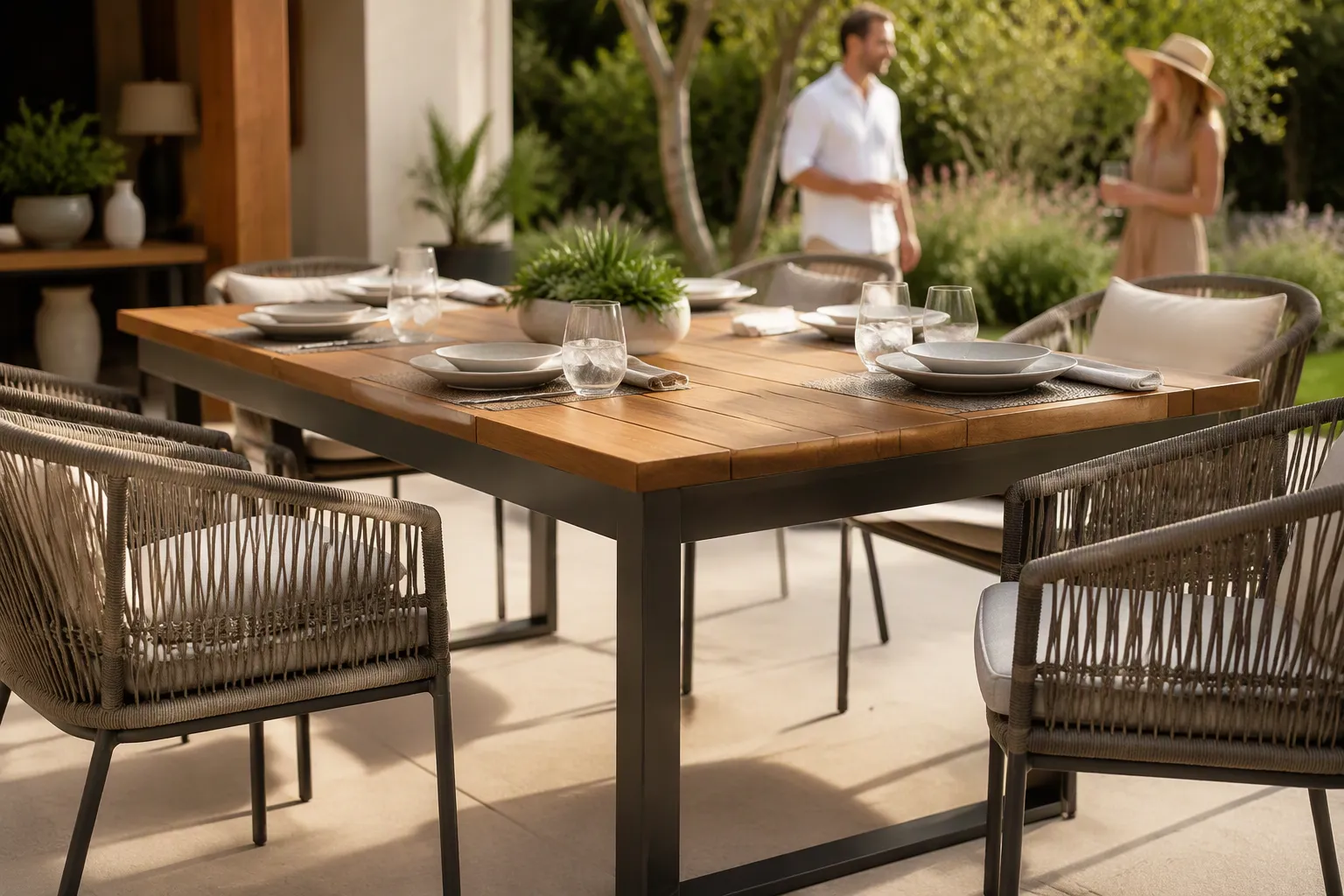
An aluminum frame with a wood top gives you the best of both. The frame stays light and rust-free, and the wood surface brings natural grain and a softer touch. This pairing works well for dining tables that see daily use.
Mixed materials create a layered, curated look. Teak with aluminum, stone with metal, rope with powder coat — each combination adds texture. Choose pieces that share a finish tone, and the mix will feel intentional rather than busy.
Fabric finishes the look, but it also decides how your seating survives the season. The 2026 trends favor soft, tactile surfaces that still stand up to sun and rain. Here is how the leading options work.
Solution-dyed fabric mixes pigment into the raw polymer before extrusion. Color runs through the whole yarn, so there is nothing on the surface to bleach out. Acrylic fibers also carry UV stabilizers built into the fiber itself, not a coating. Independent testing places solution-dyed acrylic at the top of fade-resistance ratings, above polyester and olefin.
A Sunbrella-category solution-dyed acrylic is engineered for 1,500+ hours of lightfastness. Some ratings reach up to about 2,200 hours of UV fade protection. Printed fabrics, by contrast, rate only around 300 hours, because their color sits on the surface. You can spot the difference yourself: solution-dyed fabric shows the same color intensity on both faces, while printed fabric is vivid only on the right side.
These weaves feel soft, not slick. Acrylic fibers resist water absorption, so moisture beads on the surface and dries quickly after rain. That interrupts the damp conditions that promote mold and mildew. You can even clean stubborn spots with a bleach solution, which printed fabrics generally cannot handle.
Woven rope brings texture and visual warmth to outdoor furniture. The open weave lets air pass through and water drain away, so moisture never pools. Pieces dry faster after rain, which matters in warm, humid climates.
Rope adds softness without bulk. It keeps pieces airy for small patios and balconies, and it reads more comfortable than bare metal. Many nautical ropes use recyclable materials, too.
Rope adapts to contemporary, relaxed, or tailored styles through pattern, color, and frame choice. Pair a warm rope weave with a matte earth-tone aluminum frame, or set it against black for contrast. Basic care is enough: water and mild soap, no sanding or sealing.
Cushions carry much of the comfort in your outdoor living spaces. Choose quick-dry foam so seats recover fast after a soaking. Coordinating patterns tie the bench to the table and the surrounding palette.
Quick-dry foam pushes water out instead of holding it. Seats feel dry sooner, and cushions stay lighter to move.
Pick one bold pattern and repeat it in a smaller scale on bench cushions. Keep the table surface calm so the fabric leads. This approach keeps your backyard looking curated, not cluttered.
Small spaces deserve smart solutions. A tight balcony or a narrow patio can still host a great outdoor table. The trick is picking designs that earn their footprint.
A classic bistro set — a two-top with two chairs — delivers the most efficient configuration for balcony dining. It creates an intimate café feel suited to city living. A folding bistro table goes further: it folds away to open up the balcony when you are not eating. That flexibility beats a fixed table in a tight spot.
A half-round tabletop sits flush against a railing or wall, freeing floor space. The Modesto 46" Half-Round Balcony Table Set pairs a semi-circular top with two bar stools for cozy dining for two. Pedestal tables also shine here. A single central base shrinks the footprint compared with four-legged designs.
Fold-down and nesting tables slide completely under one another when unused. They reappear the moment you need a surface. For a balcony used mainly for lounging, a compact side table or nesting set makes more sense than a full dining table. Lightweight aluminum and synthetic rattan stay easy to move and store.
A compact table can double as a coffee table, a dining surface, or a work area. That range matters when your outdoor living spaces serve many roles. Choose a slim rectangular top for a narrow balcony, or a round one to ease movement around sharp corners.
Storage benches and ottomans that serve as both surface and seating maximize a small area. A larger multifunctional variant, the Modesto Saddle Poly Bar Set for 5, adds under-table storage and stools that tuck away. Position seating against a wall or railing to keep the center open.
Measure first, then buy. Allow roughly 24 inches of table width per seated person. Keep about 30 inches between the table edge and any wall or railing so a chair pulls out comfortably. For fuller circulation, leave 36–48 inches around the table.
Area | Recommended clearance |
|---|---|
Main walking path | 30–36 inches |
Seating to coffee table | 14–18 inches |
Dining chair clearance | ~36 inches |
Plan for 10–13 inches between the table underside and seat top for legroom. Give each guest two feet of shoulder-to-shoulder space and at least 15 inches of depth per place setting.
Let the table and seating fill roughly two-thirds of the available area for a balanced look. Outline the proposed dimensions with painter's tape before you buy. For extendable tables, measure the fully extended size so the wings open without hitting walls. Keep pathways clear, and avoid tables that block doors.
Smart features turn a good table into a hardworking one. You get fewer trips inside, less clutter, and gear that survives the season. Here is what to look for.
Ample built-in storage lets you keep cooking and eating supplies outdoors. That means no more running back to the kitchen mid-meal. Dedicated space for supplies and trash also keeps the area tidy.
Look for cabinets with doors that hide plumbing, gas lines, and propane tanks. Sink and grill cabinets often include this maintenance access. Pass-through cabinets work from both sides of an island, which suits a busy backyard layout.
You can choose full-height doors, doors with drawers, or multiple drawers to match your space. Cabinet widths come in hundreds of sizes in 3-inch increments, so you can fit a wall precisely. Add shelves for dinnerware and warming drawers beneath the grill to hold food before serving. Durable 304 or 316 stainless steel cabinetry holds up well, and powder-coated finishes come in many colors and textures.
Shade makes or breaks a long afternoon at the table. Integrated umbrella features keep the pole steady and the coverage even.
A pole-through-table-hole design lets the umbrella slide through and lock firmly at your chosen height. Pre-drilled holes in durable poly lumber tables give the pole a stable base. On counter- and bar-height double pedestal tables, a frame extension raises the umbrella so shade reaches the taller surface properly. A push-button tilt lets anyone in the family adjust the angle with ease.
Cooler inserts keep drinks cold right at the table, so guests serve themselves. Pair them with umbrellas in coordinated colors that match your cushions. The whole outdoor room then reads as one intentional design.
Good drainage and smart hardware protect your investment. Check these details before you buy.
Trapped water is the enemy in wet climates. Clear drainage channels let rain run off instead of pooling on the surface. In the Pacific Northwest, airflow and debris removal matter just as much as drainage. In freeze-thaw regions, check for trapped water and cover pooling after storms.
Inspect exposed joints, fasteners, and frame feet, and note the coating condition. Aluminum resists iron rust, but it can still corrode, and attached hardware may use other metals. Rust-resistant stainless-steel fasteners prevent moisture-driven failure. Quick-release hardware makes seasonal teardown faster. Treat "weather-resistant," "waterproof," and "weatherproof" as different claims, and verify which component each one covers.
Color sets the mood of your outdoor living space before a single guest arrives. Nature-inspired colors and textures lead the outdoor living trends for 2026. Think weathered wood, muted greens, and soft sand tones pulled straight from the landscape. Lighting finishes the picture, and layered light makes your backyard glow after sunset.
Warm, grounded tones dominate this year. A warm woodgrain classic — weatheredwood, Brazilian walnut, and antique mahogany — brings timeless warmth to dining tables and Adirondack chairs. These shades suit traditional settings and wooded lots especially well.
Terracotta, sage, and weathered sand echo the garden itself. A relaxed backyard retreat palette of muted turf green, birchwood, and driftwood gray blends into landscaping and suits tree-lined yards and quiet corners. You will see these tones on sectionals and gliders. Pair them with beige cushions or a linen throw, then add greenery to reinforce the natural look.
Olive and clay add depth without shouting. Rich woven browns feel cozy and elevated, and they work on wicker sofas, mixed-wood coffee tables, and fire pit seating. Balance them with cream cushions or white decor. Layer evening lighting to bring out the texture.
Neutrals give you a calm base. Accents give the space personality. A social and entertaining setup starts with a neutral base — coastal or light gray — then layers in Patriot Blue or Cardinal Red. You will spot this look on bar chairs and swivel chairs built for gathering spaces.
Deep blues and charcoal anchor a table setting with quiet confidence. Combine modern grays with white for balance or black for an architectural feel. Add woven or brushed textures so the palette never feels flat.
Playful with purpose: mint, powder blue, Aruba blue, or bright blue in small doses against soft neutrals. These shades shine on bars and barstools. Keep the pattern small and repeat it once so the look stays curated.
What to skip in 2026: very low-profile seating and short-lived synthetic wicker are losing ground. Both still have their place — just weigh comfort and longevity before you commit.
Lighting extends your evenings outdoors. Layer two or three sources so the space shifts from bright dining to soft conversation.
String lights overhead create a festive ceiling. Path lights guide feet safely along walkways. Together they frame the table without glare.
Tabletop lanterns bring warm light right to the surface. Pair them with light wall lighting near lounge sofas for a resort-inspired feel. Soft whites and ivory keep the scene airy, and matte metal or stone accents add texture.
You have seen the styles, materials, and smart designs. Now comes the fun part: picking the one that fits your life. A few clear questions will narrow the field fast.
Start with how you will actually use the space. A table for everyday meals needs different bones than one built for cocktails and conversation. Cocktail areas need smaller tops than full dining tables. Group dining and events call for larger surfaces. Smaller tables stay versatile and easy to rearrange.
Think through your typical week. Do you host sit-down dinners, or do friends mostly perch with drinks? Standard height suits dining. Pub height creates a casual, elevated feel and works well in smaller spaces or bar-style setups. Choose based on intended use and your preferred seating. Then weigh four factors together: available space and layout, the typical number of seated people, your preferred style, and whether the table mainly serves meals or gatherings. That mix fits both functional and visual needs.
Your local weather shapes the material shortlist. Pick materials suited to the climate: rust-resistant coated or galvanized metal, moisture-resistant teak, or UV- and moisture-resistant composite resin. Each one holds up outdoors in its own way. Full-sun spots reward UV-stable finishes. Humid or coastal air favors aluminum and teak. Freeze-thaw regions demand good drainage. Match the material to the exposure, and your table will age well.
Good looks fade if the build fails. Check how the piece performs under real conditions, and confirm it meets recognized standards.
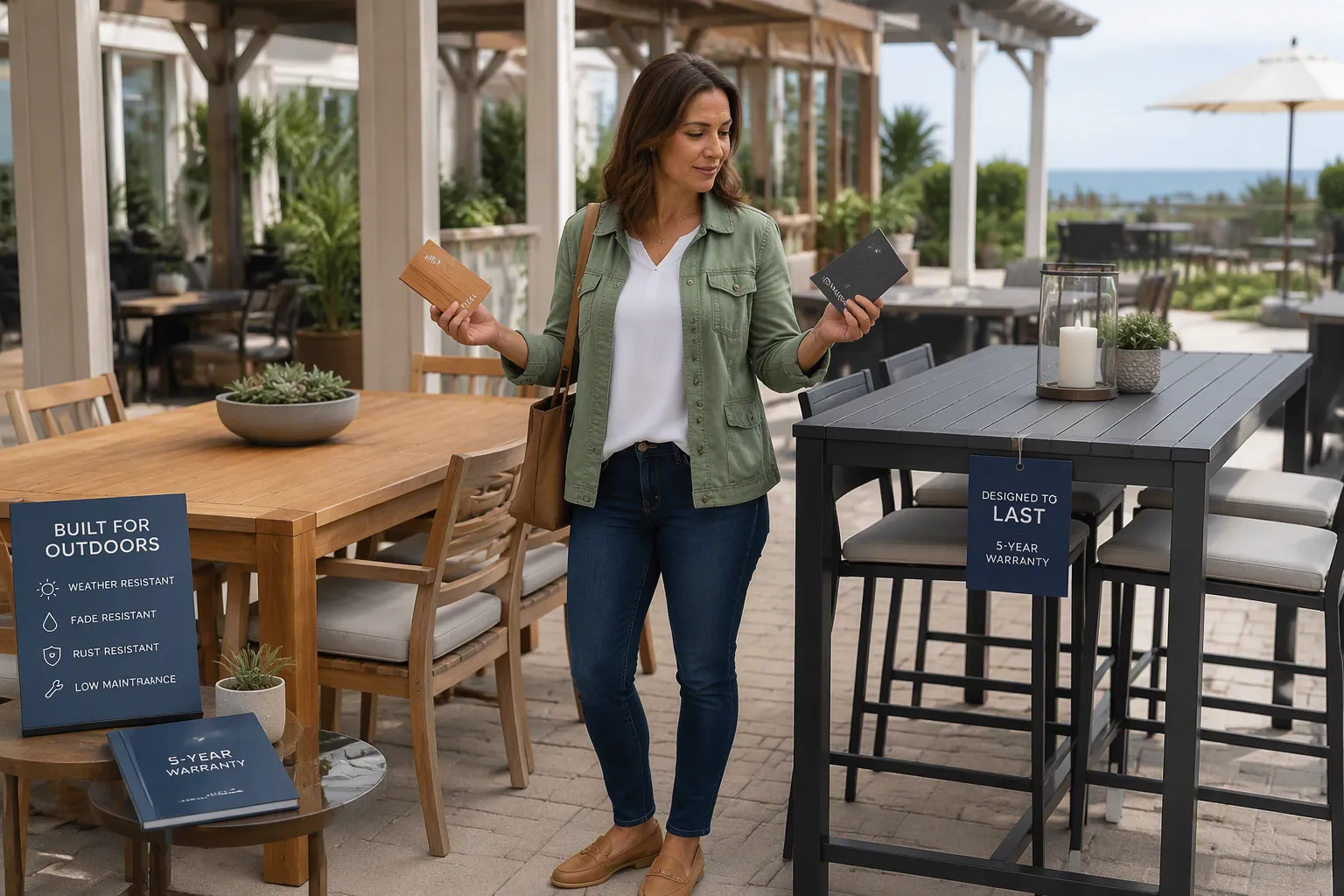
Read the warranty closely. It tells you what the maker will stand behind and for how long. Treat "weather-resistant," "waterproof," and "weatherproof" as different claims, and verify which component each one covers. A strong warranty on frames and finishes signals confidence in the build. Ask what the coverage excludes, too. Wear from sun, salt, or standing water often sits outside the terms.
Look for compliance with BIFMA X5.6, the standard governing the safety and performance of outdoor furniture. It gives manufacturers, specifiers, and users a shared basis for assessing safety, durability, and structural adequacy. The goal is simple: furniture that withstands normal use without undue risk. A product that meets it has been checked against a recognized benchmark. That matters most for tables that see daily loading, leaning, and shifting.
Price tracks material, construction, and finish quality. You can find a solid table at every level. The trick is knowing where your money buys real value.
Tier | Typical materials | What your money buys |
|---|---|---|
Entry | Powder-coated aluminum, acacia, composite resin | Light weight, easy care, good for balconies and casual use |
Mid | Teak, sintered stone tops, solution-dyed fabrics | Longer service life, better UV and stain resistance |
Premium | Grade A teak, natural stone, sculptural bases | Statement design, decades of use, refined finishes |
Entry pieces suit renters, balconies, and first setups. They move easily and ask little upkeep. Mid-range tables add durability and better finishes, which pays off in high-traffic backyards. Premium tables bring heirloom construction and design presence. None of these tiers is wrong. Each fits a different budget and a different stage of life.
Spend on the frame and the top. Those parts carry the load and face the weather. Save on accessories you can upgrade later, like cushions and lanterns. A quality frame with modest cushions beats a flimsy frame with luxury fabric every time. Prioritize low-maintenance, stain- and scratch-resistant surfaces to cut upkeep in busy settings. Then let color and pattern do the rest.
Start with your space and your lifestyle. Measure the area, count your usual guests, and note your climate. Let the trends guide your shortlist, not dictate it. The right outdoor table is the one you will use all season, with a cold drink in hand and good company around it.
Style in 2026 favors organic curves and modular flexibility. Materials lean toward stone tabletops and durable woods, metals, and fabrics. Design keeps getting smarter, with space-saving layouts and built-in features.
Keep your decision framework close. Weigh performance, application fit, regulatory compliance, and cost together. These outdoor living trends work best as a guide, not a rulebook.
Start with your space and your lifestyle. Measure the area, count your usual guests, and note your climate. Then let these ideas shape your shortlist.
Your outdoor table should fit your home and your backyard. Pick one you will gather around all summer, with good company and a cold drink close at hand.
Measure first. Allow about 24 inches of table width per seated person. Keep roughly 30 inches between the table edge and any wall so chairs pull out easily. For fuller circulation, leave 36–48 inches around the table.
Aluminum and teak both handle moisture well. Aluminum cannot rust, and a powder coat seals it against salt spray. Teak's natural oils resist moisture and insects. Both hold up in humid air, so pick based on the look you want.
Untreated teak can last 30 to 35 years outdoors. Its natural oils resist moisture, insects, and decay without chemical treatments. Left alone, the wood ages into a silver-gray patina. Occasional cleaning or a protector keeps the original honey-gold tone.
It depends on the wood. Seal or oil eucalyptus and acacia on a routine schedule to preserve the finish. Teak needs little beyond cleaning, though a protector keeps its golden color. Always use pH-neutral cleaners and a soft cloth.
Confirm the warranty terms and what they exclude. Look for compliance with BIFMA X5.6, the safety and performance standard for outdoor furniture. For wood, check for FSC certification. Treat "weather-resistant" and "waterproof" as different claims.
Leave about 30 inches between the table edge and any wall or railing. For fuller circulation, allow 36–48 inches. Plan for 10–13 inches between the table underside and seat top for legroom. Give each guest two feet of shoulder space.
Yes. Tempered glass is heat-treated and far stronger than standard glass. On impact, it shatters into small, rounded fragments rather than sharp shards. Choose 3/8 inch for small tables and 1/2 inch for large dining tops. A pencil-polished edge adds safety.
Choose solution-dyed acrylic, which holds color far longer than printed fabric. Quick-dry foam helps seats recover fast after rain. Spot clean stains right away, and use a mild soap solution. Stubborn spots on solution-dyed fabric can handle a bleach solution.