Views: 0 Author: Site Editor Publish Time: 2026-06-24 Origin: Site
You buy a beautiful patio set in May. By the following summer, rust stains bleed onto the deck. The sun-bleached surface suddenly looks decades old. Replacing degraded furniture every two or three seasons becomes a frustrating cycle. We often fall for marketing terms like "all-weather" without realizing the hidden flaws. The reality? No single material is indestructible everywhere. The "best" choice depends entirely on your regional climate extremes and how you plan to use it. You must balance freezing winters against UV-heavy summers. You must also consider intended mobility. We will strip away confusing jargon to give you a clear, criteria-driven breakdown of table materials. You will learn how to accurately evaluate durability, maintenance overhead, and structural longevity. By the end, you can confidently pick the exact material suited for your outdoor space.
High-Moisture/Coastal: Powder-coated aluminum and HDPE (High-Density Polyethylene) offer the highest resistance to rot and salt corrosion.
Extreme Wind/Stationary: Wrought iron and thick-cut Teak provide the necessary weight to prevent tipping, though both require strict maintenance schedules.
Portability/Camping: For transient setups, anodized aluminum is the strictly superior choice over plastics for structural integrity and heat resistance.
The Weak Link: Fasteners and hardware often fail before the primary table material; evaluating stainless steel hardware is just as critical as the tabletop itself.
Selecting the right material requires an honest assessment of your environment. You cannot evaluate durability in a vacuum. Materials react differently across various climates. You must align material properties directly alongside your regional weather patterns.
Direct summer sun dramatically alters material behavior. Dark metals absorb heat quickly. They can easily cause severe burn risks during peak afternoon hours. A dark iron table left in the July sun becomes unusable. Wood and high-density polyethylene (HDPE) behave differently. They remain mostly temperature-neutral. They absorb heat slowly. They also dissipate heat evenly. You must evaluate daily sun exposure carefully before selecting a highly conductive material. Shade structures change this dynamic completely. However, fully exposed spaces require heat-resistant surfaces.
High-wind regions demand heavy materials. You need significant mass to keep tables grounded during severe storms. Coastal properties face constant wind uplift forces. Lightweight furniture becomes a dangerous projectile in these environments. However, choosing heavy materials creates a major trade-off. Heavy tables limit mobility. You cannot easily relocate a 150-pound iron fixture for a weekend party. You must decide if stability matters more than flexibility.
Frame your decision tree around movement frequency. Ask yourself a simple question. Is this a permanent landscape fixture? Or do you need a deployable asset? Permanent fixtures sit outside year-round. They anchor an outdoor dining space. Deployable assets serve temporary needs. Hosting seasonal events often requires temporary setups. Understanding your mobility needs filters out incompatible materials immediately. You save time by eliminating overly heavy or excessively fragile options upfront.
Permanent installations require materials capable of surviving continuous environmental exposure. We evaluate the four leading options for legacy patio setups below. Each offers distinct advantages alongside notable compromises.
Pros: HDPE offers exceptional moisture resistance. It repels water completely. Bugs cannot penetrate the dense surface. You face zero risk of splinters over time. Manufacturers routinely use recycled plastics. This makes poly-lumber highly sustainable. It cleans easily using just soap and water.
Cons: The material carries a very high initial weight. It feels cumbersome to move. Solid HDPE can also warp slightly under sustained extreme heat. You must ensure the manufacturer utilizes robust structural reinforcement underneath.
Pros: Teak stands apart from all other exterior woods. Its natural high oil and silica content repels water effortlessly. It resists pests naturally. Left untreated, it develops an unmatched, beautiful silvery patina. It offers a premium, timeless aesthetic for any outdoor space.
Cons: The upfront cost remains exceptionally high. Retaining the original golden-honey color requires intense maintenance. You must apply specialized sealants bi-annually. Buyers must also verify ethical sourcing certifications to avoid supporting deforestation.
Pros: Aluminum inherently resists rust. This gives it a major advantage over steel. It feels lightweight. This allows for easy repositioning around the patio. A well-built outdoor table constructed from powder-coated aluminum provides excellent structural rigidity. It requires minimal daily upkeep.
Cons: High winds can easily blow it over unless properly weighted. The protective powder coat can scratch. Deep scratches expose the raw metal underneath to oxidation. You must avoid abrasive cleaning pads entirely.
Pros: You get maximum durability here. Iron provides extreme wind resistance due to sheer mass. It supports massive weight capacities effortlessly. It often features intricate, classic designs unavailable in other materials.
Cons: Iron demands the highest maintenance overhead. The protective finish will inevitably chip. You must apply immediate touch-ups using specialized exterior paint. Ignoring chips causes rapid rust propagation. Rust spreads quickly beneath the paint layer.
Comparison of Permanent Outdoor Table Materials | |||
Material | Wind Resistance | Maintenance Level | Heat Retention (Direct Sun) |
|---|---|---|---|
HDPE / Poly-Lumber | High (Heavy) | Low | Low to Moderate |
Grade-A Teak Wood | Moderate to High | High (if retaining color) | Low |
Powder-Coated Aluminum | Low (Lightweight) | Low | High (especially dark colors) |
Wrought Iron / Steel | Very High | Very High | Very High |
Transient setups require entirely different engineering priorities. Weight reduction becomes paramount. Durability must align directly alongside easy transport. We evaluate the leading materials engineered specifically for travel and temporary deployment.
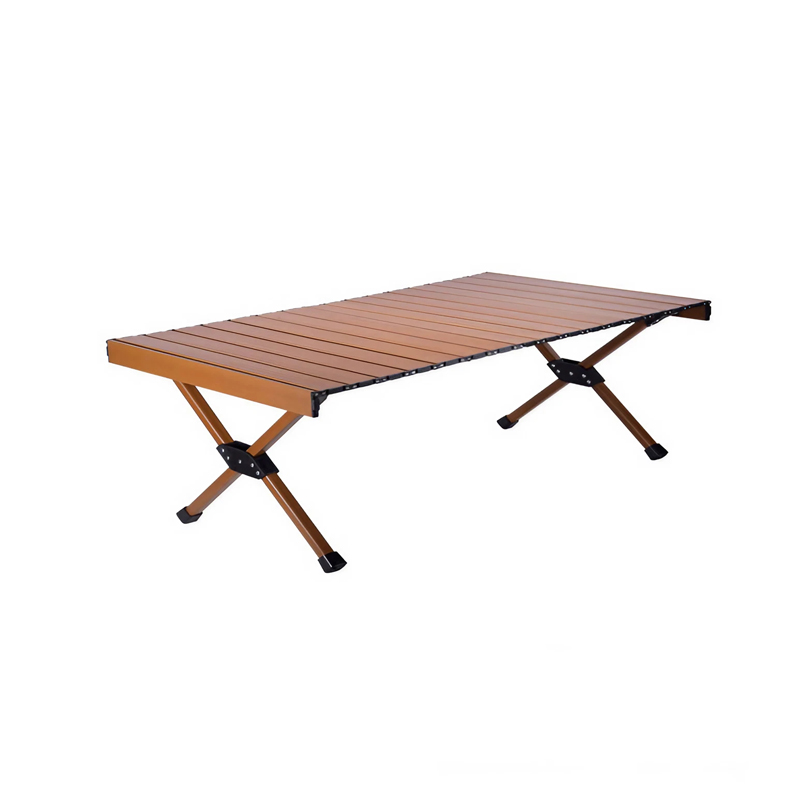
Application: This material serves as the gold standard for off-site mobility. It represents the optimal choice for a rugged aluminum camping table. It also works perfectly for a highly compact roll up table.
Evaluation: The strength-to-weight ratio remains exceptional. The anodizing process alters the metal surface electrochemically. This creates a finish highly resistant to scratches. It also resists extreme heat beautifully. You can safely place hot portable stoves directly on top. Molded plastics will melt immediately under similar conditions. Anodized aluminum folds down compactly. It survives rough transit in vehicle trunks without structural degradation.
Application: You will routinely see this material used for a temporary outdoor folding table. It also dominates the market for a budget-friendly portable picnic table used at community events.
Evaluation: Blow-molded plastic remains highly cost-effective. It repels food stains effectively. You can wipe away spills in seconds. However, plastics suffer from progressive UV degradation. Constant sun exposure makes the plastic brittle over multiple seasons. The sheer weight capacity remains noticeably limited compared to metal. The center often sags under heavy loads. They serve well for light-duty applications. They fail quickly under heavy commercial use.
High-Mobility Materials Chart | ||
Feature | Anodized Aluminum | Blow-Molded Plastics |
|---|---|---|
Heat Resistance | Excellent (Stove Safe) | Poor (Will Melt/Warp) |
Weight Capacity | High (Rigid structure) | Low to Moderate (Prone to sagging) |
UV Longevity | Excellent (No degradation) | Poor (Becomes brittle over time) |
Cost Profile | Moderate to High | Highly Economical |
Marketing departments often exaggerate material capabilities. You must look past the glossy brochures. Evaluating structural integrity requires a systematic approach. Follow this specific framework to audit any table before purchasing.
Hardware Inspection: Buyers must rigorously verify all screws, hinges, and joints. They must consist of marine-grade (304 or 316) stainless steel. A completely rust-proof aluminum frame becomes useless combined alongside cheap steel bolts. Cheap bolts bleed rust down the legs after one rainstorm. Always bring a magnet when shopping. True 316 stainless steel shows very low magnetic attraction.
Finish Tolerances: Distinguish carefully between cheap spray paint and baked-on powder coating. Paint chips easily upon impact. True powder coating bonds thermally directly onto the metal. It creates a much tougher defensive barrier. Ask the manufacturer for the specific micron thickness of their powder coat layer. Thicker coatings ensure longer lifespans.
Structural Reinforcement: Check for continuous cross-bracing underneath longer dining surfaces. This proves especially critical for wood and plastic models. Proper metal bracing prevents the center from sagging over time. Turn the table upside down. Look for thick metal bars running the entire length of the tabletop.
Eco-Toxicity & Off-gassing: Ensure all plastics and sealants lack toxic plasticizers. Food-contact surfaces require strict non-toxic certifications. Sun exposure accelerates off-gassing in cheaper materials. You want materials certified free of harmful VOCs (Volatile Organic Compounds). This ensures safe outdoor dining for your family.
Every material demands specific care routines. Ignoring maintenance guidelines leads to premature structural failure. You must understand the hidden labor hours required to keep furniture looking pristine.
We must acknowledge a harsh environmental truth. Even premium all-weather materials degrade from repeated freeze-thaw cycles. Expanding ice destroys rigid joints quickly. Water seeps into tiny crevices. It freezes, expands, and shatters the surrounding material. You must factor in the price of breathable, waterproof covers. Tarps trap moisture. Trapped moisture causes aggressive mildew growth. You also need physical storage space inside a garage or shed during the harshest off-season months.
Estimate your required annual labor hours realistically. Teak demands heavy sanding. You must apply specialized oils carefully to maintain its golden hue. This process takes several hours every season. Conversely, HDPE requires only a quick pressure washing session. You can clean poly-lumber in fifteen minutes. Iron requires diligent rust inspections monthly. Assess your personal willingness to perform manual labor. Buying a high-maintenance material guarantees frustration if you hate doing yard chores.
Learn how to read manufacturer warranties closely. Many brands include hidden clauses. They will void coverage instantly if you leave the product uncovered during winter. Proximity to salt water often voids warranties entirely. Coastal residents frequently discover their ten-year warranty holds zero value. Read the fine print before swiping your credit card. Look specifically for exclusions regarding wind damage and UV fading. Reliable manufacturers stand behind their materials unconditionally.
Choosing the ideal outdoor furniture requires balancing climate realities against your lifestyle. No magical material survives every environmental extreme perfectly. You must prioritize the features most critical for your specific location.
Follow a clear final decision matrix. Choose Teak or HDPE for legacy, permanent installations requiring maximum longevity. Select powder-coated aluminum for flexible patio dining where moderate mobility matters. Pick anodized aluminum for off-site mobility, camping trips, and temporary setups.
Your next steps remain straightforward. Measure your outdoor footprint carefully. Factor in roughly 36 inches of clearance for comfortable chair movement. Assess your local wind exposure accurately. Finally, audit the hardware specifications of your shortlisted models thoroughly before making a purchase. Taking these steps guarantees a successful long-term investment.
A: Yes, but only specific materials survive. HDPE, powder-coated aluminum, and properly covered Teak handle freeze-thaw cycles without structural compromise. Glass surfaces and cheap blow-molded plastics will likely shatter or crack when trapped moisture freezes and expands. Always use a breathable cover regardless of the material.
A: Aluminum conducts heat but dissipates it very quickly once shaded. However, dark-colored powder coatings will retain heat significantly. This causes discomfort during peak afternoon sun. Opt for lighter colors or place the furniture under a protective umbrella if your patio receives direct southern exposure.
A: For temporary setups, utilize specialized leg weights or canvas sandbags draped over the base. For semi-permanent lightweight tables, anchor the legs down to heavy outdoor rugs using discreet zip ties. You can also utilize wind-blocking patio structures to reduce direct gusts.
A: No. Polywood is typically High-Density Polyethylene (HDPE). Manufacturers construct it using vastly denser, heavier recycled materials. It feels robust and structurally sound. It resists warping far better than the thin, hollow blow-molded plastics used in budget portable tables.