Views: 0 Author: Site Editor Publish Time: 2026-07-03 Origin: Site
Planning an outdoor escape often involves wrestling dirt‑covered poles. You arrive late and sleep on uneven ground. You want to relax immediately upon arrival. However, ground pitching consumes valuable hours and energy. Traditional ground setups leave you vulnerable to mud. Rocky terrain further ruins a good night of sleep. This constant frustration pushes many adventurers toward rooftop tent alternatives. A reliable rooftop tent transforms an exhausting trip into a refreshing retreat. It keeps you safe from roaming wildlife. It also prevents sudden downpours from flooding your sleeping area. We will explore how rooftop tents completely upgrade your trips. You will discover practical benefits and essential buying criteria. We also share expert setup tips for better journeys. Let us dive into maximizing your next off‑grid adventure.
Over the past decade, overland travel transformed significantly. Adventurers now prioritize mobility over elaborate base camps. Traditional ground tents restrict where you can comfortably park. Ground conditions dictate your entire trip schedule. Now, off‑road enthusiasts embrace vehicle‑mounted rooftop tents. Integrating a rooftop tent and weekend car camping unlocks unparalleled mobility. You simply drive to a scenic overlook and park. Your bed is ready minutes later. This shift reflects a broader desire for spontaneity.
People want to explore deeper into forests. They refuse to sacrifice a comfortable mattress. Social media platforms showcase these incredible setups daily. Communities share photos of stunning elevated views. This visibility fuels continuous industry innovation. Manufacturers now design advanced models using a lightweight aluminum frame, a robust aluminum honeycomb panel shell, and heavy‑duty polyester, oxford or poly‑cotton fabric. These structural advancements make vehicle camping accessible and highly reliable for everyone.
You no longer need a heavily modified truck. Standard crossovers easily support modern rooftop tent systems. The trend highlights a fundamental shift in outdoor recreation. We value time spent exploring over time spent unpacking. Rooftop tent setups remove the friction of moving daily. You can chase better weather or new trailheads effortlessly. The psychological comfort of sleeping off the ground cannot be overstated. You feel secure, insulated, and ready for the next day.
Understanding the basic mechanics helps you operate these systems safely. You mount the rooftop tent directly to an aftermarket roof rack. The rack must support both static and dynamic weights. Dynamic weight refers to the load while driving. Static weight describes the capacity when parked. Most modern vehicles handle this load effortlessly once properly equipped. You secure the base plate using heavy‑duty stainless steel brackets.
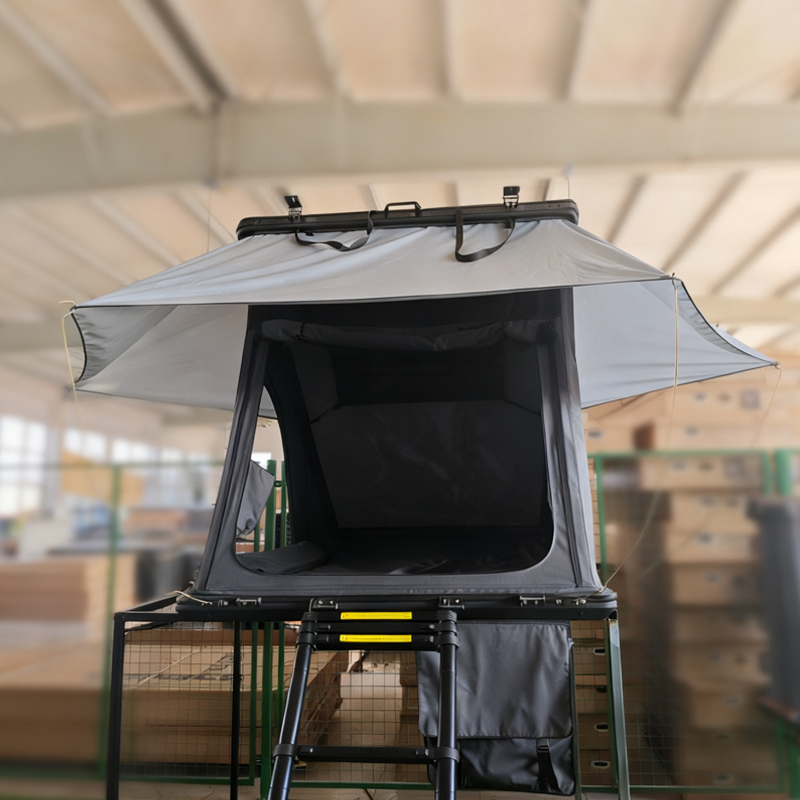
A soft‑shell rooftop tent utilizes a sturdy hinge system and a robust aluminum base frame. You unzip the travel cover and extend the telescopic ladder. The ladder acts as a crucial structural lever. You pull it downward to unfold the base. The ladder then supports half the floor weight. These side‑opening soft‑shell designs double their footprint once deployed. They offer massive interior space.
Conversely, a hard shell roof tent operates differently to maximize deployment speed. It relies on an internal gas strut or pop‑up structure housed within an aerodynamic aluminum honeycomb panel shell. This engineering provides a major rapid deployment advantage. You simply unlatch the exterior buckles, allowing a 30–60 seconds rapid setup. This meets the industry standard of typically ≤ 1 minute. The rigid outer casing becomes the structural roof, while the thick polyester / poly‑cotton fabric walls block wind and retain interior heat.
Rooftop tents fall into three main opening categories: Clamshell, Pop‑up, and Side‑Open. Clamshell and Pop‑up hard‑shell models deploy fast via gas struts, but their sleeping area is strictly limited to the footprint of the roof‑mounted shell and cannot expand sideways. Only Side‑Open designs (available in hard‑shell hybrid or soft‑shell versions) expand sideways to achieve a larger sleeping footprint. All of these core designs incorporate built‑in high‑density foam mattresses, allowing you to leave your sleeping bags inside during transit where model design permits.
Here is a typical deployment sequence for most systems:
Park your vehicle on completely level ground.
Unhook the exterior latches or remove the waterproof travel cover.
Deploy the ladder or release the internal gas struts for a 30–60 seconds rapid setup.
Extend the rainfly using the provided tension rods.
Climb inside and open the ventilation windows.
Rooftop tent camping solves numerous traditional frustrations. First, you gain absolute terrain independence. Ground campers need flat, soft, dry soil. You only need a relatively level parking spot. Mud, gravel, and roots no longer matter. This freedom vastly expands your destination options. You can camp in rocky deserts or damp forests effortlessly.
Second, weather resistance improves dramatically. The premium polyester or poly‑cotton fabric equipped with a PU coating ensures comprehensive waterproofing. A strong aluminum base frame creates a reliable anti‑wind structure against severe gusts. Water cannot pool under your floor. The thick fabric provides superior insulation against cold air. You stay dry during unexpected midnight storms. The robust rainfly directs water far away from the windows.
Third, the comfort level rivals your home bedroom. The integrated high‑density foam mattress provides exceptional back support. You sleep soundly without inflating noisy air pads. Deflating air mattresses ruin trips. Built‑in foam guarantees consistent comfort every single night.
Fourth, safety and cleanliness increase significantly. Sleeping off the ground keeps trail dirt outside. You avoid crawling insects, snakes, and curious wildlife. Better airflow prevents morning condensation buildup. The elevated vantage point also provides incredible sunrise views.
Comparison Chart: Traditional Ground Camping vs Rooftop Tent Camping
Feature | Traditional Ground Setup | Rooftop Tent System |
|---|---|---|
Setup Time | 15‑30 minutes | 30–60 seconds (typically ≤ 1 minute for hard‑shell) |
Terrain Needed | Flat, soft, clear soil | Any solid parking spot |
Weather Protection | Prone to ground flooding | Highly resistant to flooding |
Mattress Comfort | Thin inflatable pad | Built‑in high‑density foam mattress |
Wildlife Safety | Vulnerable to ground animals | Elevated and secure |
Every piece of gear has functional limitations. You must evaluate these constraints honestly before proceeding. The most prominent drawback involves vehicle mobility. You must fully close and stow the rooftop tent to drive away. Ground campers simply leave their setup behind. You lose your claimed campsite spot if you leave.
Additionally, aerodynamic drag impacts your daily commute. Mounting a large box increases wind resistance. You will notice reduced fuel efficiency. Heavy crosswinds push your vehicle around more easily. Some models generate noticeable wind noise at highway speeds. You might need to install a wind deflector.
Vehicle height clearance becomes another critical factor. The added height restricts home garage access. You must watch for low‑hanging branches on wooded trails. Drive‑through restaurants and parking structures might become inaccessible. You must memorize your new total vehicle height.
Finally, mobility around the campsite changes entirely. You must climb down a ladder for midnight bathroom trips. This requires caution in the dark. Pet owners face unique challenges here. Getting a large dog up the ladder proves difficult. You might need to lift them manually or build a custom ramp.
Choosing the correct model ensures long‑term satisfaction. You must match the product to your travel style. Finding the ideal SUV rooftop tent requires careful measurement. Check your vehicle owner manual first. Note both dynamic and static maximum roof load limits. Your crossbars must exceed the tent weight.
Next, consider the product structure carefully to eliminate functional overlaps. A soft‑shell rooftop tent offers a larger footprint, folding out over the side of the vehicle to accommodate families easily. A hard‑shell rooftop tent, defined by its rigid aluminum honeycomb panel shell, is engineered for a 30–60 seconds rapid setup and excellent aerodynamics. Among hard‑shell variants, only Side‑Open hard‑hybrid models expand sideways for extra interior space; clamshell and pop‑up hard‑shell types cannot expand outward.
Material descriptions dictate weather performance directly. Look for quality polyester, oxford or poly‑cotton fabric paired with a premium PU coating for top‑tier waterproofing. The foundation should rely on an aluminum frame and an aluminum base frame, constructing a proven anti‑wind structure. Fully taped seams prevent water from leaking inside, meaning you never have to depend on vague durability promises. Subpar materials deteriorate quickly under harsh UV rays.
Internal dimensions matter greatly for tall individuals. Check the closed length versus open length. Consider the mattress thickness carefully (hard‑shell models commonly feature 40‑50 mm high‑density foam; soft‑shell variants typically offer around 50 mm). A thicker mattress prevents hip pain during extended trips. Check the internal ceiling height. You want enough room to sit up comfortably while changing clothes.
Evaluation Matrix for Purchasing
Decision Factor | Importance Level | What to Look For |
|---|---|---|
Vehicle & Rack Compatibility | Critical | Verify both dynamic (driving) and static (parked) roof load limits; ensure crossbars match tent mounting footprint |
Tent Style (Hard‑Shell vs Soft‑Shell) | High | Hard‑shell: fast setup, superior wind‑rain resistance, higher cost. Soft‑shell: larger interior space, lighter weight, more budget‑friendly |
Total Weight | Critical | Tent plus accessories must sit under your vehicle‑rack rated limits; note off‑road limits are often lower |
Setup & Pack‑Down Speed | Medium | Hard‑shell deploys in seconds‑minutes; soft‑shell requires more time especially with rainfly and annex fitted |
Comfort & Materials | High | Check mattress thickness, fabric denier / waterproof rating, ventilation windows, zipper quality |
Proper preparation prevents miserable outdoor experiences. Even premium gear requires correct daily operation. Upgrading to a quick setup camping tent reduces arrival stress. However, you still need solid campsite routines.
Condensation remains a universal challenge. Humans exhale significant moisture overnight. This moisture hits cold fabric and drips constantly. Always leave two opposing windows slightly unzipped. Cross‑ventilation pushes damp air outside. Install an anti‑condensation mat under the mattress. This crucial mesh layer promotes airflow and prevents mold.
Leveling your vehicle is completely non‑negotiable. Sleeping on a slant causes blood to pool. You will slide downhill and toss all night. Pack a sturdy set of RV leveling blocks. Drive the low tires onto the blocks until the vehicle sits flat.
Keep these advanced practices in mind:
Store your sleeping bags flat inside the closed shell where model specifications permit.
Keep a dedicated pair of slip‑on shoes near the ladder top.
Pack a small battery‑powered fan for hot summer nights.
Dry the tent fabric completely before long‑term storage to avoid mildew.
Lubricate gas struts and zippers twice a season for smooth operation.
Use a boot bag hanging outside to keep the interior clean.
Check all mounting hardware bolts after driving on rough washboard roads.
Mastering these small details elevates your outdoor mastery. You spend less time fussing and more time relaxing. Closing the unit while wet sometimes happens. You must remember to open it immediately upon returning home. Leaving wet fabric closed destroys the tent quickly.
We covered exactly how rooftop tents transform weekend getaways. Ground conditions no longer dictate your travel plans. Review these core takeaways before your next trip:
Rooftop tent setups drastically reduce pitching time, with hard‑shell models offering a 30–60 seconds rapid setup (typically ≤ 1 minute), and eliminate terrain anxiety.
Match both dynamic and static roof‑rack weight capacities to ensure safe highway travel.
Hard‑shell rooftop tents leverage gas strut structures for deployment speed; soft‑shell rooftop tents maximize the interior footprint; only side‑open hard‑hybrid designs deliver hard‑shell convenience plus expanded sideways space.
Proper cross‑ventilation and vehicle leveling guarantee a restful night.
Embrace the true freedom of mobile exploration. Review your vehicle load ratings today. Upgrade your crossbar system to support your future rooftop tent. Plan your next weekend getaway without worrying about finding perfectly flat ground. You can finally enjoy the outdoors exactly how you want.
A: Vehicle‑factory stock crossbars rarely deliver sufficient dynamic‑load rating for rooftop tents; they may flex or fail under heavy loads. While a small number of heavy‑duty OEM crossbars on select off‑road capable SUVs can work, most users will need an aftermarket roof‑rack system. Always check your vehicle manual for specific dynamic load limits before attempting installation.
A: Yes, most models allow you to leave sleeping bags inside when closed. Hard‑shell units generally offer more internal clearance when stowed. Soft‑shells require you to lay the bedding perfectly flat to avoid bulging travel covers.
A: Quality polyester or poly‑cotton tent fabrics retain heat much better than traditional thin nylon. However, they are not actively heated. You still need proper cold‑weather sleeping bags and thermal base layers to stay safe in freezing temperatures.
A: You can close it wet temporarily. You must open the rooftop tent completely when you return home. Let the fabric bake in the sun until bone dry. Storing it wet causes permanent mildew damage within days.