Views: 0 Author: Site Editor Publish Time: 2026-10-31 Origin: Site
Picture a familiar camp setup. The fire crackles. You finally sit down to relax after a long hike. Within minutes, however, you find yourself shifting constantly. Pinching hips, numb legs, and a sagging seat quickly ruin the evening. Unfortunately, many outdoor enthusiasts purchase an outdoor chair based purely on aesthetics, color, or folded dimensions. Whether they are looking for a portable camping chair, a classic folding director chair, or a wrap-around moon chair, they often completely ignore the structural ergonomics of seat width and weight distribution.
Seat width directly dictates how your body mass disperses across the frame and fabric. Sized correctly, a well-proportioned seat prevents localized pressure points. It maintains healthy peripheral blood flow and guarantees the mechanical longevity of the gear itself. As engineers evaluating outdoor equipment, we look beyond the surface. This guide breaks down the biomechanical science of load distribution. We will analyze how different materials—from 600D Oxford cloth to sturdy aluminum alloys and authentic solid wood—handle static forces, and provide actionable advice to help you select a seating solution tailored precisely to your anatomy.
Understanding the physics of sitting is fundamental to evaluating seating comfort. Gravity exerts a downward force equal to your body mass. Biomechanically, the seating apparatus must exert an equal and opposite normal force to support you. How this upward force spreads across your body dictates your physical endurance in the wild, at a sporting event, or during an everyday picnic.
The seat pan functions as the primary load-bearing interface between human anatomy and the structural frame. The fundamental equation of pressure proves that maximizing contact area reduces localized physical stress. If the seat pan width accurately matches your pelvic and femoral dimensions, the downward force spreads evenly. Your mass is supported comfortably by the taut textile surface, a feature perfectly highlighted by the deep, enveloping design of a modern moon chair.
Optimal sizing allows you to sit with your legs slightly apart in a natural, neutral posture. This shifts the load away from the sit bones and out toward the fleshy parts of the thighs. Proper width prevents the frame from digging into your lateral thighs. This is especially true when chairs are equipped with smooth, premium wooden armrests, which offer a supportive resting place for your arms without pinching your sides. Correctly proportioned seating maintains unobstructed circulation to the lower extremities.
Recent market data reveals a massive shift in consumer priorities regarding outdoor gear. Historically, manufacturers chased ultralight metrics by utilizing complex shock-cord assemblies. However, these puzzle-like shock-cord frames are often less convenient to set up compared to the seamless, one-step deployment of a folding director chair or a pop-open moon chair. Current search trends indicate a surging demand for reliable, biomechanically optimized seating that balances ease of use with structural support.
Buyers are actively seeking solutions for lower lumbar fatigue and hip compression. In response, leading product engineers reject arbitrary, one-size-fits-all dimensions. We now utilize anthropometric data to design chairs with scientifically backed proportions. True outdoor relaxation is mechanically impossible without precise, engineered weight distribution.
Selecting a portable camping chair with arbitrary dimensions leads to predictable mechanical and structural failures. When seat width mismatches your body measurements, the resulting force imbalance compromises both comfort and product integrity.
A narrow seat creates a severe pinching effect. Biomechanically, this forces your femurs inward, causing internal rotation of the hips. Structurally, instead of weight channeling straight down into the vertical supports, it creates an outward horizontal stress on the frame. This lateral force vector accelerates metal fatigue at the hinges, making premature frame buckling highly probable.
Excessive seat width presents its own set of ergonomic hazards. You naturally tend to lean to one side or slouch backward to utilize the armrests. Additionally, excessive width across a flexible textile seat pan causes a hammock effect. The center of the fabric sags under concentrated pelvic weight, lowering your center of mass and making standing up require excessive physical exertion.
Accommodating higher weight capacities requires a complete geometric reassessment. We must maintain a delicate balance between structural rigidity, center of gravity management, and user ergonomics.
A properly engineered heavy duty camping chair undergoes specific alterations to safely handle increased kinetic and static loads. As weight capacity increases, the seat pan widens to accommodate larger body types. To counteract the inherently raised center of gravity, heavy-duty models feature a wider stance. Expanding the distance between the feet increases the base of support, lowering the center of gravity and drastically reducing the risk of tipping on uneven terrain.
The core engineering challenge lies in maintaining structural integrity while keeping the chair compact. The value of portability isn't just about carrying it; it's about minimizing the folded dimensions so it takes up less spatial footprint in a vehicle. Modern structural engineering achieves this through advanced multi-axis hinges, allowing reinforced cross-braces to fold efficiently into a highly manageable size.
The textile component of your seating is a critical structural element. It translates localized body weight into distributed tension across the frame.
High-density fabrics like single or double-layer 600D Oxford cloth and rugged canvas possess exceptional tensile strength. When you sit, a properly tensioned seat acts like a drumhead, absorbing downward kinetic energy and dispersing it radially outward. For added comfort, some designs feature a quilted construction, which adds a subtle layer of softness without relying on impractical, bulky interior foams. This low-stretch characteristic ensures the seat width remains consistent, isolating you entirely from the hard components beneath.
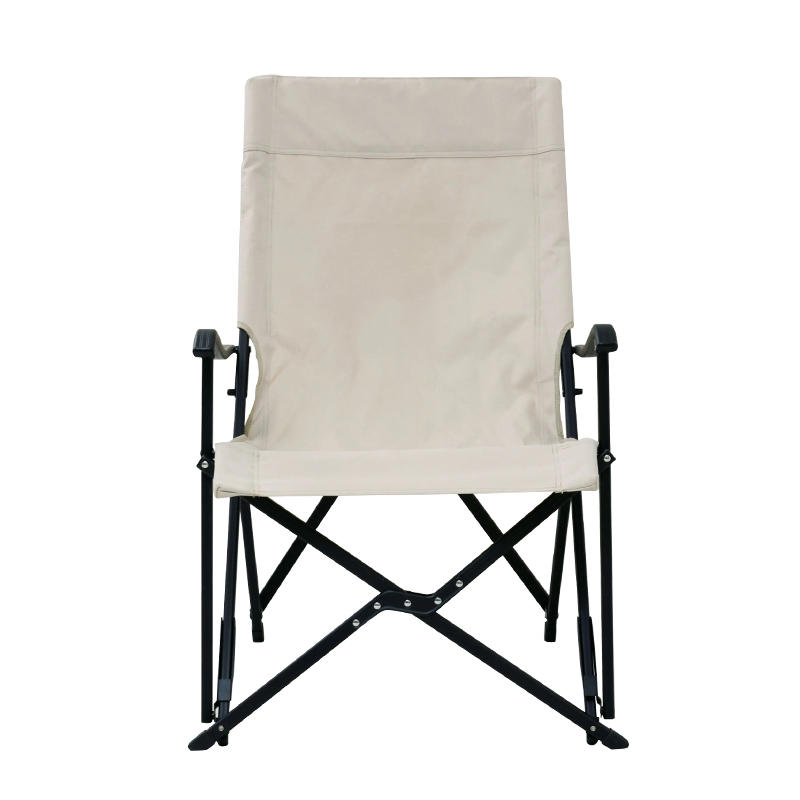
Weight distribution is not limited to the horizontal plane. A high back canvas camping chair effectively redistributes a significant percentage of your upper body mass away from the pelvis. By providing a continuous plane of tension up to the cervical spine, the extended backrest absorbs the torso load. It reduces muscle fatigue and promotes a highly relaxed posture during prolonged outdoor activities.
The skeletal framework dictates how effectively weight transfers to the ground. Aluminum dominates the portable seating sector due to its metallurgical properties, while solid woods offer a distinguished alternative for those prioritizing natural craftsmanship.
Aerospace-grade aluminum alloys offer an exceptionally high strength-to-weight ratio. They support massive static loads while remaining remarkably lightweight. Notably, many aluminum frames feature a sophisticated wood-grain surface finish, delivering the elegant look of timber alongside the durability of metal. Conversely, genuine solid wood frames—specifically crafted from robust beech or oak—stand out as a completely independent material class, providing exceptional structural rigidity and a classic aesthetic for premium director chairs.
The true strength of an aluminum folding camping chair lies in its triangulated cross-bracing design. When discussing stability, it is important to distinguish between an empty and an occupied chair. An empty, lightweight chair may easily shift, but the moment you sit down, the downward force channels through the central pivot points of the X-frame. The load divides evenly into all ground contact points, locking the frame into a highly secure and stable position.
For users prioritizing rugged durability for daily dynamic use, carbon steel offers a highly reliable alternative to aluminum.
The primary metallurgical difference between steel and aluminum is stiffness. Carbon steel is significantly stiffer and exhibits far less flex under heavy loads. Because steel resists deformation so effectively, it guarantees the geometric dimensions of the chair remain intact. Fabric tension remains consistent, preventing the seat from sagging over years of rigorous deployment.
While slightly heavier, a portable metal camping chair constructed from carbon steel is optimal for car camping, tailgating, or general everyday use at parks and sporting events. The denser frame provides rock-solid stability and uncompromising structural reliability, all while folding down neatly for transit.
To simplify your selection process, review how different materials and designs handle load distribution across various applications.
| Material / Component | Characteristics & Weight Mechanics | Best Application |
|---|---|---|
| 600D Oxford / Canvas / Polyester | Radial tension dispersion; prevents localized pressure points and completely resists sagging without stretching. | Portable camping chairs, moon chairs, director chairs. |
| Aluminum Alloy (incl. Wood-Grain Finish) | High strength-to-weight ratio. Triangulated cross-bracing locks firmly into place once occupied. | Mobile camping, festivals, easy transport. |
| Carbon Steel Frame | High stiffness prevents geometric deformation under heavy dynamic loads. | Tailgating, RV camping, high-capacity needs. |
| Solid Wood (Beech / Oak) | Premium independent material offering rigid, natural support and long-lasting mechanical integrity. | Luxury outdoor settings, glamping, premium director chairs. |
Translating biomechanical science into a purchasing decision requires matching your personal data with specific structural specifications.
To ensure optimal weight distribution, measure your seated hip breadth on a flat, firm surface. Add roughly two inches of clearance to each side. This total dimension represents your ideal seat width. The added clearance ensures the frame side rails will not compress your lateral thighs and gives you room to rest your arms comfortably on the wooden armrests.
When selecting your gear, evaluate the folded dimensions and how well the item fits into your daily routine. A compact aluminum director chair is perfect for quick trips due to its lightweight and small folded footprint. For maximum relaxation, a spacious moon chair featuring durable 600D Oxford fabric provides exceptional enveloping comfort. By prioritizing folded size and frame materials, you ensure your seating is as practical to transport as it is comfortable to use.
The secret to true outdoor comfort is deeply rooted in how effectively the seat width distributes your body weight. A well-proportioned portable camping chair, folding director chair, or moon chair prevents nerve compression, improves spinal posture, and significantly extends the lifespan of the equipment by reducing localized frame stress.
Whether you prefer an ultralight aluminum frame with a wood-grain finish, a classic solid oak construction, or a rugged carbon steel model, matching the correct seat width to your unique body type is the ultimate key to relaxation. Take a moment to compare folded dimensions and engineering specifications. For structurally optimized, professional-grade seating solutions, explore the extensive catalog at szmaitop.com to find the perfect ergonomic fit for your next expedition.
Standard chairs generally feature a seat width ranging from 19 to 22 inches, accommodating the average adult. Oversized or heavy-duty models feature widths of 24 to 28 inches. These wider dimensions are meticulously engineered to better distribute higher body weights and prevent lateral compression on the thighs.
A heavy-duty chair utilizes thicker frame materials, reinforced cross-bracing, and a significantly wider seat pan. This specific geometry ensures higher user weights spread out over a much larger surface area, preventing fabric tearing and stopping the frame from bending.
Not necessarily. While a wider seat vastly improves comfort, actual weight capacity is determined by structural factors like the sheer strength of the aluminum joints, tubing wall thickness, and the durability of the single or double-layer 600D Oxford fabric.
A high back design allows taller individuals to distribute a substantial portion of their upper body weight against the backrest. Redistributing weight vertically improves overall spinal posture, relieves lumbar strain, and significantly enhances seated comfort.
Yes, fabric composition is absolutely critical. Sturdy materials like 600D Oxford cloth, heavy-duty canvas, or robust polyester have very low stretch elasticity. They hold their structural shape under pressure and distribute weight evenly, unlike cheaper synthetics that cause rapid sagging.
Stability is best evaluated when the chair is occupied; your body weight lowers the center of gravity and locks the frame into a sturdy stance. Portability should be judged by the actual folded volume and physical weight, confirming how easily it stores in your car trunk or utility closet.
Uneven terrain forces your body weight onto fewer ground contact points, creating lateral stress. Well-engineered folding director chairs and moon chairs mitigate this using triangulated cross-bracing, maintaining structural integrity even when one leg rests on softer ground.