Views: 0 Author: Site Editor Publish Time: 2026-10-24 Origin: Site
Picture this: friends gathered on your patio, plates passing hand to hand, glasses clinking under string lights. That outdoor table sits at the center of it all, holding the food, the laughter, and the memories.
In 2026, outdoor table designs bring a fresh wave of warmth, durability, and versatility. You will see natural materials, earthy colors, sculptural shapes, and smart features reshaping outdoor furniture. These trends make outdoor living feel more inviting than ever.
Whether you own a cozy balcony or a sprawling yard, these ideas can transform your outdoor spaces. Let's dive into the looks and details defining the year ahead.
Choose natural materials like teak, stone, or woven fibers for a warm and lasting outdoor table.
Pick warm frame finishes such as flax or hazel to blend with your landscaping and home.
Use earthy colors like terracotta, sage, and sand to create a calm, nature-inspired patio.
Select rounded or pebble shapes for a family-friendly table with no sharp corners.
Look for extendable tables and hidden storage to make one table serve many purposes.
Choose recycled aluminum or composite wood for durable, eco-friendly furniture.
Mix materials like wood and metal to add warmth and strength to your outdoor table.
Layer lighting with overhead, tabletop, and path lights to set the perfect mood.
Natural materials set the tone for outdoor furniture in 2026. Wood, stone, and woven fibers bring warmth and texture to your outdoor spaces, and each one earns its place for a different reason.
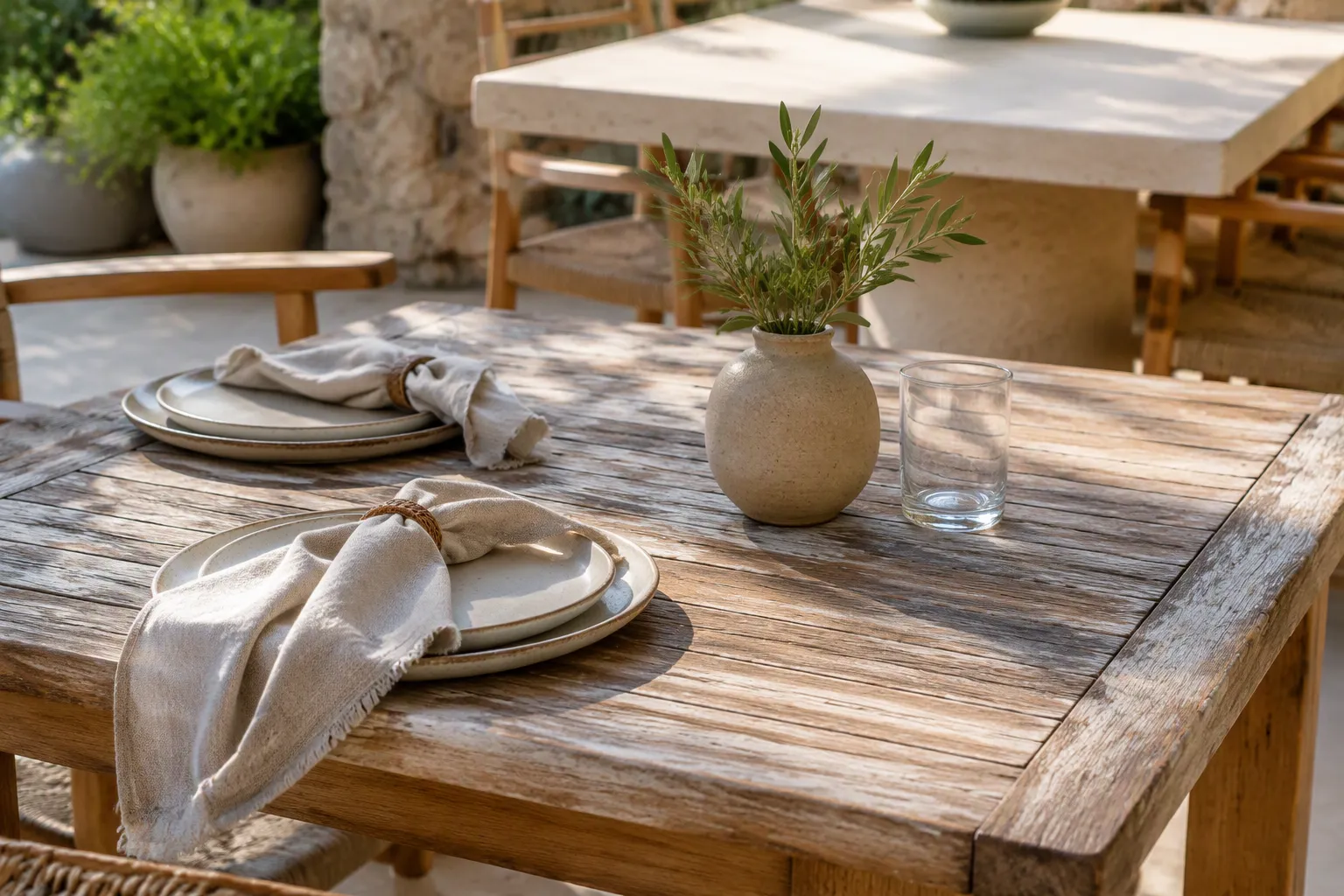
Teak and acacia both bring a golden warmth to an outdoor dining table. Teak starts as a warm golden-brown. Sun and rain then oxidize it into a silver-gray patina over time. That color shift is a natural aging process, and it does not weaken the wood. Some people deliberately keep the silvered look. Others use a sealer to slow the oxidation when they prefer the golden tone.
Acacia behaves differently. Its appearance can vary, and the sources we reviewed do not describe acacia developing a silver patina. Check whether the maker recommends periodic attention to a protective finish. Either way, gentle regular cleaning keeps both woods looking their best.
That aged, silvered look suits the lived-in 2026 aesthetic perfectly. It signals a table that has hosted real gatherings, not one wrapped in plastic. Treat the patina as character, not damage.
Pair warm woods with soft neutral cushions, linens, and ceramics. The quiet backdrop lets the grain and patina take center stage.
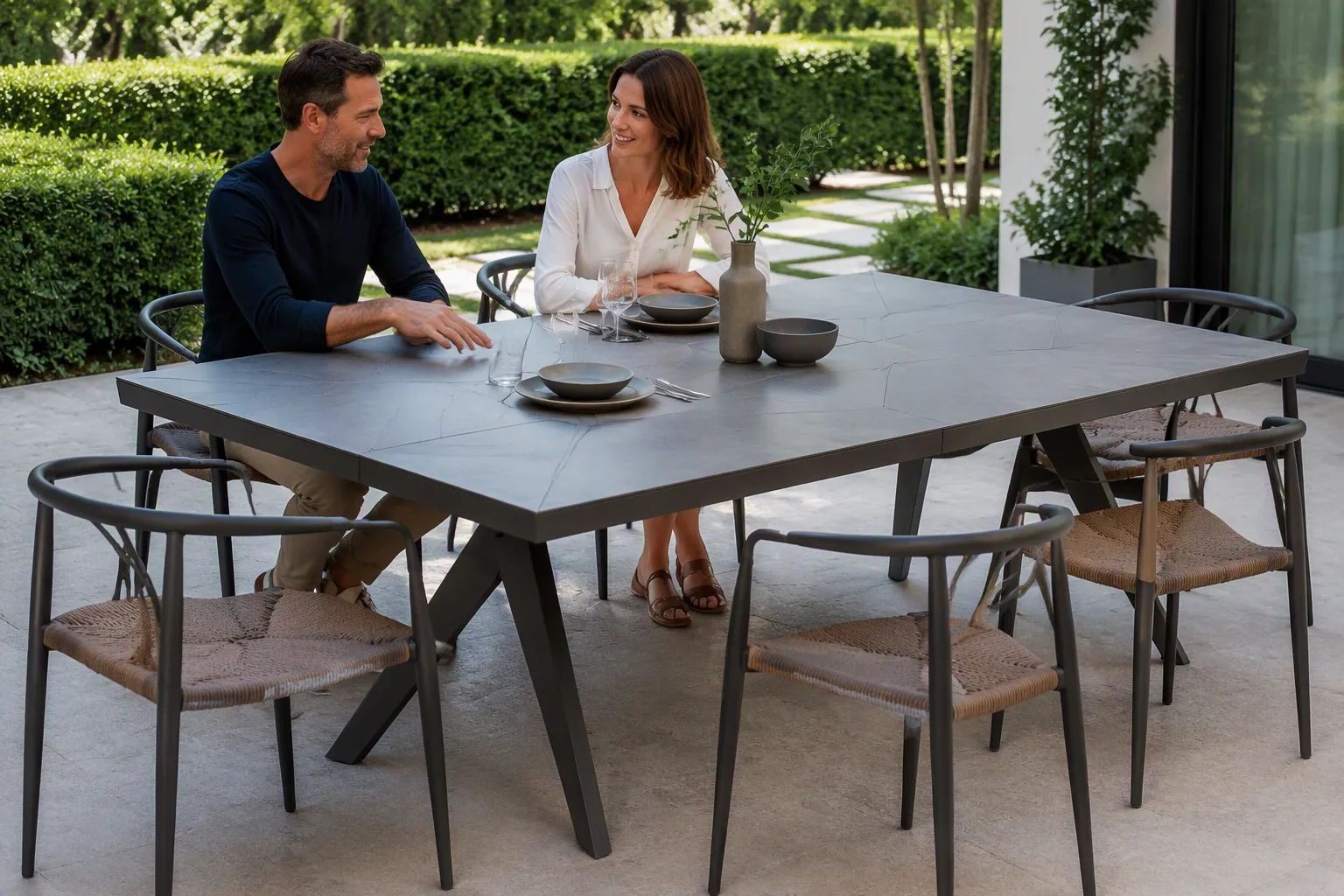
Stone outdoor dining tables anchor larger-scale patio designs. Dense, low-porosity sintered stone resists spills, so most cleanup is a single wipe rather than scrubbing between slats. Platters and glassware rest on one continuous serving plane, which suits buffet-style meals. The solid top also creates a clean visual bridge to stone, porcelain, or concrete counters and outdoor kitchens. These dining tables pair beautifully with warm frame finishes, which soften the stone's cool presence.
Plan your footprint early. An 87-inch table needs roughly 13 feet 4 inches by 9 feet 6 inches of minimum dining zone. An expanded 134-inch table needs about 17 feet 2 inches by 9 feet 6 inches. A kitchen-side layout needs 42 to 48 inches of serving clearance and 36 inches on the opposite side. Expect real weight, too: one reference table weighs 172 pounds, so plan the delivery path. Protect exposed edges from sharp impacts.
Textured and matte finishes keep stone from feeling cold or glossy. They hide fingerprints and water spots, and they feel wonderful under your hands.
Woven rattan and rope add warm, lightweight accents that bring dimension without feeling heavy. Use rattan for statement seating and side pieces under a covered porch. Rope works well on open patios where sun and rain reach everything. Both materials layer beautifully with wood and stone.
Mixed-material tabletops combine a woven base with a solid top. You get the lightness of fiber and the practicality of stone or wood in one piece. These natural textures make a table feel collected rather than catalog-ordered.
Warm frame finishes are one of the biggest outdoor furniture trends for 2026. A 2026 outdoor living trends report notes that warm tones are replacing the long-standing dominance of cool gray. After roughly a decade of gray being the default choice, homeowners are shifting toward warmer aluminum and woven finishes in natural tones such as flax, barley, and hazel.
Why the change? These warmer hues blend more naturally with landscaping, wood accents, and contemporary home exteriors. They also perform better visually in bright sunlight, where cooler tones can look harsh. The result is a softer, more residential and livable aesthetic. If you are shopping for outdoor furniture this year, start with a warm frame and build the rest of your palette around it.
Black frames are positioned as a timeless architectural anchor rather than a passing trend in 2026 patio design. Many newer homes feature black window frames, steel doors, and darker exterior trim. Outdoor furniture increasingly mirrors these details, so patios feel visually connected to the home's structure.
Black frames supply contrast and definition. They let cushions, greenery, and surrounding materials stand out. Designers now combine black with warm finishes rather than choosing between them. That balance of structure and softness creates a layered, intentional look. Use black on railings, pergola frames, or table bases, and reserve bronze for targeted accents on connectors, lighting fixtures, or furniture details. Black provides stronger visual definition against lighter wood tones or pale stone, which makes it ideal for urban modern settings or spaces that need crisp architectural lines.
European influences shape the latest outdoor furniture trends through slim profiles and soft curves. Picture table bases with slender legs and edges that round gently instead of cutting a hard line. These details translate easily to outdoor tables. A slim pedestal base keeps sightlines open, so your patio feels larger. A softly curved table edge feels comfortable when you lean against it and looks graceful from every angle.
You can spot this European touch in tapered legs, recessed aprons, and tops with eased corners. Pair these profiles with warm finishes and you get a refined look that still feels relaxed. The overall effect is warm minimalism: clean architectural lines, high-contrast matte black metal or dark bronze, and natural wood or stone, balanced so spaces feel inviting rather than cold or industrial.
Nature-inspired colors shape the palette for 2026. Terracotta, sage green, and weathered sand bring a lived-in feel to your patio. These tones look like they belong outside, and they age gracefully alongside wood and stone.
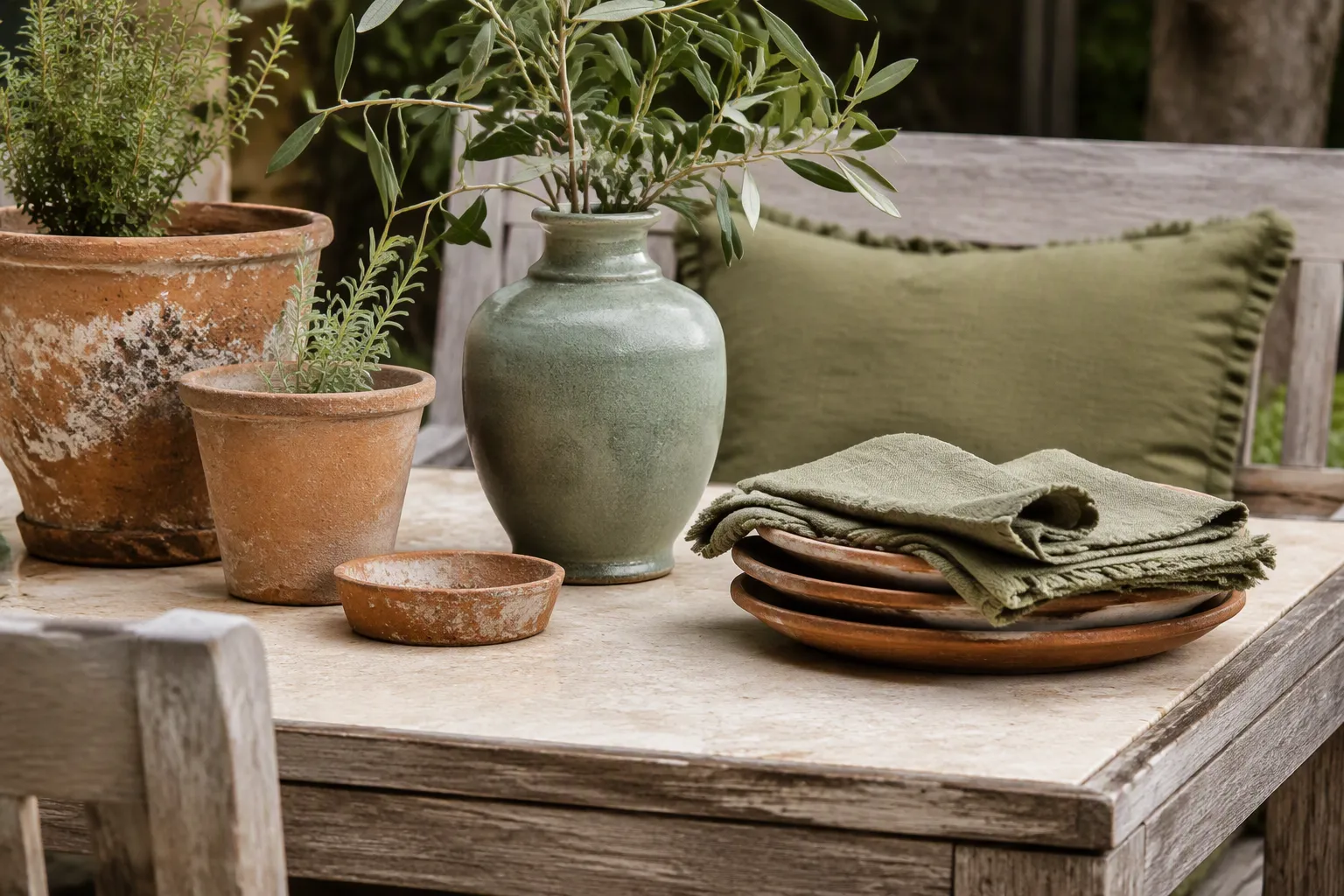
Terracotta and clay tones bring instant warmth to an outdoor table setting. Think of sunbaked pottery, roof tiles, and desert soil. These hues flatter wood grain and soften the look of metal frames. Use them on tabletop accessories, planters, and cushions for a grounded, earthy feel.
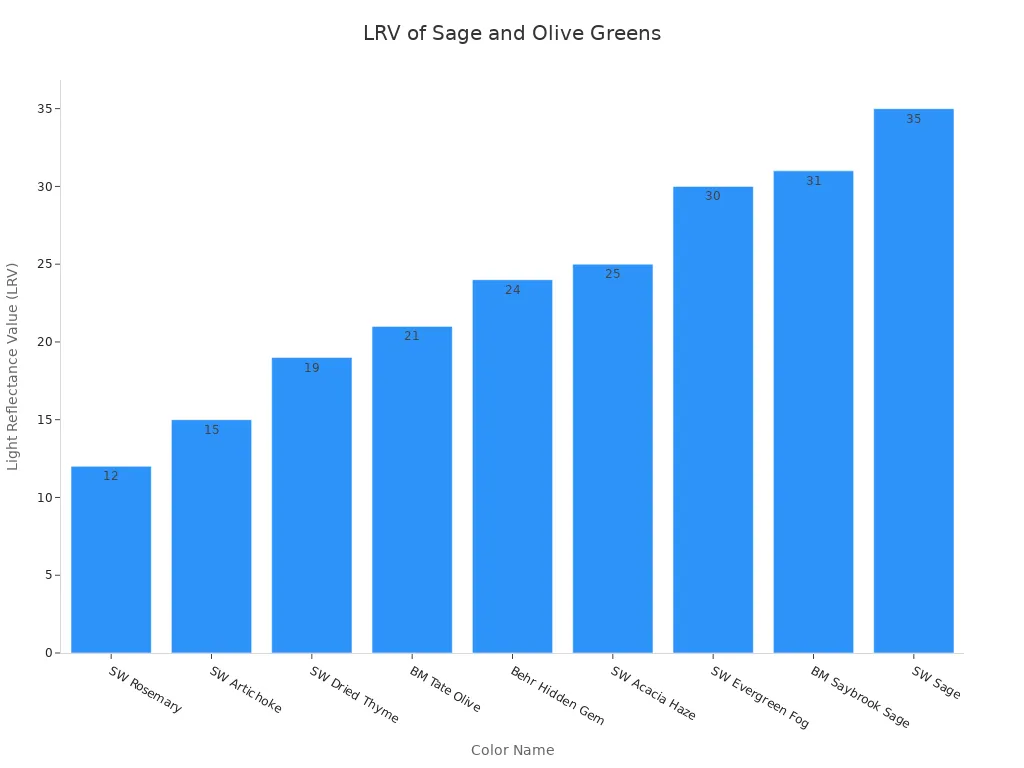
Sage and olive greens are cited as the biggest emerging trend for 2026 — calming, nature-connected, and livable. You can see the range in these popular shades:
Color | Code | LRV | Undertone | Best Placement |
|---|---|---|---|---|
SW Evergreen Fog | SW 9130 | 30 | Gray-green, slight earthy warmth | Body siding, board-and-batten |
SW Sage | SW 7745 | 35 | Soft gray-green, neutral | Body siding, shutters |
Behr Hidden Gem (2026 COTY) | N430-6A | 24 | Smoky jade, blue-green | Body, front door, accent |
SW Acacia Haze | SW 9132 | 25 | Gray-green, muted | Body siding, garage |
BM Saybrook Sage | HC-114 | 31 | Warm gray-green | Body siding, shingles |
SW Rosemary | SW 6187 | 12 | Deep olive, gray-yellow | Shutters, door, accent body |
SW Dried Thyme | SW 6186 | 19 | Khaki-olive, warm gray | Body siding, shutters |
BM Tate Olive | HC-112 | 21 | Warm olive, yellow base | Body siding, trim accent |
SW Artichoke | SW 6179 | 15 | Mid olive, balanced | Body siding, garage door |
A few pairings work especially well. Sherwin-Williams Evergreen Fog with cream trim and a natural wood door suits cottage and craftsman homes, and it pairs with copper or aged brass. Benjamin Moore Dried Thyme with ivory and brass feels bold but timeless on traditional homes. Sherwin-Williams Privilege Green with white trim and a black door delivers high contrast for a modern, rooted look.
A caution with olives: the yellow base that makes them feel natural also makes them the most likely greens to clash with cool surfaces. If your roof, stone or paver hardscape leans blue-gray, sample an olive against it before you commit, or shift to a gray-green sage instead. Olive greens reward warm fixed elements (red brick, sandstone, wood) and punish cool ones.
Weathered sand neutrals act as the quiet base for these earthy trends. They resemble driftwood, limestone, and dry beach grass. Use them on large surfaces like table bases and seating frames, then let the greens and terracotta do the talking.
Tonal layering builds depth with accessories. A linen runner in a slightly deeper sand tone adds contrast without noise. Ceramics in clay and olive echo the table's palette. Cushions in muted sage tie the whole outdoor furniture grouping together. Keep each layer one step away from the last, and the result feels collected rather than flat.
Shape matters as much as material in 2026. Rounded, pebble-inspired, and live-edge silhouettes bring organic softness to outdoor spaces. Hard lines and sharp corners are giving way to forms that feel carved by nature.
Rounded and pebble forms soften a patio instantly. A pebble-shaped top has no hard corners to bump into, which makes it a friendly choice for homes with kids or guests who move around a lot. The curved edge also looks graceful from every angle, so the table works as a focal point even when nobody is sitting at it.
These shapes fit the modern and organic design mood perfectly. Pair a pebble top with a slim pedestal base and the piece feels almost sculptural. Choose a matte stone or warm wood finish and the soft form does the rest.
Live-edge silhouettes keep one natural edge intact on the tabletop. The irregular line celebrates the tree's original shape, and no two pieces look alike. This detail adds instant character to your outdoor furniture and makes the table feel collected rather than mass-produced.
Live-edge tops suit relaxed, garden-style settings. Keep the base simple so the edge stays the star. Seal the surface regularly to protect that raw edge from moisture and sun.
Low-profile lounge tables suit conversation groupings. A low table sits at easy reach from lounge chairs and sofas, so drinks and snacks stay close without anyone stretching. Group two or three around a fire feature and you have a natural gathering spot.
One caution: skip low-profile seating that strains the body. Very low sofas and deep slouchy chairs can be hard to rise from, especially for older guests. Choose a seat height that lets you stand up comfortably, and let the low table carry the relaxed look instead.
Nesting arrangements multiply your options. A set of two or three tables in graduated sizes tucks together when you need floor space and fans out when guests arrive. Use the tallest for drinks, the mid-size for a snack board, and the smallest as a side perch. This flexibility makes nesting sets a smart pick for a patio seating arrangement that shifts from quiet mornings to full-house evenings.
Multifunctional outdoor living spaces are reshaping how you shop for outdoor furniture. One area now handles dinner, homework, and a quiet morning coffee. Your outdoor table sits at the heart of that shift. Extendable tops, hidden storage, and fire pit hybrids let a single piece serve many jobs.
Extendable dining tables adapt to different group sizes and uses. You seat four on a weeknight and pull the leaves out when the whole crew arrives. Armless chairs maximize space between place settings, so a crowded table still feels comfortable. Movable side tables, nesting tables, and folding serving surfaces add reconfigurable support wherever you need it.
Modular design takes flexibility further. Versatile pieces combine into a sectional or separate for solo lounging. That same space shifts to fit different social configurations. Pair this approach with flexible modular seating and your patio changes shape as fast as your plans do.
Integrated storage keeps a flexible setup practical. A built-in bench provides seating while storing cushions, games, or serving items. Weather-resistant storage cabinets nearby hold the rest. You clear the deck in minutes when the party ends.
This design also frees your table for more than meals. A dining table can double as a food-prep, homework, or work surface. Ottomans that double as seating and benches with storage round out the room. Every piece earns its footprint.
Fire pit and dining hybrids merge warmth with a place to eat. You get a dining surface by day and a gathering point after dark. These hybrids suit outdoor living at its most social, and they anchor a conversation zone without a second piece of furniture.
Built-in ice buckets and coolers make these tables entertaining-friendly. You chill drinks right at the table and skip the walk to the kitchen. Look for this feature if you host often. It pairs naturally with the multifunctional trends shaping 2026 outdoor table design.
Sustainability now shapes how you shop for outdoor furniture. Recycled aluminum, reclaimed wood, composite wood, and eco-friendly resin each extend a table's working life in a different way. Longer life means fewer replacements, and that is the heart of the story.
Aluminum earns its place as one of the most recyclable outdoor furniture materials. It is fully recyclable at the end of its life, and recycled content in furniture varies by alloy and product. Makers also recover internal scrap, down to the smallest particles, and high-grade alloys with strict performance criteria keep the frames strong.
The practical payoff is rust resistance. A corrosion-resistant frame resists deterioration, so your table keeps its structure season after season. Ebel pairs aluminum frames with its Eco-Weave recycled ocean-plastic weave on pieces like the Boulevard Sofa, which lowers reliance on virgin materials and diverts plastic from waste streams.
Aluminum is lightweight and rust-resistant, is often made with a high percentage of recycled content, and is fully recyclable at the end of its life.
Reclaimed wood gives old timber a second chapter as a tabletop. Composite wood goes further. Many composite products use recycled polymers that would otherwise sit in landfills or waterways, and the production process often reuses materials too. At end of life, the piece can be fully recycled into new products.
Composite also outlasts traditional wood and needs only a wipe-down, so you skip harsh chemical sealants and annual re-sealing. That low-maintenance durability suits busy households. Look for brands that are transparent about recycled content and sourcing.
Marine-grade HDPE recycled plastic lumber shrugs off moisture, salt spray, and UV radiation. Tables made from it will not fade, crack, splinter, or rot, and they need no maintenance. Synthetic wicker woven from UV-stabilized polyethylene resin over rust-proof aluminum frames holds its structure and appearance over time. High-quality weather-resistant tables use UV stabilizers for exactly this reason.
One caveat: lightweight recycled plastic can shift in high winds, so weigh stability when you choose. Otherwise, these durable materials deliver stylish, weather-resistant pieces that minimize replacement.
Finishes decide how long any material lasts. UV-stabilized resin, powder-coated aluminum, and sealed composite all slow fading and wear. Ask how a finish is applied and how you care for it. A good finish keeps your outdoor table looking new and keeps materials out of the waste stream.
Combining wood, metal, stone, and fabric is one of the biggest backyard furniture trends for 2026. You get warmth and dimension when several materials share one piece. No single element has to carry the whole look. Instead, each one adds a layer the others cannot.
Wood and metal pairings balance softness with structure. A warm teak top on a powder-coated aluminum frame gives you the grain you love and a base that shrugs off rust. The metal keeps the silhouette clean. The wood keeps it friendly. Together they handle weather and look good doing it.
You can push the contrast further. Try concrete with natural teak, where a cool gray surface meets golden timber. That mix of outdoor materials feels collected rather than matched. It also suits the warm finishes and black accents shaping outdoor furniture trends this year. Start with one hero pairing and let the rest of the patio follow.
Stone tops on sleek bases deliver a modern look without bulk. The Lloyd Flanders Escape 86.5" Dining Table pairs a marble-look top with a sleek charcoal aluminum frame. That blend of elegance and durability reads modern at a glance. The Tropitone Kor collection uses a faux stone top with curved backs and arched legs on a rustproof aluminum frame, so you get modern style without giving up comfort.
Other options follow the same recipe. The Homecrest Concrete 84" x 42" Rectangular Balcony Post Base Table pairs a concrete-finish top with a matching sleek concrete finish. A simulated textured stone top with a 2-inch profile and straight edge sits on angled legs for clean simplicity with artistic flair. Each one shows how stone and metal work together. Pick a top that echoes your counters and a base that stays out of the way.
Upholstered accents soften all that hard surface. A cushioned bench or a fabric-topped ottoman adds a layer your guests will notice. Choose weather-resistant upholstery so the fabric handles sun and rain without fuss. The right fabric also ties your color palette together.
Contrasting weaves add natural textures to the mix. Pair a tight basket weave on a seat with a looser rope detail on a table base. The two weaves catch light differently, and that difference gives the piece depth. This approach keeps your outdoor living space feeling layered and intentional. Mix two weaves at most, and let the pieces do the rest.
Designers point to layered lighting as a key trend guiding outdoor buying in 2026. One overhead source rarely does the job. You want light at several heights, each layer with its own purpose. Start with a soft glow overhead, add a mid-level layer near eye height, and finish with low light close to the ground.
Around the table, think in three zones. A pendant or string light above sets the mood. Candles or small lanterns on the tabletop add warmth at hand level. Path lights and low bollards mark the edges of your outdoor spaces so guests move safely after dark. Dim each layer separately when you can. That control lets you shift from bright dinner light to a quiet late-night glow without moving a single piece of furniture.
Multi-sensory layering pairs music, lighting, fire, and water with furniture groupings that invite conversation at multiple scales. A fire feature gives you flicker, warmth, and a natural focal point. A small fountain or water bowl adds a gentle background sound that softens street noise. Hidden speakers carry music at a volume that lets people talk.
The trick is restraint. Pick two or three sensory elements and let them work together. Fire plus soft music plus low lighting feels complete. Add water only if the sound suits your setting. Place each element so it supports the seating, not competes with it. A fire pit at the center of a lounge group pulls people in. A fountain at the patio edge frames the space without blocking conversation.
Good outdoor living design plans for more than one size of gathering. A large dining table handles the holiday crowd. A small bistro set or a pair of lounge chairs handles a quiet morning. Arrange both within the same patio so the space adapts without rearranging.
Scale matters here. Keep chairs close enough for easy talk, roughly an arm's length apart. Face seating toward a shared view, a fire feature, or each other. Small clusters of two to four seats feel intimate. Larger groups work best when you break them into overlapping circles. This approach keeps every guest part of a conversation, whether the party is four people or fourteen.
2026 brings warm natural materials, earthy colors, sculptural shapes, and smart features together in one confident look. Your best pick depends on your space, your lifestyle, and how much upkeep you enjoy.
Mix these trends with intention. Trends come and go, but quality stays. Choose pieces that will last, and let each one earn its spot on your patio. A great outdoor table should serve you for years, not just one season.
Ready to refresh your outdoor space? Start with one piece you love, build around it, and shop with confidence. Your next gathering deserves furniture that feels as good as it looks.
Recycled plastic lumber and powder-coated aluminum ask the least of you. Both shrug off moisture and sun, and a wipe-down handles most messes. Teak and acacia reward a little cleaning and occasional sealing. Stone needs the least day-to-day attention of all, though it is heavy to move.
Plan your dining zone before you buy. An 87-inch table needs roughly 13 feet 4 inches by 9 feet 6 inches of clear space. An expanded 134-inch table needs about 17 feet 2 inches by 9 feet 6 inches. Measure your delivery path too, since stone tables can weigh well over 150 pounds.
Absolutely. Wood-and-metal pairings are one of the year's biggest looks. A warm teak top on a black powder-coated frame gives you grain plus structure. The black adds definition, and the wood keeps things friendly. Start with that one pairing and build the rest of your patio around it.
Check your fixed elements first. Olive greens reward warm surfaces like red brick, sandstone, and wood. They can clash with cool blue-gray roofs or pavers. If your hardscape leans cool, sample a gray-green sage instead. Test a swatch against the surface before you commit.
Extendable tops, hidden storage, and fire pit hybrids all count. A bench with storage holds cushions and games. A fire pit table gives you dinner by day and a gathering spot after dark. Built-in coolers keep drinks at the table. Each feature lets one piece do several jobs.
Yes, when the finish is right. Recycled aluminum resists rust and stays structurally strong. Composite wood outlasts traditional wood and needs only a wipe-down. Marine-grade recycled plastic lumber will not fade, crack, or rot. Ask how the finish is applied, since that decides the lifespan.
Think in three zones. A pendant or string light overhead sets the mood. Candles or lanterns on the tabletop add warmth at hand level. Path lights mark the edges so guests move safely. Dim each layer separately when you can, and shift from bright dinner light to a quiet glow.
Rounded and pebble forms suit households with kids. No hard corners means fewer bumps, and the curved edge looks graceful from every angle. Pair a pebble top with a slim pedestal base for a sculptural feel. Live-edge silhouettes work well too if you prefer a relaxed, garden-style look.