Views: 0 Author: Site Editor Publish Time: 2026-08-15 Origin: Site
Nature rarely provides a perfectly flat surface. Campgrounds feature sloping dirt, rocky outcrops, and hidden root systems. Stability becomes a primary failure point for outdoor gear when gravity interacts with uneven terrain. A wobbly surface presents immediate operational risks. Spilled boiling water from a camp stove causes severe burns. Dropped gear like laptops or cast-iron skillets ruins trips. Utility drops to zero during meal prep or remote work if your cutting board constantly rocks back and forth.
You must evaluate specific leg adjustment mechanisms, frame architectures, footbed designs, and structural materials before investing in an Outdoor Table. Understanding how these components interact with ground variations ensures your setup remains secure, level, and highly functional regardless of the environment. Different terrains demand different mechanical solutions, from telescoping legs for steep hillsides to wide footbeds for soft sand.
Understanding the mechanical forces at play prevents catastrophic gear failure in the field. There is a distinct difference between a surface being level and a surface being stable. A level surface sits perfectly parallel to the horizon. This prevents round objects from rolling away and keeps cooking oils evenly distributed in a pan. A stable surface means the structure does not wobble, shift, or collapse under a moving load. You can achieve stability on a 15-degree slope, but cooking on that angle remains impossible. Optimal utility requires achieving both metrics simultaneously.
The geometric reality of furniture design dictates that a three-legged structure will always find a stable plane, regardless of how uneven the ground is. Three points define a flat plane. However, three legs provide a smaller footprint and a higher risk of tipping when you apply weight to the outer edges. Four legs offer a larger, safer working area but introduce the four-point problem. On uneven terrain, a rigid four-legged structure will rest on three legs while the fourth hovers above a depression. This creates a fulcrum across the middle of the frame. When weight shifts across this diagonal axis, the entire structure rocks violently.
The underlying frame architecture dictates how effectively you can combat this fulcrum effect. Independent vertical legs allow for maximum terrain adaptation. You can extend or retract a single corner without impacting the geometry of the other three. This isolates the adjustment to the exact point of ground variation. Conversely, interconnected X-frames limit adjustment capabilities. When you attempt to lengthen one side of an X-frame to compensate for a dip in the ground, you introduce torsional stress into the central pivot point. This stress transfers upward, which can warp the tabletop or cause the opposite leg to lift off the ground entirely.
Load distribution also plays a massive role in stability. When you place a heavy water jug on one corner of an unlevel table, the frame absorbs lateral sheer forces. If the legs cannot adjust to transfer that weight straight down into the ground, the frame will eventually buckle. Proper leveling aligns the load with the vertical axis of the legs, maximizing the structural integrity of the aluminum or steel tubing.
Manufacturers utilize several distinct engineering approaches to solve the four-point problem. Each mechanism offers specific advantages depending on the severity of the terrain and the required load capacity. Selecting the right hardware dictates your success in the field.
Telescoping legs consist of an inner tube sliding within a slightly larger outer tube, secured by a tension-based lever or twist lock. This design provides infinite adjustability within the physical limits of the tube length. You can lock the leg at exactly 14.3 inches or 18.7 inches to match the exact contour of a rocky slope.
This mechanism utilizes a spring-loaded metal pin housed inside the inner tube. The pin pops through pre-drilled holes in the outer leg tube. Adjustments are restricted to fixed intervals, typically every one inch or half-inch.
Commonly found on the bottom of fixed-length legs, threaded feet allow you to rotate the base pad to extend or retract the contact point by fractions of an inch. The threaded steel or heavy-duty plastic stem screws directly into a threaded insert at the base of the leg.
Instead of a rigid plastic cap, the footpad is mounted on a spherical joint. This allows the flat bottom of the foot to pivot independently of the leg angle. The base remains flat against the ground even if the leg approaches at a 30-degree angle.
Having the right hardware is only half the equation; deployment technique matters. The most efficient way to deploy an adjustable camping table involves utilizing gravity rather than trial and error. Follow this exact sequence to achieve a perfectly level surface in seconds:
This method eliminates the frustrating process of adjusting one leg, checking the level, and readjusting the others in an endless loop.
The materials used in construction directly impact how well leveling mechanisms function over time. Rigidity, weight, and corrosion resistance dictate field performance. You cannot separate the leveling mechanism from the material housing it.
Weight-to-strength ratios define outdoor gear utility. Steel provides immense structural rigidity but introduces significant weight penalties and severe corrosion risks. If a steel telescoping leg scratches, rust forms quickly. This rust expands, causing the inner and outer tubes to seize together permanently. Wood offers excellent aesthetics but swells when exposed to humidity, making moving parts sticky and unreliable.
An aluminum folding camping table solves these issues. Aluminum naturally resists rust through oxidation. Even when the anodized coating scratches from repeated leg adjustments, the exposed metal will not degrade or seize. This ensures smooth telescoping action year after year. High-grade aluminum alloys, like 6061 or 7075, provide the necessary tensile strength to support heavy loads without the back-breaking weight of steel.
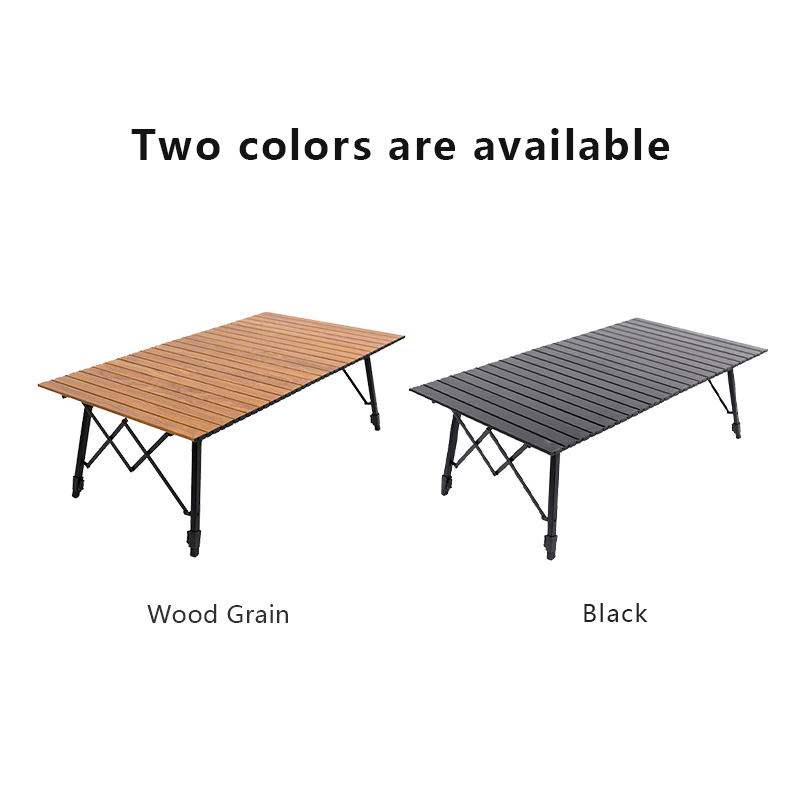
A rigid, single-piece tabletop acts as a structural brace, forcing the legs to maintain their geometry. A roll up camping table lacks this solid upper brace. The surface consists of individual aluminum slats held together by shock cord or hinges. When placed on uneven ground, any torsional stress applied to the frame transfers directly to the surface.
If the legs are not perfectly leveled, the frame twists. This twisting causes the roll-top slats to separate, creating gaps where utensils fall through. It can also bow the surface, creating an unsafe cooking area where pots slide off the burner. The leg frame must absorb all uneven terrain forces independently to keep the top flat. Therefore, roll-up designs require highly robust, independently adjustable legs to function properly on anything other than flat pavement.
Backpackers and motorcycle campers prioritize packed size and weight above all else. An ultralight folding camping table typically utilizes shock-corded, tent-pole style legs. These frames are designed for rapid assembly but rarely feature true independent leg length adjustment. The thin aluminum or carbon fiber poles snap together into a fixed geometry.
Instead of mechanical leveling, they rely on flexible frames that conform slightly to the terrain. If the ground is severely sloped, the entire structure leans. The thin pole legs also exert high pressure on the ground, making them prone to sinking deeply into soft soil unless modified with aftermarket feet. You trade leveling capability for extreme portability.
| Table Design Type | Leveling Capability | Primary Material | Ideal Terrain Application |
|---|---|---|---|
| Heavy-Duty Telescoping | High (Macro & Micro) | Anodized Aluminum / Steel | Steep slopes, rutted ground, overlanding |
| Roll-Top Slatted | Medium (Requires rigid frame) | Aluminum | Packed dirt, gravel, moderate slopes |
| Shock-Corded Ultralight | Low (Relies on flex) | DAC Aluminum / Carbon | Flat ground, tent floors, manicured grass |
| Fixed Leg with Threaded Feet | Low (Micro only) | Wood / Steel / Aluminum | Patios, concrete, leveled campsites |
Matching your gear to the specific environment prevents catastrophic failures during use. The ground composition dictates which features are mandatory and which are liabilities. You must anticipate the terrain before packing your vehicle.
Solid ground provides excellent load-bearing capacity but offers zero forgiveness for uneven leg lengths. On hardpack or river rocks, an unlevel table will vibrate and rattle constantly during food prep. The requirement here is micro-adjustability combined with high-friction contact points.
The ideal solution involves push-button legs for macro-height setting, combined with threaded rubber feet for dialing in the final millimeter of stability. The rubberized footpads grip smooth rock faces, preventing the structure from sliding downhill when bumped. Hard plastic feet will skate across smooth granite, creating a dangerous hazard if you are operating a boiling stove.
Coastal camping, desert environments, and rain-soaked forests present a flotation problem. A perfectly leveled mechanism is useless if one leg sinks three inches into the mud under the weight of a water jug. The requirement shifts from micro-adjustment to maximizing surface area. You need flotation to reduce the pounds-per-square-inch (PSI) exerted on the ground.
The ideal solution involves an outdoor camping table equipped with telescoping legs and oversized "mud baskets" or wide-stance articulating feet. These wide bases distribute the load, preventing the legs from penetrating the soft surface and ruining the level plane. If your table lacks wide feet, you must carry flat wooden blocks to place under the legs.
Mechanical systems have limits. When you encounter a slope that exceeds your leg extension capacity, or if a locking mechanism fails, you must rely on field-expedient stabilization. The most common mistake is stacking loose rocks, firewood, or shims under the downhill leg. This raises the center of gravity and creates a highly unstable, secondary failure point.
The structurally superior method is to dig a small trench for the uphill legs. Lowering the uphill side into the dirt drops the overall center of gravity, anchors the frame against lateral movement, and provides a rock-solid foundation without relying on precarious stacks of debris. Use an entrenching tool or a sturdy stick to carve out a flat shelf for the uphill feet. Test the stability by pressing firmly on all four corners before placing any gear on top.
Deploying adjustable furniture in harsh environments introduces specific physical risks. Understanding load dynamics and maintenance requirements prevents gear destruction and ensures long-term reliability.
Extending adjustable legs alters the physics of the structure. When you extend legs to their maximum height to compensate for a steep drop-off, you raise the center of gravity and significantly reduce the overall weight capacity. Long, extended tubes act as levers, amplifying lateral forces from wind or accidental bumps.
To mitigate this risk, you must practice strict load management. Always place the heaviest items—such as full water jugs, heavy coolers, or cast-iron stoves—directly over the shortest, least-extended legs. This anchors the most stable side of the frame and keeps the center of gravity as low as possible. Never place heavy, shifting liquid loads over fully extended legs on the downhill side of a slope.
Adjustable components require tight tolerances to function. These tight clearances are highly vulnerable to environmental contamination. Fine silica sand, river grit, and sticky mud easily enter telescoping leg channels or the threads of screw-in feet. Once inside, this debris acts like sandpaper, scoring the aluminum and causing the mechanisms to jam permanently.
To mitigate this, prioritize external cam locks over internal twist-locks. External levers are easy to visually inspect, wipe clean, and flush with water. Avoid dragging the legs through the dirt during setup. Always wipe down the lower tubes with a dry cloth before retracting them into the upper housing. If a leg becomes sticky, flush it with clean water and apply a dry PTFE lubricant. Never use wet oil-based lubricants, as they attract and hold abrasive dirt.
Telescoping legs rely on tube overlap for rigidity. If a 20-inch outer tube holds a 20-inch inner tube, and you extend the inner tube by 19 inches, only one inch of overlap remains inside the housing. This minimal overlap creates a severe weak point that will bend or snap under lateral stress.
When evaluating gear, check the manufacturer's overlap ratio. High-quality designs feature internal physical stops that prevent you from extending the leg past a safe overlap threshold. If your setup requires maximum extension, ensure the frame includes diagonal cross-bracing to absorb lateral forces and protect the weakened leg joints. If the table wobbles excessively at full extension, you must lower the overall height to regain structural integrity.
A: First, utilize any built-in adjustable legs to find a level plane. If the wobble persists due to soft soil, attach wide footpads or mud baskets to distribute the weight. Alternatively, place flat rocks or pieces of wood directly under the sinking legs to increase the surface area and prevent further ground penetration.
A: Lever-locks (cam locks) are generally superior for outdoor use. They are easier to clean, allow for quick visual verification that they are locked, and can be adjusted with gloves on. Internal twist-locks are highly susceptible to jamming from fine dust, sand, and moisture, often seizing permanently in gritty environments.
A: Yes, but only if the table features independently adjustable legs. Because the roll-top surface is flexible, the underlying frame must be perfectly leveled. If the frame sits unevenly, torsional stress will cause the aluminum slats to bow, separate, or pop out of their mounting tracks.
A: Weight capacity decreases significantly as legs are extended. Longer legs increase leverage against the joints and reduce the structural overlap inside the telescoping tubes. Always check the manufacturer's specifications specifically for "fully extended" limits, and keep heavy items positioned over the shortest legs.
A: Ultralight tables have narrow pole legs that exert high pressure. You can stop them from sinking by using aftermarket solutions like 3D-printed sand feet, slipping tennis balls over the leg ends, or simply placing the narrow feet onto flat pieces of firewood or specialized rubber mud mats.
A: Use field-expedient leveling by digging out the soil beneath the uphill legs. Lowering the uphill side into the ground is significantly safer, more stable, and lowers the center of gravity. Avoid propping up the downhill legs with loose rocks or debris, as this creates a dangerous tipping hazard.