Views: 0 Author: Site Editor Publish Time: 2026-11-24 Origin: Site
A larger roof rack isn't always better for a Suzuki Jimny. Limited roof space makes tent compatibility and weight crucial. Choosing the right Suzuki Jimny with rooftop tent setup requires careful planning. Discover how to compare rack types, dimensions, load limits, and mounting options.
The best rack depends on how you plan to use your Jimny. Some owners need a simple tent mounting system. Others want extra space for camping equipment. Three common options deserve consideration.
Compact crossbars provide a simple mounting solution. They usually consist of two or more bars attached to vehicle-specific mounting points. The rooftop tent connects through its bottom mounting channels or brackets.
Their main advantage is reduced weight. They also leave much of the roof exposed. This makes them suitable for owners who carry only a tent and essential camping equipment.
However, crossbar spacing matters. The tent base must receive proper support at approved mounting positions. Always check the tent manufacturer's installation requirements before selecting a crossbar system.
A compact roof platform provides more mounting positions. It can support different tent mounting arrangements and selected accessories. This flexibility helps owners who regularly change their camping equipment.
However, a platform usually adds more weight than a basic crossbar system. Its larger surface can also increase wind resistance. A low-profile design may reduce these effects, but it cannot remove them completely.
For a Jimny, choose a platform based on actual requirements. Avoid buying an oversized model simply because it offers more mounting space. Every additional kilogram matters when calculating the complete roof load.
Vehicle-specific racks are designed around particular roof configurations. Their brackets and mounting positions should match the intended Jimny model. This can simplify installation and reduce compatibility problems.
Universal racks offer broader application possibilities. However, universal compatibility does not guarantee a secure fit. You must check roof dimensions, attachment points, mounting hardware, and permitted load ratings.
For regular off-road use, a properly matched vehicle-specific system is often easier to evaluate. If you choose a universal rack, obtain written compatibility information before purchasing.
Rack Type | Main Advantage | Main Limitation | Best Application |
|---|---|---|---|
Crossbars | Lower system weight | Limited mounting positions | Minimalist camping |
Compact platform | Flexible mounting | Usually heavier | Multi-accessory setups |
Vehicle-specific rack | Model-matched installation | Limited vehicle coverage | Dedicated Jimny setups |
Tip: Ask suppliers for vehicle-specific fitment details, mounting diagrams, and complete rack weight before placing an order.
Physical compatibility is one of the most important parts of choosing a Jimny rooftop tent rack. A tent may fit visually but still have incompatible mounting channels. Measure the components before making a purchase.
Start by checking the tent's closed dimensions. Measure its length, width, and mounting base. Then compare these measurements with the usable rack area.
Do not rely only on the rack's external dimensions. Some platforms have raised edges or restricted mounting zones. These features can reduce the actual space available for installation.
Also consider the tent's center of gravity. A large tent extending too far beyond the supported area may create unnecessary leverage. Follow the manufacturer's approved mounting positions.
Most rooftop tents use mounting channels, brackets, or dedicated fixing hardware. These components determine where the rack can support the tent. Their spacing must match the available crossbar positions.
Measure the distance between the tent's mounting rails. Then check whether the rack allows the required spacing. Adjustable brackets can help, but they cannot solve every structural mismatch.
Incorrect positioning may create uneven pressure. It can also increase vibration during travel. If the supplied hardware does not fit, ask the tent manufacturer about approved alternative mounting solutions.
A compact rack should not prevent normal tent operation. Hard-shell models need sufficient space for their opening panels. Fold-out models require additional room around their deployed sections.
Check the ladder position and opening direction. Also consider nearby accessories, such as awnings and storage boxes. These items should not block the tent mechanism.
An annex introduces another clearance requirement. Its fabric and attachment points need enough space around the vehicle. Plan the complete camping setup rather than measuring the closed tent alone.
Note: A rack that fits the tent when closed may still interfere with its opening mechanism. Confirm both configurations before installation.
Load capacity deserves careful attention on a compact 4x4. A strong rack does not automatically increase the vehicle's permitted roof load. You must consider the limits of the entire installation.
Dynamic load refers to the permitted roof load while driving. It includes the rack, tent, mounting hardware, and other installed equipment. Vehicle movement creates additional forces during braking, cornering, and uneven-road driving.
Static load refers to the load supported when the vehicle is stationary. This becomes relevant when people occupy the rooftop tent. However, the static rating must come from reliable vehicle or rack documentation.
Never assume the static rating can be used while driving. These two figures describe different operating conditions. Always follow the vehicle manufacturer's restrictions and the rack manufacturer's installation instructions.
Calculate the complete installed weight before buying. Include every component attached to the roof. A simple calculation helps identify potential overload problems.
Total dynamic roof load =
Roof rack weight
Rooftop tent weight
Mounting brackets and hardware
Permanently installed accessories
Other roof-mounted equipment
For example, assume a proposed setup contains a 12 kg rack, a 55 kg tent, and 5 kg of mounting hardware. Its combined weight is 72 kg, before adding other equipment.
This is only an illustrative calculation. It does not confirm that a particular Jimny can carry 72 kg. Compare the result against the exact vehicle's documented dynamic roof limit.
Aluminum is a common material for lightweight roof rack construction. It offers a useful balance between weight and structural performance. This can help reduce unnecessary load above the vehicle.
However, material alone does not determine rack quality. Profile design, connection points, welding, and bracket construction also affect performance. A poorly designed aluminum rack may still have weak connection areas.
Look for clear load ratings and material specifications. Ask whether the stated capacity applies to the complete rack assembly. This helps prevent confusion between individual component ratings and installed-system limits.
Tip: Request a component weight breakdown from suppliers. It makes roof load calculations easier for buyers and vehicle accessory distributors.
Tent construction affects mounting requirements. Soft-shell and hard-shell models have different shapes and opening mechanisms. Their closed dimensions, weights, and fixing positions should guide rack selection.
Soft-shell tents often fold into a relatively compact travel package. When opened, their sleeping area extends beyond the closed footprint. This design can provide more interior space without requiring an equally large rigid shell.
Some models also offer an optional annex. For example, the Sunday Campers tent uses an aluminum base and universal mounting brackets. Its listed configuration includes a 143 × 310 × 126 cm specification and an optional annex room.
These features demonstrate why buyers should check both mounting compatibility and deployed dimensions. A universal bracket does not guarantee Jimny compatibility. Confirm the actual tent weight, rail spacing, and vehicle-specific rack requirements.
Hard-shell tents generally offer a more enclosed travel profile. Their rigid upper shell protects the folded tent components. Many models also use assisted or gas-strut opening systems.
The Youngsoul pop-up model provides an example of this design. Its listed features include an aluminum honeycomb panel structure and a no-crank opening arrangement. It also offers optional extended canopy configurations.
For Jimny owners, the closed footprint is only one consideration. Check the shell dimensions, mounting channel spacing, and opening clearance. Also obtain the actual product net weight before comparing it with the vehicle's load limit.
Automatic rooftop tents can simplify campsite setup. Some models use electric lifting systems and remote controls. These features reduce manual handling but introduce additional components.
The WILD LAND automatic model illustrates this approach. Its listed features include remote-controlled deployment, a transparent hard shell, and an emergency manual lifting function. The product page also lists a 174 × 143 × 32 cm closed size.
Its listed package gross weight is 128 kg. This is shipping information, not confirmed net tent weight. Buyers should request the actual operating weight and complete mounting specifications before considering a vehicle installation.
For a small Jimny rack, the key question is not how advanced the opening system looks. It is whether the complete tent can be supported safely within the vehicle's limits.
Note: Product descriptions such as universal fit or suitable for 4x4 vehicles do not establish compatibility with every Jimny generation.
Dimensions and weight are only part of the decision. A reliable rack should also suit the vehicle's mounting structure and driving conditions. Review these details before choosing a supplier.
Start with the mounting brackets. Check their shape, material, fixing positions, and adjustment range. They should match the vehicle's approved mounting points.
Fastener quality also matters. Poor connections may loosen under repeated vibration. This becomes more important when driving on rough roads or uneven trails.
Ask about corrosion protection and replacement hardware. Suppliers should provide installation instructions and tightening specifications. These details help buyers assess product quality beyond appearance.
A roof rack changes the airflow above the vehicle. Large platforms and exposed crossbars can increase wind resistance. This may also produce additional noise at highway speeds.
A low-profile design can reduce unnecessary height. However, the tent itself still affects the vehicle's aerodynamic profile. The complete installed setup should therefore be evaluated.
Consider your usual driving conditions. Daily commuting may place greater value on lower noise and simple removal. Frequent camping may justify a more flexible mounting arrangement.
Some owners want to install awnings, lights, storage boxes, or other camping equipment. A platform may provide more mounting options. However, each additional component increases the total roof load.
Prioritize essential accessories. Avoid installing equipment simply because mounting slots remain available. Keep the layout balanced and follow the rack manufacturer's approved loading instructions.
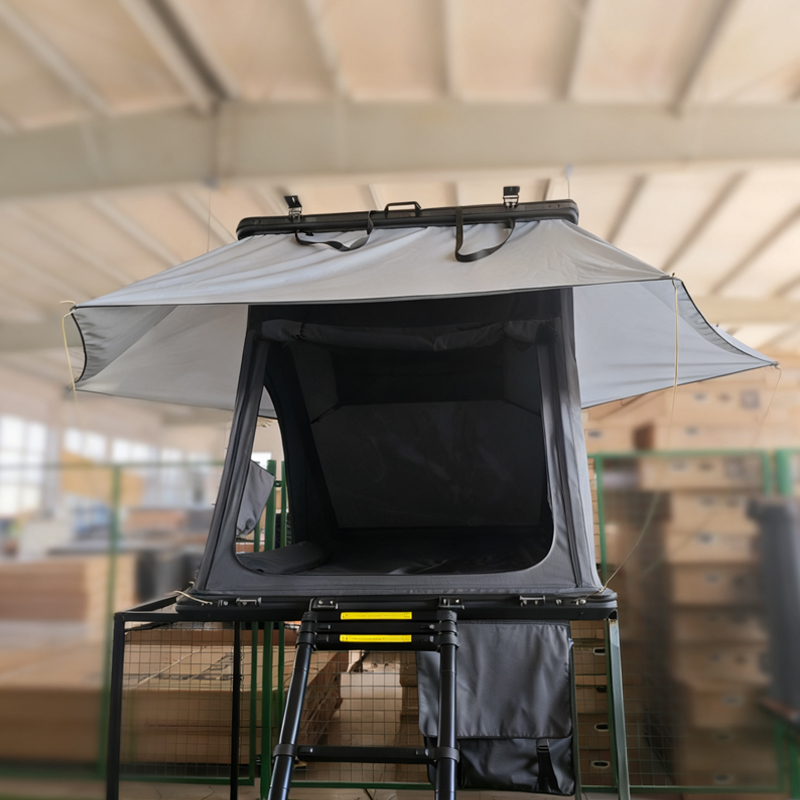
For buyers comparing different tent configurations, light aluminum clamshell rooftop tents provide another product reference. Compare the tent's construction, dimensions, and weight before selecting a compatible rack.
Tip: Ask suppliers to confirm accessory mounting compatibility in writing. This reduces installation uncertainty for distributors and end customers.
There is no single rack design for every Jimny owner. The right choice depends on the tent, vehicle version, and camping equipment. Use your actual requirements to narrow the options.
Crossbars are suitable for simple camping setups. They work well when the tent has compatible mounting channels and requires only a few support positions.
They also reduce unnecessary roof coverage. This can help keep the complete installation relatively simple. Owners who rarely carry additional roof accessories may find this approach practical.
However, check the approved bar spacing and load capacity. Do not assume two bars can support every tent. Follow the tent manufacturer's mounting requirements.
A compact platform suits owners who need several mounting positions. It can accommodate selected accessories alongside a rooftop tent. This provides more flexibility for longer trips.
The trade-off is additional weight and potentially greater wind resistance. Check whether the platform's extra mounting space offers real value. It should not compromise the vehicle's load restrictions.
If you prefer a hard-shell configuration, compare options such as hard-side rooftop camping tents. Their closed dimensions and mounting hardware can help determine the platform size required.
Before purchasing, confirm the exact Jimny generation and body configuration. Different versions may use different roof structures and attachment systems. Never assume that a rack fits every model year.
Next, compare four essential specifications:
Checkpoint | What to Confirm |
|---|---|
Vehicle | Exact Jimny model and roof configuration |
Roof rack | Dimensions, weight, and load rating |
Rooftop tent | Net weight, footprint, and rail spacing |
Installation | Approved brackets and fixing positions |
Finally, inspect every connection before driving. Follow the specified tightening sequence and torque values. Recheck fasteners after the initial journey if the manufacturer recommends it.
For larger camping groups, a four-person pop-up aluminum rooftop tent may also be worth comparing. However, capacity alone should never determine suitability for a Jimny.
Note: Vehicle fitment, rack capacity, and tent weight must all be verified independently. A compatible mounting bracket cannot override the vehicle's roof load limit.
Choosing the right Suzuki Jimny roof rack requires careful attention to fit, weight, and load capacity. Compact crossbars suit minimalist camping, while low-profile platforms offer greater flexibility.
Suzhou Maitop provides diverse rooftop tent solutions, including lightweight aluminum clamshell and hard-shell pop-up designs. These products help campers build practical setups for different outdoor needs.
A: Compact crossbars suit lightweight setups. Low-profile platforms offer more mounting flexibility.
A: Check dynamic roof load limits and total installed weight before buying.
A: Not always. Verify mounting brackets, rail spacing, and vehicle specifications.
A: Lightweight aluminum racks reduce added roof weight while providing structural support.
A: Measure tent dimensions, mounting rails, and opening clearance before installation.