Views: 0 Author: Site Editor Publish Time: 2026-11-24 Origin: Site
A long outdoor table does not always need center legs. But how far can its tabletop safely span? The answer depends on material, thickness, and frame design. This guide explores outdoor table rectangular span limits, support options, and ways to prevent sagging.
The maximum unsupported span is the distance between structural support points. It is not the full length of the table. For example, a 2.4-meter table may have legs near both ends and a central support beam underneath. Its tabletop length is 2.4 meters, but its unsupported sections are much shorter.
Several factors determine the safe span. These include material stiffness, panel thickness, tabletop width, frame depth, and load position. The type of support also matters. A panel resting on two simple supports behaves differently from one fixed into a rigid frame.
A table used for light dining has different requirements from one used for catering equipment. Plates and tableware create moderate distributed loads. Heavy serving equipment creates concentrated loads. People may also lean against the edges. Each condition changes the forces acting on the tabletop.
Therefore, there is no reliable universal span limit for an outdoor table rectangular design. A safe value must come from the complete structural design. It should account for the tabletop, frame, joints, fasteners, and intended use.
Material stiffness is one of the first factors to check. Stiffer materials generally resist bending more effectively under similar conditions. However, stiffness alone does not determine the result. Panel geometry and support conditions also affect deflection.
The load pattern is equally important. A heavy object placed at the center can create a different bending response from an evenly distributed load. Edge loading may also cause twisting. Designers should identify the expected load before selecting a span.
The support arrangement completes the picture. A tabletop supported along two edges has different structural behavior from one attached to a rigid perimeter frame. A strong frame can transfer loads toward the legs. Weak joints may still allow movement.
Thickness can improve bending resistance, but the relationship depends on the material and panel construction. A thicker solid panel usually resists bending better than a thinner panel of the same material. Yet added thickness also increases weight and material cost.
Hollow-core and molded panels require a different assessment. Their internal ribs or cavities contribute to structural performance. A panel's overall depth may be greater than its solid material thickness. Buyers should request construction details rather than compare thickness figures alone.
For example, one listed outdoor folding table uses a 40 mm HDPE top. This figure describes the product's stated tabletop thickness. It does not establish a 40 mm panel's unsupported span or load capacity.
Tabletop width affects how loads spread across the panel. A wider panel may distribute some loads over a larger area. However, it can also increase the distance between side supports. The actual effect depends on the frame and panel geometry.
Load position matters during daily use. A heavy appliance near the center may produce significant bending. A person leaning on one corner can create local stress and twisting. Designers should assess both central and edge loading.
Overhang length also needs attention. A tabletop extending beyond its supporting frame behaves like a cantilever. The longer the overhang, the greater the bending demand under the same load. This is why support location matters as much as overall table length.
Product dimensions do not prove structural capacity. A table listed at 1.8 or 2.4 meters may use several legs, crossbars, or a full perimeter frame. Its overall length cannot be treated as one unsupported span.
Intended use changes the design requirement. A patio dining table may carry dishes and small accessories. A banquet table may hold catering equipment and heavy serving trays. Commercial buyers should also consider repeated setup, transport, and loading cycles.
A reliable limit needs defined test conditions. These include load magnitude, load position, support arrangement, test duration, and acceptable deflection. Without these details, a single span figure can mislead buyers and manufacturers.
Engineers often begin with beam theory. They model the tabletop or frame as a structural member. The calculation considers material properties, cross-section geometry, load, and support conditions. It can help compare design options before building a prototype.
Deflection is the amount a structure bends under load. Bending moment describes the internal action caused by applied forces. Both are useful when evaluating long tabletops. The model must still reflect the real assembly, including joints and connections.
For a custom outdoor table, use calculations as an initial design check. Then test a representative prototype. Measure movement at the center and near unsupported edges. Record permanent deformation after unloading. This provides more useful evidence than relying on dimensions alone.
Note: A calculation based only on the tabletop panel may overlook weak frame joints. Evaluate the complete table assembly before approving production.
Material selection affects stiffness, weight, outdoor durability, and maintenance. However, no material guarantees a long unsupported span by itself. Panel design and frame support remain essential.
HDPE, ABS, and plywood are used in different furniture applications. Each has distinct structural characteristics. Buyers should compare the actual grade, thickness, internal construction, and connection method. They should also consider heat, moisture, and UV exposure.
Material | Key design consideration | Structural assessment |
|---|---|---|
HDPE | Panel thickness and molded structure | Check deflection and temperature effects |
ABS | Panel geometry and frame support | Confirm panel stiffness and connection strength |
Plywood | Layer construction and moisture protection | Check bending strength and edge durability |
HDPE is commonly used for outdoor furniture. It resists moisture and is easy to clean. Its flexibility can be useful in portable products. However, flexibility may also lead to visible deflection under sustained loads.
Panel thickness and internal construction affect performance. A solid panel and a ribbed molded panel do not behave identically. The frame must support the panel at suitable points. Fasteners should also allow for the material's movement.
The Ai-Cathlon product listing describes a 40 mm HDPE tabletop. It also identifies a powder-coated metal frame and several table length options. These details show how panel and frame specifications work together. They do not provide a verified unsupported-span rating.
ABS is used in furniture components that need a formed surface and practical durability. Its performance depends on the grade, panel thickness, and manufacturing process. A product description alone cannot confirm its bending capacity.
The frame plays a major role in a long ABS tabletop. Metal rails can support the panel and transfer loads toward the legs. A well-designed connection also reduces local movement around fasteners. Unsupported areas should remain within the verified design limits.
Womei's listed table uses an ABS plastic top and a powder-coated metal frame. The supplier also states that size and color customization are available. This is a useful example of a combined panel-and-frame product. It does not establish a maximum unsupported span.
Plywood consists of bonded wood layers. The direction and quality of these layers affect bending behavior. Panel thickness, veneer quality, adhesive, and edge protection should all be considered. These factors matter when the table is used outdoors.
Moisture can affect plywood over time. Water entering exposed edges may weaken the panel or damage its layers. A suitable coating and sealed edges help reduce this risk. Regular inspection remains important in outdoor environments.
A Xinsheng product listing describes a plywood tabletop and a 30 × 30 × 1.0 mm steel tube frame. It offers 1.5 m, 1.8 m, and 2.4 m table sizes. These are overall product dimensions, not unsupported-span test results.
Tip: Ask suppliers for panel construction drawings and frame details. These documents help buyers compare products beyond surface material and overall dimensions.
A tabletop does not work alone. The frame carries loads and transfers them to the legs or other supports. A strong panel can still perform poorly if the frame twists or its joints loosen.
For commercial buyers, the frame deserves the same attention as the tabletop. Check the rail profile, wall thickness, weld quality, fasteners, and corrosion protection. These details influence stability during regular use.
Steel and aluminum frames can support long tabletops. Steel generally offers high stiffness for a compact section. Aluminum can reduce overall weight. The best option depends on the required strength, profile design, and outdoor conditions.
Frame depth can improve resistance to bending. A deeper rail may provide greater structural stiffness than a shallow rail of similar material. However, connection design still matters. Weak joints can reduce the benefit of a strong frame.
The frame should transfer loads evenly toward the legs. Poor alignment can create local stress around attachment points. Buyers should inspect the connection between the tabletop and frame. They should also confirm that the legs remain stable under uneven loading.
Crossbars provide additional support beneath the tabletop. They divide a long panel into shorter unsupported sections. This can reduce bending and improve load distribution. Their position should match the expected load pattern.
A perimeter frame supports the edges. Additional crossbars can support the central area. Some designs also use concealed reinforcement rails. These solutions can improve stability without adding visible center legs.
The reinforcement must connect securely to the main frame. A loose crossbar may provide little practical benefit. Check welds, bolts, brackets, and contact points. For folding tables, confirm that reinforcement does not interfere with folding or locking mechanisms.
Support spacing is the distance between effective structural supports. Smaller spacing generally reduces the unsupported section. It can also reduce deflection under similar loading conditions. However, extra supports may increase weight and affect legroom.
The correct spacing depends on the panel and frame. A thin plastic panel may need closer support than a deeper reinforced panel. A heavy commercial table may require more support than a light picnic table. Avoid choosing spacing based only on appearance.
A useful design process starts with the intended table length and load. Next, identify the frame layout and panel properties. Then calculate likely deflection and verify the result through testing. This process helps determine whether extra support is necessary.
A cantilever design can create a clear space beneath the tabletop. It uses a fixed structural connection to support an overhanging section. This can suit modern outdoor dining areas. However, it requires careful frame and connection design.
Removing visible center legs does not remove the need for structural support. Loads still need a path toward the floor, wall, or base. The supporting structure must resist bending and rotation. Stability also depends on the base and anchoring method.
A cantilever transfers loads back toward its fixed support. This creates bending moment near the connection. As the overhang becomes longer, the structural demand usually increases. The support must resist both bending and rotation.
The tabletop alone may not provide enough stiffness. A steel frame or reinforced base may carry most of the load. The connection between the frame and support must be designed for the expected forces. Weak bolts or thin brackets can become failure points.
Designers should also consider stability against tipping. A cantilevered table may create an unbalanced force around its base. The base needs enough strength and footprint. Anchoring may be required for some installations.
There is no standard overhang length suitable for every table. The safe distance depends on material, section depth, frame stiffness, load, and connection design. A small decorative overhang has different requirements from one supporting heavy equipment.
Longer overhangs increase bending demand. They may also increase deflection at the free edge. The tabletop can feel unstable even before material failure occurs. Buyers should consider both structural safety and user comfort.
For custom projects, request an overhang calculation or test report. The supplier should state the applied load and support conditions. A sample test should reproduce the intended installation. Do not rely on photographs or appearance to judge capacity.
Wall-mounted tables can keep the floor area clear. They may suit patios, outdoor counters, or narrow dining spaces. The wall must be strong enough to carry the loads. Anchors and brackets must match the wall construction.
Side-supported designs use strong end frames or bases. They can create an open center area. However, the end supports may experience higher bending forces. The tabletop and frame must resist these forces without excessive movement.
These structures need careful installation planning. Check the substrate, fastener type, exposure to weather, and access for maintenance. For public or commercial spaces, consider misuse and accidental leaning. A design should remain stable under realistic conditions.
Tip: For a clean, leg-free appearance, explore concealed steel rails or side frames first. They may offer a more practical solution than a fully unsupported panel.
Excessive unsupported span can affect both performance and service life. The first sign may be visible sagging. Later problems can include cracks, loose joints, or permanent deformation.
Outdoor furniture also faces changing conditions. Heat, moisture, UV exposure, and repeated handling can affect materials and connections. A table designed only for a short indoor test may not perform the same way outdoors.
Sagging occurs when the tabletop bends under load. Some deflection may be temporary. The panel may return to its original shape after the load is removed. Excessive or repeated bending can cause lasting deformation.
Long-term loading can be important for plastic materials. A tabletop may gradually deform under a sustained load. Temperature can influence this behavior. Designers should consider both short-term and long-term performance.
Inspect the center and edges during testing. Look for uneven surfaces and changes in alignment. Record deflection under load and after unloading. These measurements help identify whether the structure meets the intended use.
High bending stress can damage the tabletop. Cracks may begin near holes, corners, or fasteners. These areas often experience concentrated stress. Poor edge finishing can make the problem worse.
Joints can fail even when the panel remains intact. Loose bolts, weak welds, and thin brackets may allow movement. Repeated folding can also affect hinge and locking components. These details are important for portable event tables.
Frame deformation can make the entire table unstable. Bent rails may prevent the legs from sitting evenly. The table may wobble or fail to fold correctly. Buyers should inspect the complete structure rather than focus only on the tabletop.
Temperature changes can cause materials to expand or contract. Plastic panels may move differently from metal frames. If the connection does not allow suitable movement, stress can build around fasteners. This can lead to cracks or distortion.
Moisture is a key concern for wood-based panels. Water can enter damaged coatings and exposed edges. UV exposure may also affect some plastics and finishes. Material selection should match the expected outdoor environment.
Repeated transport and setup create additional wear. Folding legs, hinges, and frame joints need regular checks. Commercial operators should include these points in maintenance schedules. Early inspection can prevent small defects from becoming larger failures.
A long table can have an open appearance without relying on an unsupported tabletop. The key is to hide or integrate the support structure. Designers can use concealed rails, deeper frames, and carefully placed side supports.
The right design balances appearance, strength, weight, and cost. It should also suit the table's daily use. A portable picnic table has different needs from a fixed outdoor dining table. Buyers should define these needs before requesting quotations.
Start by defining the table's purpose. Consider the expected load, number of users, cleaning needs, and outdoor exposure. Then compare suitable materials. Do not select a panel based on thickness alone.
HDPE may suit outdoor furniture that needs moisture resistance and easy cleaning. ABS may suit formed furniture components. Plywood can work in suitable designs when edges and surfaces receive proper protection. Each option requires a suitable support frame.
If portability matters, consider total weight. A very thick panel may improve stiffness but make transport harder. A reinforced structure may provide a better balance. Ask suppliers to explain the panel construction and frame arrangement.
Concealed reinforcement can preserve an open look. Rails can sit beneath the tabletop or inside a perimeter structure. Crossbars can also be positioned away from the main seating area. The goal is to support the panel without obstructing users.
A deeper frame profile may improve stiffness. Strong corner joints can reduce unwanted movement. The design should also prevent twisting when loads are uneven. For folding tables, the locking system must remain secure during use.
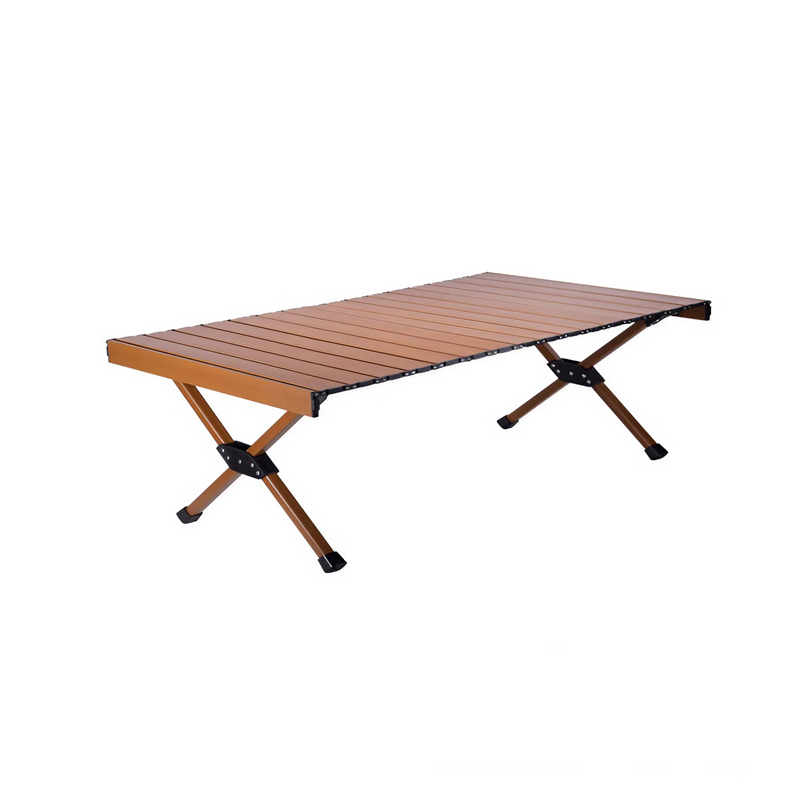
The final choice depends on the application. Event furniture may prioritize folding and transport. Fixed patio furniture may prioritize stability and appearance. A compact portable camping table offers a different design reference from a long commercial dining table.
Testing should reflect real use. Apply a distributed load across the tabletop. Then test concentrated loads at likely stress points. Measure deflection at the center and near unsupported edges.
Record the support arrangement and load details. Include the test duration and environmental conditions. Check the table after unloading. Permanent deformation, loose joints, or cracks indicate that the design needs review.
A prototype test should also include stability checks. Apply reasonable lateral forces and inspect the legs. For folding tables, test the locks and hinges repeatedly. Keep records so future production batches can be compared.
Note: Do not publish a load rating unless its test method and conditions are documented. Buyers need comparable results, not unsupported capacity claims.
The maximum unsupported span depends on material, thickness, frame design, and load distribution. Proper reinforcement helps prevent sagging and improves stability.
Suzhou Maitop offers practical outdoor furniture solutions, including portable camping tables. Their lightweight, foldable designs support convenient transport and flexible outdoor use.
A: It depends on material, thickness, frame design, and load.
A: Material stiffness, support spacing, and load position matter.
A: Yes, reinforced frames can support longer overhangs.
A: Add crossbars and reduce unsupported support spacing.
A: HDPE, ABS, and plywood require different structural designs.