Views: 0 Author: Site Editor Publish Time: 2026-11-22 Origin: Site
An ultra lightweight rooftop tent must do more than reduce weight. Its core must also provide reliable strength and stiffness. But which material saves the most grams? This article compares aluminum honeycomb, foam, and composite cores to help buyers choose the right construction.
A rooftop tent panel usually has several layers. The core sits between two outer skins. Together, they form a sandwich structure. This design can improve stiffness without using a solid, heavy panel.
The core contributes to the panel's total mass. However, it is not the only factor. Outer skins, adhesives, reinforcements, and fittings also add weight. Therefore, comparing core density alone can produce misleading results.
A lightweight rooftop tent core material should meet several requirements. It needs suitable compression resistance and bonding strength. It must also support the loads expected during use. The best option balances these properties.
An aluminum honeycomb core uses thin metal walls. These walls form a repeating hexagonal cell pattern. Most of the panel's internal volume remains empty. This reduces material use while creating a structured support system.
The cells help distribute loads across the panel. When bonded to suitable outer skins, they create a stiff sandwich structure. This makes honeycomb useful for lightweight floors and structural panels.
An aluminum honeycomb rooftop tent floor can offer good stiffness without using a solid aluminum plate. However, cell size and foil thickness matter. Bonding quality also affects performance. A well-designed panel needs more than a lightweight core.
Foam cores provide another way to reduce panel weight. They use lightweight materials to fill the space between outer skins. Common options include closed-cell structural foam and other engineered foam materials.
Foam core rooftop tent construction can offer useful thermal insulation. It may also provide impact absorption. These features can benefit campers in changing weather conditions.
However, different foam densities behave differently. Low-density foam may save more weight. Higher-density foam may offer better compression resistance. Buyers should check the material grade and finished panel specifications.
Composite sandwich panels combine a core with stronger outer skins. The core may use honeycomb or structural foam. The skins may use aluminum, fiberglass, or reinforced composites.
Each layer performs a different function. The core provides thickness and internal support. The skins carry much of the bending stress. Adhesives connect the layers into one structure.
A lightweight composite rooftop tent panel can balance several performance needs. Manufacturers can adjust the core and skin combination. This allows them to target specific weight and stiffness requirements.
There is no universal winner between honeycomb and foam. Their performance depends on the complete panel design. Thickness, density, skin materials, and bonding all matter.
Honeycomb often performs well when panel stiffness is important. Its cell geometry supports lightweight sandwich construction. Structural foam can be useful when insulation and impact absorption matter.
The rooftop tent strength-to-weight ratio should reflect tested panel performance. Buyers should compare bending stiffness and compression resistance. They should also review the finished panel's weight.
Core type | Main advantage | Main consideration |
|---|---|---|
Aluminum honeycomb | High stiffness potential at low weight | Bonding and edge protection |
Structural foam | Low weight and thermal insulation | Density and compression resistance |
Composite sandwich | Flexible material combinations | Skin and adhesive quality |
The weight saved depends on the panel's surface area and thickness. Core density is another important variable. A simple calculation can estimate the core's mass.
Core weight = Density × Panel area × Core thickness
For example, consider a panel measuring one square meter. Assume its core is 20 mm thick. If the core density is 50 kg/m³, its mass is approximately one kilogram.
This example only describes the core. It excludes outer skins and adhesives. It also excludes reinforcement and mounting hardware. The finished panel will weigh more.
Manufacturers should compare complete panels under the same conditions. They should use identical dimensions and similar performance requirements. This makes weight-saving results more meaningful.
Two panels can use the same material. Yet their weight and strength may differ significantly. Cell size, wall thickness, and panel depth influence performance.
Foam density also affects the final result. Outer skin thickness changes panel mass. Poor bonding can reduce structural reliability.
Manufacturing quality matters just as much. Inconsistent adhesive coverage can create weak areas. Moisture entering exposed edges may also damage certain constructions. Buyers should evaluate the finished panel rather than the core alone.
Honeycomb panels use connected hexagonal cells. Their geometry creates a lightweight internal framework. This structure distributes forces across multiple cell walls.
When a load reaches the panel, several cells help resist deformation. The outer skins also contribute to load transfer. Together, these layers create a more efficient structure than a simple thin sheet.
However, performance depends on the design. Cell dimensions and foil thickness affect the result. The bonding process also determines how effectively the structure transfers loads.
Panel thickness plays an important role in bending stiffness. A deeper sandwich structure can resist bending more effectively. It does this without filling the entire section with solid material.
This principle makes honeycomb attractive for lightweight construction. Manufacturers can use thin skins around a deeper core. The result can offer useful stiffness at a relatively low mass.
However, increasing thickness is not always the answer. It may affect storage dimensions and production costs. Engineers must balance stiffness, weight, and available space.
Rooftop tent floors need to support occupants and equipment. They also face repeated loading during camping. A suitable sandwich panel can provide structural support without unnecessary solid metal.
Hard shell designs have different requirements. Their panels need to protect the folded tent. They must also withstand transportation and environmental exposure.
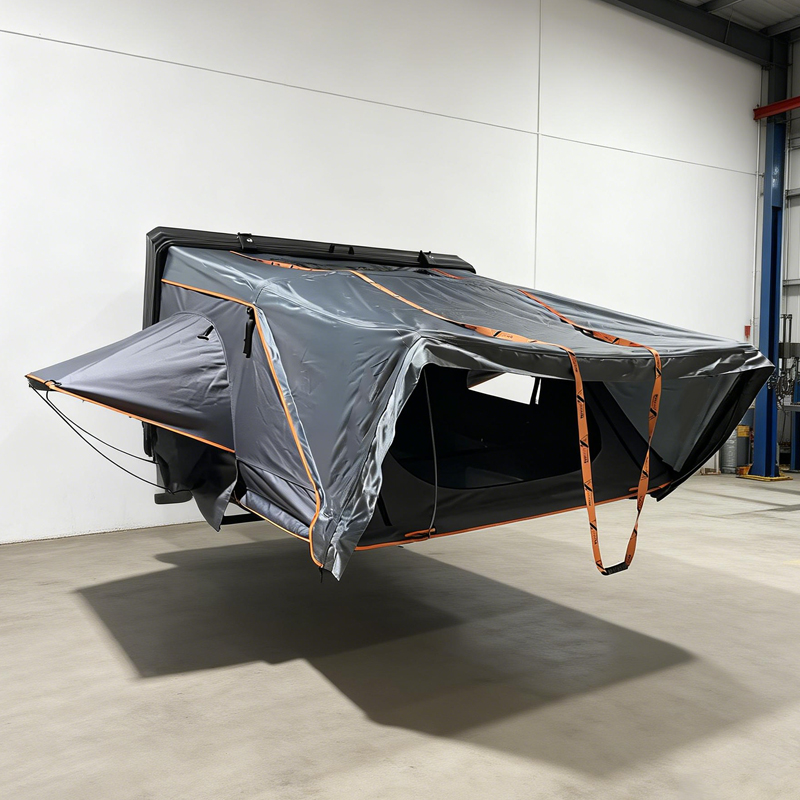
For buyers comparing these designs, a 4-person pop-up aluminum rooftop tent provides a useful product reference. Its hard shell construction illustrates the role of structural design. However, buyers should confirm its exact core construction separately.
Honeycomb and foam cores offer different engineering advantages. Honeycomb uses thin walls to create an open structure. Foam uses a continuous lightweight material.
Both can reduce panel mass. Their final performance depends on density and thickness. Outer skins also affect the finished structure.
Comparison factor | Aluminum honeycomb | Structural foam |
|---|---|---|
Weight | Depends on cell and foil design | Depends on foam density |
Stiffness | High potential in sandwich panels | Depends on core grade and skins |
Insulation | Requires additional insulation layers | Often provides better insulation |
Compression | Depends on cell geometry | Depends on foam density |
Moisture | Needs protected edges and suitable bonding | Closed-cell grades resist moisture better |
Buyers should request actual test results. They should compare panels of equal dimensions. This avoids choosing materials based on marketing descriptions alone.
Moisture can affect long-term panel performance. Aluminum does not absorb water like many porous materials. However, corrosion can occur under unsuitable conditions.
Honeycomb panels need careful edge sealing. Water entering exposed cells may affect bonding. Dissimilar materials can also create corrosion risks if poorly designed.
Foam performance depends on its chemistry. Closed-cell foam generally limits water absorption. However, cut edges and damaged skins may still allow moisture into the panel assembly.
Note: Ask suppliers about edge sealing, adhesive compatibility, and environmental testing before placing bulk orders.
Foam cores generally offer better thermal insulation. Their internal structure slows heat transfer. This can improve comfort in colder conditions.
Aluminum honeycomb is not primarily an insulation material. Its metal cell walls conduct heat. Additional insulation layers may therefore be necessary.
The choice depends on the camping environment. Warm-weather users may prioritize low weight and stiffness. Cold-weather users may value insulation more highly.
The core is only one part of the tent. The shell and frame also affect total weight. Their design can create major differences between models.
Aluminum alloy frames offer a useful balance. They provide structural support without relying on heavy steel construction. Shell thickness and reinforcement placement still require careful optimization.
For example, a low-profile hard side-opening Jeep rooftop tent illustrates how overall structure affects product design. Buyers should compare its complete specifications rather than focusing only on the shell material.
Tent fabrics contribute to both weight and weather protection. Lightweight ripstop fabrics can reduce fabric mass. Their strength and waterproof performance must still meet application needs.
Aluminum alloy poles can replace heavier alternatives. However, pole diameter and wall thickness affect stiffness. A lighter pole must still withstand expected wind loads.
Hardware also adds weight. Hinges, latches, gas struts, and mounting brackets all contribute. Manufacturers should optimize these components without reducing safety.
The mattress affects the total weight of a rooftop tent. Thicker mattresses may improve comfort. However, they can increase mass and reduce interior clearance.
Ladders and crossbars also add weight. Lighting systems and storage accessories contribute further. These items should be included in the complete product specification.
Buyers should compare standard and optional configurations. A lightweight base model may become much heavier after accessories are added. Clear weight information helps prevent purchasing misunderstandings.
Vehicle roof limits are essential when selecting a rooftop tent. Dynamic load refers to the load supported while driving. Static load refers to the load supported when parked.
These ratings are not interchangeable. The vehicle manufacturer sets the approved limits. Roof rack manufacturers may also specify separate limits.
Buyers must follow the applicable vehicle and rack requirements. They should include the tent and mounting hardware. Occupant loads must also be considered under the relevant parked-use specifications.
Product weight should include the complete standard configuration. This means the shell, base, fabric, frame, and hardware. Optional accessories should be listed separately.
Packaging weight is different from product weight. Shipping cartons and protective materials add mass. Buyers should not use gross package weight as the tent's net weight.
Installation requirements also matter. Heavy tents may require additional help during mounting. Buyers should check bracket spacing and roof rack compatibility before ordering.
Different camping conditions need different panel properties. Honeycomb sandwich panels may suit applications requiring high stiffness and low weight. Structural foam may be preferable when insulation is important.
The vehicle also affects material selection. Smaller SUVs may have tighter roof load limits. Larger trucks may allow different configurations.
Buyers should compare technical specifications before choosing. A suitable panel must meet both weight and performance needs. Material names alone cannot guarantee a reliable result.
Compression tests measure how a panel responds to applied pressure. They help identify crushing and deformation risks. These results are useful when evaluating rooftop tent floors.
Bending tests examine panel stiffness. They measure how much a panel deflects under a defined load. Test conditions should remain consistent between samples.
Buyers should request test methods and results. They should also check specimen dimensions and loading conditions. This makes comparisons more reliable.
Sandwich panels depend on strong bonding. The core and outer skins must work together. Weak adhesive connections can cause separation during use.
Bonding tests help evaluate interface strength. Environmental testing examines performance under changing conditions. These tests may include humidity and temperature cycling.
Water exposure testing is also important. It helps identify problems around edges and joints. Manufacturers should document any changes after testing.
Manufacturers should measure both panel weight and complete tent weight. Each measurement needs a clear definition. This avoids confusion between net and gross weights.
Batch checks help maintain production consistency. Material traceability also supports quality control. Suppliers should record core grades and skin specifications.
For B2B buyers, technical documentation supports better purchasing decisions. Request material data sheets and relevant test reports. Also confirm whether the reports match the production model.
Not always. Aluminum honeycomb uses thin metal walls and empty cells. Structural foam uses a continuous lightweight material.
The result depends on density and thickness. Outer skins and adhesives also affect panel weight. Buyers should compare complete panels rather than core materials alone.
A honeycomb core can improve panel stiffness. Its cell structure supports load distribution. However, strength depends on the complete sandwich construction.
Skin materials and bonding quality remain important. Panel thickness also affects bending performance. Structural testing is necessary before making strength claims.
There is no universal answer. Aluminum honeycomb, structural foam, and composite panels can all reduce weight. Their performance varies by design.
The best choice depends on load requirements and insulation needs. Buyers should compare complete panel weight and test results. Vehicle compatibility must remain a priority.
Choosing the lightest core is not simply about selecting the lowest-density material. Aluminum honeycomb offers strong stiffness potential. Structural foam provides useful insulation and impact absorption. Composite panels combine different materials to meet specific requirements.
The best solution depends on panel design. Core density, thickness, outer skins, and bonding all influence performance. Buyers should compare complete structures before making decisions.
For an ultra lightweight rooftop tent, weight reduction must work alongside safety and durability. Request detailed specifications and test reports. This helps identify a product that suits both vehicle limits and camping requirements.
A: It depends on density, thickness, and panel design.
A: Honeycomb offers high stiffness; foam provides insulation.
A: It replaces solid material while supporting outer skins.
A: Yes. Closed-cell foam provides thermal insulation.
A: Core material, skin type, bonding, and manufacturing quality.