Views: 0 Author: Site Editor Publish Time: 2026-05-20 Origin: Site
Have you ever arrived at a campsite after a long day of driving, only to spend another 30 minutes searching for flat ground and setting up a traditional tent? For many outdoor enthusiasts, this inconvenience is one of the biggest drawbacks of conventional camping. As overlanding and vehicle-based travel continue to grow in popularity, rooftop tents have emerged as a practical solution that combines comfort, mobility, and convenience.
Unlike traditional ground tents, a rooftop tent creates an elevated sleeping platform mounted directly on a vehicle. This design not only simplifies setup but also improves comfort, safety, and weather protection. Whether you're planning weekend camping trips, cross-country road adventures, or serious overlanding expeditions, understanding the advantages of rooftop tents can help you choose the right camping solution.
As overlanding and vehicle-based travel continue to grow, rooftop tents have become a preferred camping solution for modern travelers.
Unlike traditional ground tents, rooftop tents are mounted directly on a vehicle roof, turning your car into a mobile sleeping system. This design creates a combination of speed, safety, comfort, and durability that ground camping cannot easily match.
The key advantages can be summarized in four core areas:
Faster setup and greater convenience
Improved sleeping comfort
Enhanced safety in outdoor environments
Stronger weather resistance and durability
One of the biggest advantages of rooftop tents is instant deployment.
Most modern rooftop tents can be fully opened in 30–60 seconds, especially hard-shell and gas-strut assisted models.
In contrast, ground tents require finding flat terrain, cleaning rocks and debris, assembling poles, fixing stakes and ropes, and adjusting tension. This process often takes 10–30 minutes depending on experience and weather conditions.
Rooftop tents remove campsite dependency completely, allowing users to stop and sleep almost anywhere suitable for parking.
This process can take anywhere from 10 to 30 minutes depending on weather conditions and user experience.
Feature | Rooftop Tent | Ground Tent |
|---|---|---|
Average Setup Time | 30s-60s | 10–30 Minutes |
Terrain Requirement | None | Flat Ground Required |
Setup Complexity | Low | Medium to High |
Bad Weather Setup | Easy | Difficult |
For travelers who move frequently between campsites, this time-saving advantage quickly becomes one of the most appreciated benefits.
Comfort is a major factor in long outdoor trips.
Rooftop tents significantly improve sleep quality by eliminating common ground issues such as uneven terrain, mud and moisture, rocks and roots, and insects or ground pests.
Most models also include built-in high-density foam mattresses, an elevated sleeping platform, and better airflow and ventilation.
This elevated structure reduces condensation and improves sleep comfort, especially in humid or coastal environments.
Sleeping above ground provides a natural safety advantage.
Rooftop tents reduce exposure to snakes, insects, rodents, and small wildlife. They also offer better protection against flooded or wet ground conditions.
In addition, elevation improves security when camping in remote or unfamiliar locations, increasing peace of mind during overnight stops.
Modern rooftop tents are engineered for extreme outdoor conditions.
Common materials include aluminum hard-shell panels, reinforced frames, waterproof Oxford fabric, UV-resistant coatings, and heavy-duty hardware.
Compared with ground tents, rooftop tents provide better stability in strong wind, no risk of ground flooding, improved structural rigidity, and longer lifespan in harsh environments.
Because they are mounted on a vehicle, they are less affected by terrain conditions such as mud, sand, or uneven soil.
This combination provides excellent protection against rain, wind, and prolonged sun exposure.
Weather Condition | Rooftop Tent | Ground Tent |
Heavy Rain | Excellent Protection | Moderate Risk |
Strong Wind | High Stability | Variable Stability |
Muddy Terrain | No Impact | Significant Impact |
UV Exposure | High Resistance | Moderate Resistance |
Unlike ground tents that rely heavily on stake placement and soil conditions, rooftop tents benefit from the stability of the vehicle platform, resulting in greater structural reliability.
As rooftop tents continue to evolve, choosing the right model is no longer just about size. It depends on structure, materials, deployment system, and real usage scenarios.
Modern rooftop tents are generally divided into several key categories, each designed for different travel needs and vehicle types.
Hard-shell and soft-shell rooftop tents are the two main product categories in the market.
Soft-shell tents offer larger internal sleeping space, lower purchase cost, and flexible family camping use. They are ideal for casual campers who prioritize comfort and affordability over speed.
Hard-shell tents focus on fast setup, improved weather resistance, higher durability, and better aerodynamics during driving. They are more suitable for frequent travelers and overlanding users who need efficiency and reliability.
Beyond shell type, rooftop tents also differ in their opening mechanisms.
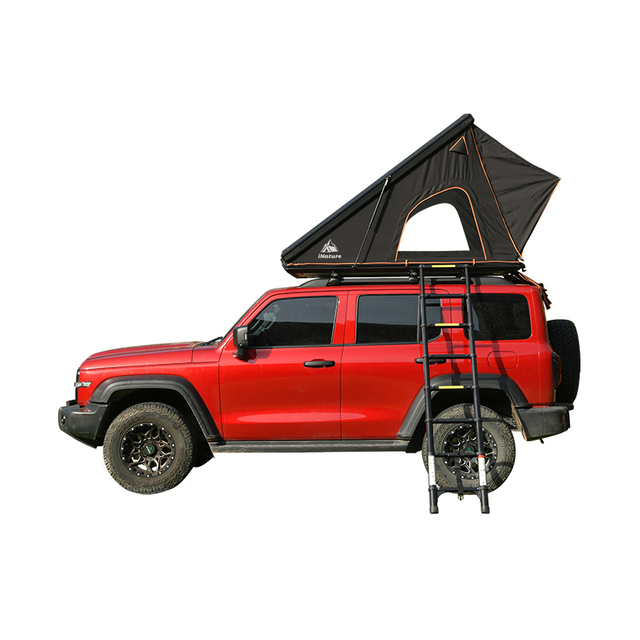
Clamshell designs use a wedge-shaped structure that allows extremely fast deployment. They are lightweight, aerodynamic, and perform well in strong wind conditions, making them ideal for fast-paced travel.
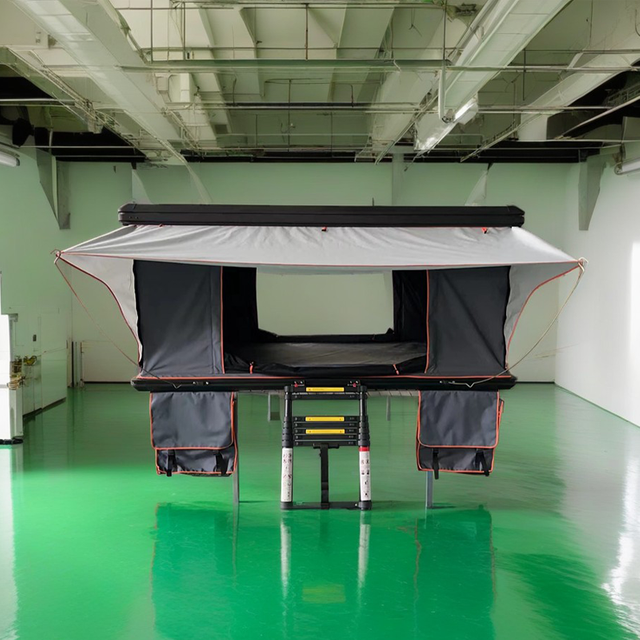
Side-opening tents provide a larger sleeping area and more interior comfort. They are often preferred by couples and families who value space over compactness.
Pop-up tents use gas-assisted or mechanical lift systems to enable near-instant setup. They offer a balance between convenience and usability, making them suitable for frequent camping trips.
Material choice plays a critical role in durability, weight, and long-term performance.
Modern rooftop tents increasingly use aluminum frame structures because they provide a strong balance between lightweight design and structural strength.
Aluminum materials offer high corrosion resistance, reduced roof load pressure, and improved long-term durability in outdoor environments. This makes them highly suitable for SUVs, trucks, and off-road vehicles used for extended travel.
Some premium models also use thermal insulation layers or honeycomb aluminum structures to improve rigidity and temperature control.
Although rooftop tents require a larger initial investment than traditional ground tents, they often provide greater long-term value.
Factor | Rooftop Tent | Ground Tent |
Initial Cost | Higher | Lower |
Maintenance Cost | Low | Moderate |
Average Lifespan | 5–10+ Years | 2–5 Years |
Replacement Frequency | Low | High |
For campers who travel regularly, the combination of durability, convenience, and comfort often justifies the higher purchase price.
A rooftop tent is ideal for:
Overlanding enthusiasts
Road trip travelers
SUV owners
Jeep owners
Truck campers
Families seeking greater camping comfort
It is especially valuable for travelers who frequently move between campsites and want a quick, hassle-free setup process.
Ground tents remain a practical solution for:
Backpackers
Hikers
Budget-conscious campers
Occasional campers
For users who prioritize low cost and portability over convenience, traditional tents continue to offer excellent value.
While both rooftop tents and ground tents provide outdoor shelter, rooftop tents clearly offer significant advantages in convenience, comfort, safety, weather resistance, and mobility.
Whether you prefer a lightweight soft-shell rooftop tent for weekend adventures or an aluminum hard-shell model for serious overlanding, modern rooftop tents provide a more efficient and enjoyable camping experience than traditional ground tents.
Maitop offers a complete range of rooftop tent solutions, including hard-shell, soft-shell, clamshell, side-opening, pop-up, and low-profile models designed for SUVs, Jeeps, trucks, and overlanding vehicles. By combining lightweight aluminum construction, rapid deployment systems, durable waterproof materials, and practical user-focused design, these tents help outdoor enthusiasts travel farther and camp more comfortably.
Most rooftop tents can be installed on vehicles equipped with properly rated roof rack systems, including SUVs, trucks, Jeeps, and many crossover vehicles.
Most modern rooftop tents can be deployed within one minute, while traditional ground tents often require significantly more setup time.
Yes. High-quality rooftop tents are designed to withstand heavy rain, strong winds, and prolonged outdoor exposure through reinforced structures and waterproof materials.
There may be a slight impact due to additional weight and aerodynamic drag, but modern low-profile designs help minimize these effects.
Yes. Integrated mattresses, elevated sleeping platforms, and improved ventilation make rooftop tents one of the most comfortable camping solutions available for vehicle-based travel.