Views: 0 Author: Site Editor Publish Time: 2026-07-12 Origin: Site
Aggressive marketing cycles in the pickleball industry create massive buyer fatigue. Brands constantly release shiny new paddles. You probably wonder if you actually need them. Equipment degradation is a physical certainty. Materials break down under repetitive impact stress. However, upgrading should always stem from measurable performance decline. You should not just chase new product releases. We wrote this guide to provide an evidence-based framework. We help you evaluate when existing gear holds back your game. You will learn to justify the return on investment for new items.
Every player deserves gear matching their current skill level. You will see how to spot vital upgrade signals. Stop guessing about your gear. Start making smart, data-backed replacement choices. This article removes the guesswork completely. We show you exactly what to check. You will discover how to identify true structural failure.
Play frequency, rather than calendar age, is the only accurate metric for determining baseline equipment lifespan.
Surface grit loss and honeycomb core crushing are the two primary physical drivers of paddle failure.
Court shoe degradation poses a higher immediate physical risk (injury) than paddle degradation (lost points).
Upgrading to a new equipment tier is only justified when your mechanical skill has outgrown your current gear's technical limitations.
Calendar age presents a deceptive metric. A paddle owned for two years might seem old. If you play once a month, it remains fresh. A three-month-old paddle faces severe stress if used daily. We must track play frequency instead. You cannot judge wear simply by looking at a purchase receipt. Measuring true pickleball paddle lifespan requires an honest look at your court hours.
We developed a frequency formula to establish realistic expectations. This chart outlines typical lifespans based on consistent weekly play. It assumes you use standard polymer core paddles.
Player Category | Play Frequency | Expected Lifespan | Primary Wear Mechanism |
|---|---|---|---|
Casual Player | 1 to 2 times/week | 1 to 1.5 years | Cosmetic scratching, slow grit loss |
Regular Player | 3 to 4 times/week | 4 to 6 months | Noticeable spin reduction, core softening |
Tournament Competitor | 5+ times/week | 2 to 3 months | Core crushing, complete surface smoothing |
You must also consider the cost-per-play assumption. This calculation rationalizes replacement budgets effectively. You spend $150 on a premium paddle. You play three times a week. That equals roughly twelve sessions a month. Over five months, you play sixty times. Your actual cost drops to $2.50 per session. This framework helps remove emotional attachments to old gear. It frames equipment depreciation purely as an ongoing sporting expense.
You must separate superficial cosmetic wear from structural failure. Edge guard scratches look bad. They rarely impact your actual game. Core crushing ruins your shots completely. You need a reliable evaluation framework. This section teaches you when a pickleball racket replacement becomes absolutely necessary.
Symptoms include a drastic sound change. A crisp "pop" turns into a hollow "thud." You will notice inconsistent power delivery. You swing exactly the same way. The ball travels entirely different distances. This creates immense frustration during competitive play.
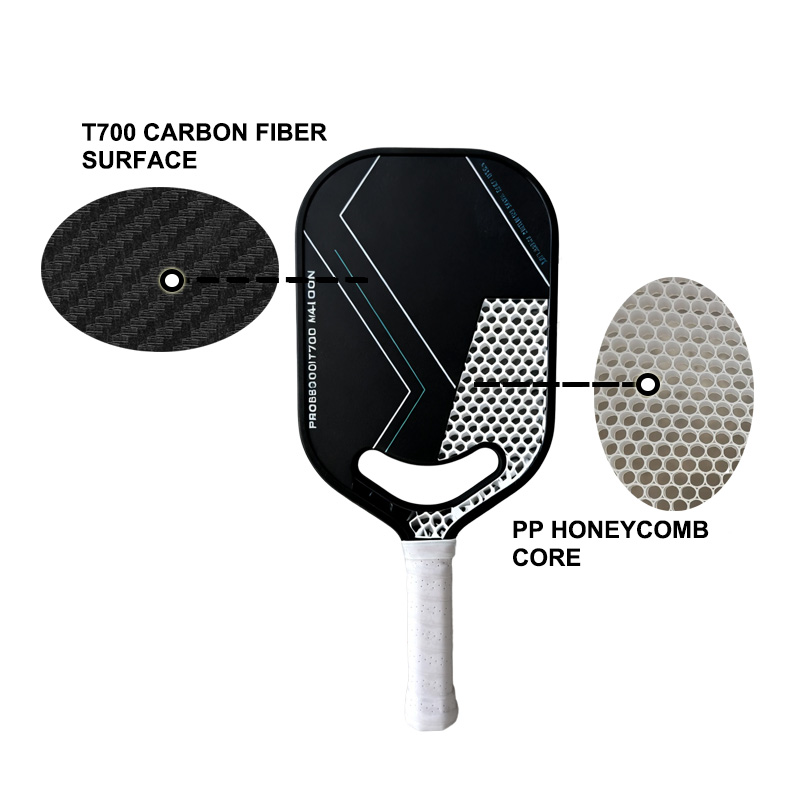
The mechanism behind this is simple. Paddles use polymer honeycomb cells inside. Repetitive impact stress weakens these delicate cells. A hard plastic ball repeatedly strikes the paddle face. Eventually, the honeycomb walls buckle. Sometimes they detach from the face entirely. This creates a "dead spot." Energy transfer fails completely in these zones. Your shots die mid-air.
You can perform a quick diagnostic check before your next match. Follow these three physical tests to assess structural health.
The Surface Test: Drag your fingernail lightly across the paddle face. Feel for uniform friction. A worn paddle feels glassy in the center sweet spot. It feels rough only near the edges. Uneven friction means inconsistent spin.
The Edge Guard Test: Inspect the plastic rim carefully. Check for loose sections. Gently pull the edge guard away from the face. A loose edge guard alters swing weight drastically. It creates distracting vibration upon impact.
The Core Press: Place your thumbs directly in the center sweet spot. Press down firmly. Listen for a subtle crunching sound. Feel for unusual softness. A healthy core feels entirely rigid. A crushed core yields slightly under thumb pressure.
Raw carbon fiber dominates the current market. Players prize it for massive spin generation. You must understand true carbon fiber paddle durability before spending your money. All surfaces degrade over time. We conduct a feature-to-outcome analysis here to explain why.
Manufacturing differences dictate lifespan heavily. You will primarily see two surface types: peel ply and spray-on grit.
Peel Ply Construction: Manufacturers press fabric into the resin during heating. They tear the fabric away after curing. This leaves durable microscopic ridges behind. These ridges grip the ball exceptionally well. They naturally resist wear longer.
Spray-on Grit: Factories spray abrasive particles onto a smooth paddle face. This feels very rough initially. Sandpaper-like surfaces wear down rapidly. Frictional forces scrape the particles away constantly. Your high-spin weapon becomes a low-spin liability within weeks.
Compliance and authoritativeness play huge roles. USAPA regulations strictly limit surface roughness. They use specialized tools to measure friction coefficients. Natural wear turns a legal, high-spin paddle into a perfectly smooth board. You lose your competitive advantage gradually. You might not even notice the daily decline.
We must address a necessary skeptical check. Ignore marketing claims promising "lifetime spin." Basic physics dictates friction loss. A hard plastic ball repeatedly strikes a flat surface. No texture remains immune to this repetitive trauma. Expect peak spin potential to fade after a few months of heavy use. You must accept this physical reality.
You hit a plateau. You miss easy shots. Is it your skill or your gear? Deciding requires careful implementation considerations. Do you buy the exact same model again? Do you transition upward to a new equipment tier?
Run a "technique first" check immediately. Do not blame the paddle prematurely. Ensure your mechanics remain solid before spending money. Popped-up dinks usually stem from poor paddle face angles. Missed drives often happen due to late footwork. Film yourself playing a few games. Analyze your mechanics objectively. If your form looks solid, suspect your gear.
If you confirm a gear deficit, explore specific upgrade paths. Target your weaknesses directly.
Transitioning from fiberglass to carbon fiber: Fiberglass offers explosive power. It acts like a trampoline. It severely lacks control. Carbon fiber tames the power. It adds massive spin and placement accuracy.
Moving to thermoformed unibody construction: Older paddles feature separate face and handle pieces. Thermoforming seals the entire paddle under extreme heat. It expands the sweet spot outward. It dramatically increases overall durability.
Adjusting paddle thickness: A 14mm paddle swings faster. It generates more raw power. A 16mm paddle absorbs shock better. It significantly enhances your blocking and resetting abilities.
Replacing equipment requires calculated, logical decisions. Base your choices strictly on physical degradation. Look for proven skill mismatches. Ignore marketing hype completely. Do not wait for gear to fail completely mid-tournament. A broken paddle during a medal match guarantees a loss.
Use our frequency formulas regularly. Perform the DIY physical tests every single month. Check your shoes for midsole compression. Preemptively shortlist replacements before you actually need them. Keep an evaluation guide handy. Seek out durable, high-E-E-A-T reviewed product categories. Stay informed about structural changes in your gear. Play better by taking equipment maintenance seriously.
A: No. You cannot restore lost carbon fiber grit. Paddle erasers only remove plastic ball residue. They clean the surface nicely. They do not add texture back. Once microscopic ridges wear away from friction, the paddle permanently loses its original spin potential. You must replace the paddle to regain peak performance.
A: Yes, they offer minor protective benefits. Tape prevents cosmetic scratches from court scrapes. However, tape alters the paddle's swing weight. It makes the head slightly heavier. It will not prevent internal honeycomb core crushing. Use tape for external cosmetic protection, but do not expect structural immortality.
A: Outdoor ball lifespan depends entirely on climate. In hot summer weather, a ball might soften in just three games. In colder climates, plastic hardens. It plays faster but cracks sooner. On average, expect a premium outdoor ball to maintain optimal competitive bounce for five to ten games before performance severely degrades.
A: We advise against it. A dead paddle features drastically different power delivery and spin. Switching between a fresh paddle and a dead backup disrupts your muscle memory. It destroys your timing completely. If your primary paddle breaks during a tournament, a dead backup will only frustrate you further.