Views: 0 Author: Site Editor Publish Time: 2026-08-13 Origin: Site
High-speed driving through torrential rain and setting up camp in high-wind environments expose rooftop tents to extreme hydrostatic pressure and dust ingress. Water or dust bypassing the primary seal compromises expensive bedding, causes mold degradation, and forces trip cancellations. Many buyers focus heavily on fabric denier while completely ignoring the structural closure mechanism and how it impacts setup speed during a storm. While rubber gaskets provide baseline protection, the physical shell overlap acts as the primary mechanical defense in a premium tent. This guide breaks down the engineering behind shell overlap, how it dictates weather resistance, and how to evaluate closure mechanisms before purchasing a Rooftop Tent.
A successful tent closure must achieve zero water or dust ingress at 70+ mph. It must withstand static pooling during heavy downpours. It must also allow for the completely dry storage of bedding when closed. Achieving these success criteria requires more than just a thick rubber seal. It requires intelligent structural engineering. The physical design of the shell mating surfaces determines the long-term viability of the tent. When you drive through a severe storm, the front of your vehicle pushes a massive wall of water up and over the roofline. If your tent relies solely on a rubber gasket pressed against a flat surface, that pressurized water will eventually find a microscopic gap.
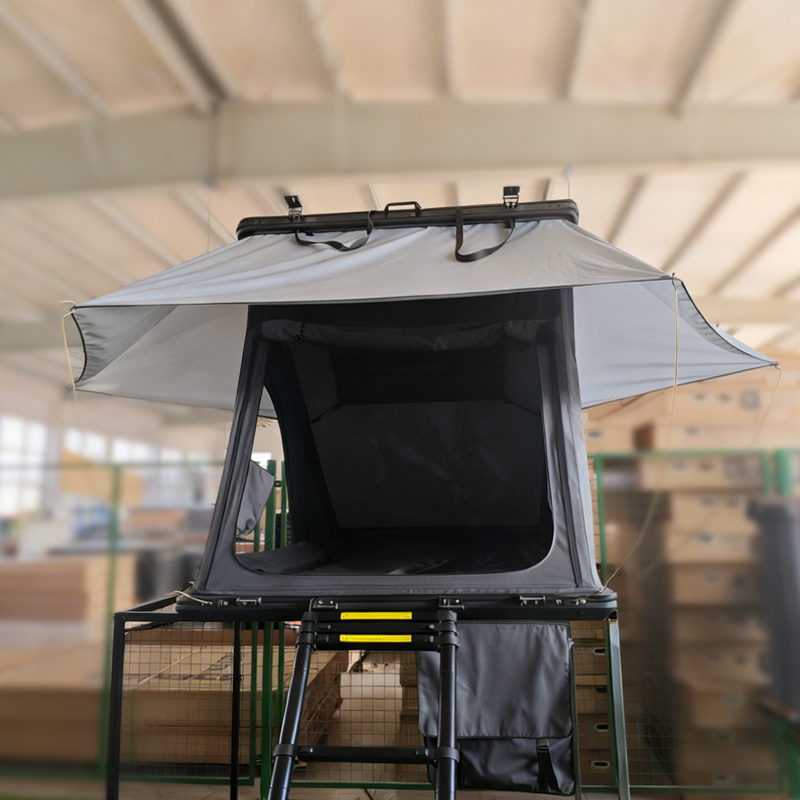
Shell overlap defines a specific structural design where the upper fiberglass or aluminum shell extends beyond the lower shell lip. It caps the lower half completely. This creates a physical barrier that covers the internal sealing mechanisms. Think of it like the roof overhang on a well-built house. It protects the vulnerable junction where the two halves meet. This design is highly prevalent in a premium clamshell rooftop tent. The continuous front hinge naturally supports this overlapping geometry, allowing the top lid to close down over the bottom tray like a heavy-duty storage case.
This design relies heavily on the "shingle effect" mechanism. Gravity forces water to drip off the extended upper lip. Water cannot pool at the mating line of the two shells. Without an overlap, water sits directly against the rubber gasket. High-speed driving then pushes this pooled water past the seal. The shingle effect breaks this path. It forces moisture down and away from the interior cabin. It relies on physics rather than chemical sealants to keep you dry. When parked, rain simply sheets off the top shell and falls clear of the canvas walls.
Material rigidity directly impacts overlap integrity. Extruded aluminum maintains its shape under extreme conditions. Fiberglass can warp if manufactured poorly. Intense UV exposure heats the shell surface. This heat can cause inferior materials to bow or flex. Warping lifts the upper lip away from the lower shell. This breaks the weather seal. High-quality aluminum profiles prevent this warping. They ensure the overlap remains uniform across the entire perimeter of the tent. If the shell warps even a quarter of an inch, the overlap fails, and the gasket loses compression.
The overlap creates vital gasket synergy. It protects the internal rubber bulb or D-seal from direct UV degradation. Sun exposure destroys exposed rubber over time. It causes cracking, shrinking, and a total loss of elastic memory. The extended upper shell shades the gasket completely. It also shields the rubber from pressurized water strikes while driving. This mechanical protection extends the lifespan of the weatherproofing significantly. You spend less time replacing seals and more time camping.
Hydrostatic pressure deflection is critical for highway travel. Driving at 70 mph through a rainstorm turns water drops into high-velocity projectiles. A flush-mount closure exposes the gasket directly to this pressure. The physical barrier of the upper shell prevents water from being forced upward. The overlap blocks the direct line of sight to the seal. The kinetic energy of the rain dissipates against the hard outer shell. The internal gasket only handles ambient moisture, not pressurized spray. This is the exact same engineering principle used in automotive door frames.
Dust exclusion matters immensely for off-road travel. Unpaved roads generate massive clouds of fine silt. This dust penetrates standard zippers and weak seals easily. The shell overlap creates a low-pressure zone behind the lip. This aerodynamic disruption prevents fine particulate matter from packing into the closure gap. Desert dust stays outside the cabin. Your sleeping bags remain clean and breathable. You avoid inhaling fine silt when you finally open the tent at camp. Anyone who has driven the Mojave Road knows how invasive alkaline dust can be; a deep shell overlap is the only reliable defense.
Capillary action prevention saves your mattress. Wet fabric acts like a wick. It pulls moisture from the outside directly into the dry interior. The shell overlap separates the outer shell drip line from the internal tent fabric. Water drips off the hard shell before it can touch the canvas. This physical separation breaks the capillary chain. Moisture cannot climb up the fabric and soak into your mattress. You wake up dry even after a night of torrential rain. If the outer shell sat flush with the canvas, the constant contact would transfer gallons of water inside over a single weekend.
Strategic vehicle orientation maximizes these defensive capabilities. You should always park with the continuous aerodynamic hinge facing into high winds. This points the strongest, most weatherproof section of the tent toward the storm. The rigid shell acts as a massive windbreak. It protects the open fabric sections at the rear and sides. This orientation reduces fabric flapping. It minimizes noise. It prevents wind-driven rain from striking the vulnerable side windows. A clamshell design allows you to leverage the vehicle's position to fight the weather actively.
Static and dynamic weather resistance require different engineering solutions. While parked, the tent relies on shell pitch and orientation to shed water. Gravity does most of the work. While driving, the tent faces dynamic forces. It relies entirely on overlap depth and latch tension. Wind tries to pry the shell open. The latches must hold the overlap tight against the lower lip. The combination of deep overlap and high-tension latches secures the tent against hurricane-force driving conditions. You need both systems working together to guarantee a dry bed.
Evaluating weather sealing requires looking at the entire rooftop tent category. Different designs approach the problem of water ingress in vastly different ways. Understanding these mechanical differences helps you choose the right tool for four-season overland travel. You cannot rely on marketing claims; you must look at the physical construction of the closure.
A hard shell rooftop tent provides a rigid, overlapping lip. A soft shell rooftop tent relies on heavy-duty PVC covers and zippers. Zippers fail under tension. They clog with dust and mud. UV exposure degrades the PVC cover over time, causing micro-cracks. Hard shells eliminate these failure points. The rigid overlap never stretches. It never tears. Hard shells also offer a distinct advantage in rapid setup and takedown speed during a storm. You unlatch the shell and push. You do not have to fight a muddy PVC cover in freezing rain while balancing on a slippery tire.
Clamshell designs differ significantly from a pop up rooftop tent. Clamshells feature a continuous hinge at the front. This reduces the total seal perimeter. It provides a natural, rigid windbreak. Pop-ups require a 360-degree seal. They use multiple lifting struts at all four corners. These struts pass through the sealing perimeter. Every strut creates a potential water ingress point. The increased surface area of a pop-up makes it more vulnerable to mechanical failure and weather breaches. The continuous hinge of a clamshell is inherently more watertight than four independent lifting mechanisms.
Flush-mount hard shells offer conceptual trade-offs against overlap designs. Flush-closing shells provide better aerodynamics. They offer a slimmer visual profile on the vehicle. However, they sacrifice superior weather sealing. They rely 100% on the rubber gasket to keep water out. Overlapping shells are slightly bulkier. Yet, they provide mechanical water deflection. They also offer better internal volume for leaving thick bedding inside the closed tent. For serious weather, overlap always wins. A slim profile looks great in a driveway, but a deep overlap keeps you alive in the backcountry.
| Design Type | Primary Weather Defense | Vulnerability | Setup Speed in Rain |
|---|---|---|---|
| Clamshell (Overlap) | Physical shell overhang + EPDM gasket | Minimal; requires proper fabric tucking | Under 30 seconds |
| Pop-Up (Flush) | 360-degree rubber gasket | Strut penetration points; gasket reliance | Under 60 seconds |
| Soft Shell | PVC cover + Zippers + Velcro | Zipper failure; UV degradation of PVC | 5 to 10 minutes |
You must inspect the closure mechanism closely before purchasing. The visual appearance of the shell tells you very little about its weather readiness. You need to evaluate the specific engineering dimensions that dictate performance. Do not just look at the tent when it is open; spend time examining how it locks down.
Even the best-engineered overlap can fail if maintained poorly. Understanding implementation risks allows you to mitigate them before they ruin a trip. Proper technique and routine maintenance guarantee a dry interior. You cannot treat a rooftop tent like a static piece of furniture; it is a dynamic piece of outdoor gear that requires attention.
User error causes the vast majority of water ingress. The "fabric wick" is the most common culprit. This happens when you fail to fully tuck the tent canvas inside the lower shell before closing. Packing away a wet tent exacerbates this issue. If wet canvas folds directly onto the mattress, you will sleep in a puddle the next night. Mitigation requires proper tucking techniques. Utilize internal bungees. Ensure wet canvas folds flat against the roof, away from the sleeping surface. Always do a final walk-around to check for exposed fabric before hitting the highway.
Seal degradation happens to all rubber components eventually. Over time, rubber gaskets compress permanently. They lose their elastic memory. UV exposure accelerates this process if the overlap is insufficient. Mitigation requires routine lubrication. Wipe the seals down with a high-quality silicone spray twice a year. This keeps the EPDM rubber supple. Adjust your latch tension annually to compensate for minor wear and compression. If you notice the latches closing too easily, it is time to tighten them.
Hinge alignment shift occurs after thousands of miles on washboard roads. Extreme off-road vibrations can cause the upper shell to shift laterally. This misaligns the overlap. A misaligned shell leaves one side exposed to the elements. Mitigation requires regular hardware checks. Perform routine torque checks on all hinge hardware. Inspect the closure gap visually. Ensure the overlap remains uniform around the entire perimeter of the tent before heading into a storm. A quick wrench check at camp prevents a massive leak on the drive home.
Shell overlap is never just a cosmetic feature. It serves as the primary mechanical defense against dynamic weather conditions. It physically blocks water and dust from reaching vulnerable seals. This makes deep shell overlap a non-negotiable requirement for serious four-season overland travel. Relying on a rubber gasket alone is a gamble you will eventually lose.
Use strict shortlisting logic when evaluating your options. Prioritize models that feature a distinct, measurable upper-shell overhang. Demand automotive-grade EPDM seals. Insist on lockable, adjustable tension latches. Avoid models that prioritize a hyper-slim, flush-closing aerodynamic profile at the expense of mechanical weather deflection. A dry bed is always worth an extra inch of roof height.
A: No. While most premium models utilize an overlapping design, many budget, DIY, or ultra-slim models use flush closures. Flush designs rely entirely on the rubber gasket to keep water out. This significantly increases the risk of high-speed leaks and dust ingress during off-road travel.
A: A clamshell offers a massive aerodynamic advantage when parked with the hinge facing the wind. The angled hard shell creates a rigid windbreak. Furthermore, the continuous front hinge reduces weather-stripping failure points compared to the 360-degree seal and exposed struts of a pop-up design.
A: Yes. While heavy-duty PVC covers protect soft shells, the zippers and velcro closures can fail over time. High-speed driving forces rain against these weak points. Hard shells with physical overlap are generally much more secure and weather-tight at highway speeds.
A: Use internal bungees to pull the wet canvas inward as the shell closes. This keeps the fabric away from the mattress and the shell overlap. Ensure no canvas hangs outside the shell, as exposed fabric will wick outside moisture directly into the dry interior.
A: The most common culprits are trapped fabric wicking water inside, degraded or cracked rubber gaskets, warped fiberglass shell materials, or loose latches that fail to adequately compress the weather seal. Inspect your canvas tucking technique and latch tension first.
A: Expect to replace the primary weather seal every 3 to 5 years, depending on UV exposure and storage conditions. You can prolong seal life by treating the rubber with silicone spray and using adjustable latches to maintain proper compression as the gasket ages.