Views: 0 Author: Site Editor Publish Time: 2026-07-31 Origin: Site
Upgrading your gear shouldn't rely on marketing hype or copying the local pro. As your game advances, equipment transforms into a precise tool. It solves specific on-court performance gaps. The current market is flooded with complex terminology. Words like thermoforming, peel ply, and swing weights obscure practical performance metrics. Players often feel overwhelmed. You might buy a popular paddle only to discover it aggravates your elbow or ruins your drop shots. This guide strips away the gimmicks. We provide an objective, evidence-based framework. You will learn to evaluate and select the exact pickleball equipment matching your biomechanics and playstyle. We will break down paddle construction, ergonomic metrics, and essential accessories. By the end, you will confidently audit your current setup. You will know exactly what parameters your next paddle needs. Stop guessing and start analyzing.
Identify your primary performance gap (e.g., lack of power, inconsistent drops) before evaluating paddle specifications.
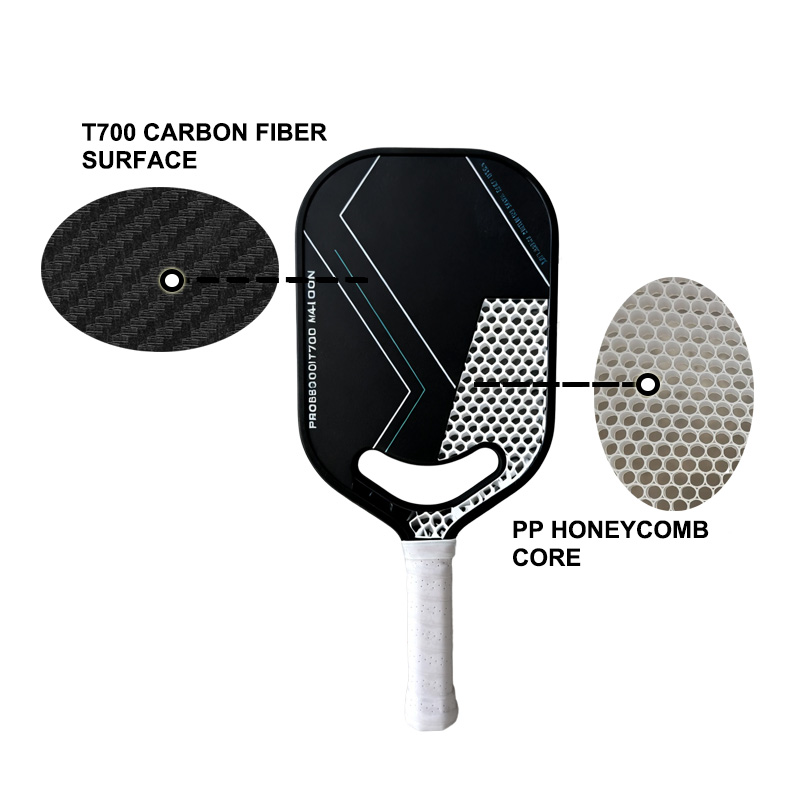
Material dictates performance: T700 raw carbon fiber maximizes spin and control, while fiberglass offers elasticity and power. A polypropylene honeycomb core offers standard vibration dampening.
Thermoformed manufacturing increases power and sweet spot size but introduces specific durability risks like core crushing.
Proper footwear and targeted pickleball paddle accessories (like lead tape and overgrips) are critical for injury prevention and micro-customization.
Always verify USAPA compliance before purchasing to ensure tournament legality.
You cannot fix a problem you have not clearly defined. Evaluating new gear begins by analyzing your current baseline. Identify the exact moments you lose points. Are you routinely popping up dinks into the strike zone? This highlights a control issue. Are opponents easily blocking your baseline drives? You likely lack power or topspin. Are you experiencing persistent elbow pain after long sessions? Vibration dampening and weight distribution need immediate correction.
Players often misdiagnose their needs. They buy aggressive paddles hoping for better drives. Suddenly, their soft game disappears. Equipment swaps always involve trade-offs. You must categorize your playstyle first. We generally group players into three distinct archetypes. Knowing your archetype prevents mismatched purchases.
Control Players: You prioritize the soft game. Drops, dinks, and resets form your foundation. You require thicker cores and friction-heavy surfaces. These absorb energy and maximize placement accuracy.
Power Players: You rely on aggressive drives and put-aways. You attack fast and push opponents back. You benefit from stiffer materials. Higher swing weights help you generate lethal pace.
All-Court Players: You seek a balanced hybrid. You accept slight trade-offs in maximum power or supreme control. You value overall versatility across all zones of the court.
Below is a quick reference table. It maps player archetypes to ideal equipment specifications.
Table: Player Archetypes and Ideal Equipment Specifications
Player Archetype | Primary Goal | Ideal Core Thickness | Recommended Surface |
|---|---|---|---|
Control | Energy absorption, resets | 16mm | T700 Raw Carbon Fiber |
Power | Pace generation, drives | 12mm - 14mm | Fiberglass / Composite |
All-Court | Versatility, balance | 14mm - 16mm | Carbon Fiber / Hybrid |
Paddle faces and internal cores act as an integrated system. They determine how the ball compresses, dwells, and exits upon impact. Understanding these materials separates informed buyers from susceptible consumers.
Surface material heavily dictates friction. This directly influences spin generation. A carbon fiber pickleball paddle currently represents the industry standard. Specifically, T700 Raw Carbon Fiber is highly favored for delivering exceptional control, massive spin, and pinpoint precision. This material offers microscopic grit that grips the plastic ball effectively. It produces high RPMs on topspin drives and slice returns. Furthermore, T700 raw carbon fiber responds with a stiff, predictable sensation. It ensures the ball leaves the paddle exactly as intended.
Conversely, Fiberglass surfaces behave differently. They possess high elasticity and act like a trampoline. The material bends slightly and snaps back. This provides more "pop" and effortless power, making fiberglass extremely beginner friendly. However, it sacrifices some durability. You also lose some spin potential compared to raw carbon. If you struggle to generate pace, fiberglass helps. If you struggle to keep balls in bounds, avoid it.
Other supplemental materials round out the market. A Wood paddle is primarily suited for basic entertainment, offering a durable and budget-friendly entry point for absolute beginners. Additionally, Graphite surfaces, provided the brand's product line supports them, offer a lightweight feel and responsive touch, though they lack the extreme grit of raw carbon fiber.
Table: Paddle Face Materials and Performance Benefits
Material Type | Core Characteristics | Best Suited For |
|---|---|---|
T700 Raw Carbon Fiber | Control, high spin, maximum precision | Intermediate to professional players |
Fiberglass | High elasticity, effortless power, pop | Beginner friendly, power seekers |
Graphite | Lightweight, responsive touch | Speed and finesse players |
Wood | Heavy, basic impact | Beginner entertainment, casual play |
The interior architecture matters just as much as the face. A polypropylene honeycomb paddle core provides the baseline for modern gear. This material balances shock absorption, sound dampening, and long-term durability. It features tiny hexagonal cells glued together. When the ball strikes, these cells compress to absorb impact forces.
Core thickness dictates the ultimate feel. You will generally choose between 16mm, 14mm, or 12mm options.
16mm Cores: These deliver maximum control. They provide a plush, forgiving feel. The extra thickness absorbs more energy. This makes resetting hard drives much easier.
14mm and 12mm Cores: These yield faster hand speed. They provide noticeably more pop. The thinner core transfers energy directly back into the ball. However, they offer much less forgiveness on off-center hits.
Manufacturing techniques evolved dramatically recently. Traditional cold-pressed paddles sandwich the core between surface layers. They use simple edge guards to hold everything together. This method is reliable and cheap.
The thermoformed shift changed the landscape entirely. A thermoformed pickleball paddle uses immense heat and pressure during assembly. Manufacturers seal the edges using injected foam and carbon strips. This creates a highly rigid, unibody structure. The trade-off is clear. You gain a massive sweet spot. You unlock tremendous baseline power. The paddle feels incredibly stable in your hand.
However, thermoforming historically carries specific risks. Delamination occurs when the face separates from the core. Core crushing happens when internal honeycombs collapse under high pressure. Buyers must monitor these implementation realities. Always check recent reviews regarding a brand's thermoformed durability.
Many players obsess over materials but ignore ergonomics. Poorly fitted gear restricts your potential. Worse, it leads directly to repetitive strain injuries. You must evaluate weight metrics and geometry.
Static weight represents the scale reading. Most paddles range from 7.5 oz to 8.5 oz. This dictates general heft in your gym bag. However, swing weight matters significantly more on the court. Swing weight dictates how heavy the paddle feels in motion. It measures maneuverability.
High swing weight provides immense plow-through power. Once you start the swing, the paddle carries momentum effortlessly. It crushes drives. Unfortunately, high swing weight creates sluggish reactions. You will likely lose fast hand battles at the kitchen line. Low swing weight allows lightning-fast blocks. Yet, you must swing much harder to generate baseline pace.
Manufacturers manipulate paddle outlines to shift the sweet spot.
Standard or Widebody: These designs maximize the horizontal width of the sweet spot. They are highly forgiving. They excel at defense, blocking, and resetting.
Elongated: These stretch the paddle face vertically. They increase your reach. The higher leverage point generates more power and spin. However, the horizontal sweet spot narrows significantly. Mishits become more frequent.
Matching grip circumference to hand size is non-negotiable. A grip too small forces you to squeeze tightly. A grip too large strains your forearm extensors. Both scenarios cause severe tennis elbow. You can test proper grip size easily:
Hold the paddle using an eastern continental grip (shake hands with the handle).
Look at the gap between your fingertips and the base of your thumb.
You should be able to snugly fit the index finger of your opposite hand in this gap.
If the gap is too small, add an overgrip. If the gap is too large, you need a thinner handle.
Finally, evaluate handle length. If you hit a two-handed backhand, you require space. A standard 5-inch handle feels cramped. Look for elongated handles measuring 5.3 inches or longer.
Do not buy a premium paddle based solely on internet reviews. What feels plush to one player feels mushy to another. "Feel" remains highly subjective.
The demo strategy is essential. Utilize local club demo days. Borrow paddles from your regular playing partners. Many online retailers offer robust trial programs. You pay a small fee to test multiple paddles for a week. Hit dinks, drives, and volleys. Pay attention to vibrations traveling up your arm.
Before pulling the trigger, verify compliance. Cross-reference your shortlisted paddle with the official USAPA Approved Equipment list. Non-approved paddles cannot be used in sanctioned leagues or official tournaments. Even if you play recreationally, USAPA approval ensures the paddle meets safe manufacturing standards.
Finally, evaluate the manufacturer's warranty. Premium paddles degrade over time. You should expect protection against manufacturing defects. Check the fine print regarding dead spots, core crushing, or edge guard separation. Six-month minimum warranties represent the standard for high-end gear. Some premium brands offer limited lifetime warranties against structural defects.
Selecting the right gear involves objective self-assessment. It requires understanding the physics of court equipment. The right paddle combines specific core thickness, surface materials, and ergonomic weight. It must tailor exactly to your biomechanics and playstyle.
Take these actionable next steps today:
Audit your current game to define your primary performance gap.
Decide if you need to optimize for power, control, or an all-court balance.
Invest in proper lateral-support court footwear immediately.
Demo at least two or three paddles in your targeted category before buying.
Apply targeted accessories like lead tape and overgrips only after you establish a baseline feel.
A: Realistically, competitive players replace paddles every 3 to 6 months. Raw carbon surfaces degrade, losing essential grit for spin. The internal honeycomb core also softens after thousands of impacts. Casual players playing twice a week can expect 1 to 2 years of reliable performance before needing a replacement.
A: Usually, no. Thermoformed paddles offer immense power. This power easily masks poor mechanics and sloppy footwork. Beginners struggle to control the intense "pop." They often pop up soft shots. These paddles suit intermediate and advanced players who already possess reliable touch and proper swing mechanics.
A: Yes, lead tape adds necessary static and swing weight. However, apply it carefully. Reckless placement alters the paddle's engineered sweet spot. Start with small strips at the lower corners for stability. Test thoroughly before adding weight to the top, which dramatically increases strain on your elbow.