Views: 0 Author: Site Editor Publish Time: 2026-10-23 Origin: Site
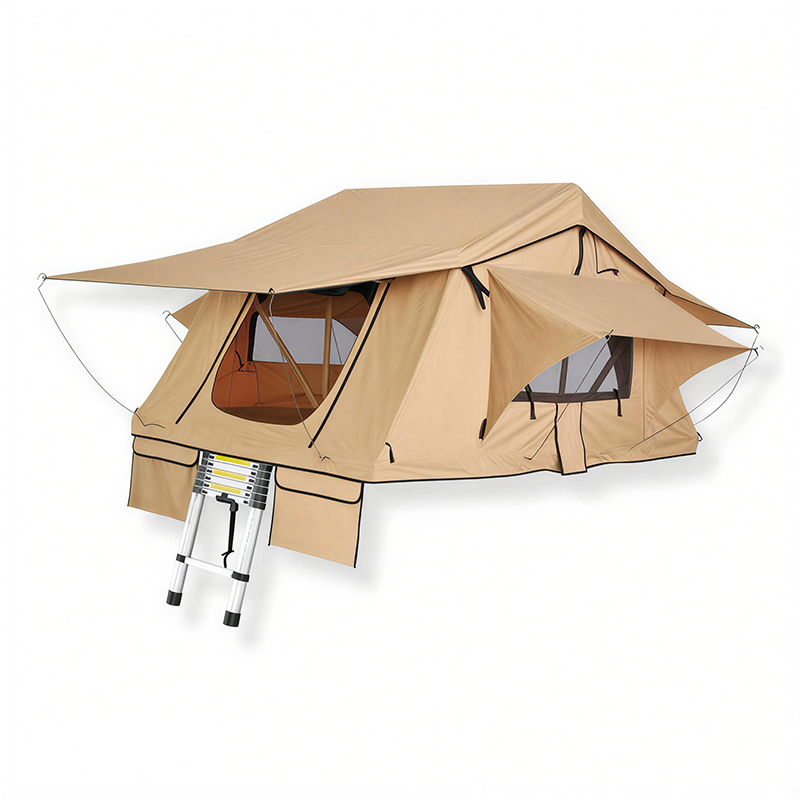
Have you ever tried sleeping while your rooftop tent fabric violently flaps in the harsh wind? Picture this scenario. It is 2 AM. A storm is rolling across an exposed alpine ridge. Every sudden gust sounds like a whip cracking just inches from your ears. A soft shell rooftop tent requires precise manual setup to avoid these acoustic disruptions and potential water ingress. Unlike rigid models assisted by pneumatic struts, traditional fold-out fabric rooftop tents rely entirely on opposing physical forces and structural geometry to maintain their shape.
In this engineering-focused guide, we will break down the exact mechanics of achieving and maintaining consistent fabric tension every single time you deploy your camp.
Structural Lever Mechanics: The ladder acts as the primary load-bearing lever. An incorrect deployment angle prevents the folding floor from locking flat, causing cascading slack across the entire canopy.
Hardware Dependency: Window spring rods, internal U-bars, and adjustable webbing straps are the primary mechanical tools engineered to achieve a drum-tight pitch.
Material Science in the Wild: Modern rooftop tents are primarily made of high-quality polyester, though some models utilize poly-cotton or oxford cloth. Depending on the material, fabrics can absorb moisture and stretch when wet, then shrink upon drying. This hygroscopic behavior demands proactive manual tension adjustments during extended trips.
Strategic Selection: While fold-out Side-Open models offer a spacious interior footprint capable of fitting 2–4 people (ideal for a family of 2 adults and 1 or 2 children), buyers prioritizing instant deployment and aerodynamic wind resistance should evaluate alternative structural designs.
Understanding the underlying mechanics of fabric tension goes beyond mere comfort. It is essential for evaluating product durability and surviving hostile weather. Failing to achieve optimal tautness compromises the entire structural skeleton of your rooftop tent, leading to a series of compounding failures in the wild.
When tent material is pitched loosely, it inevitably creates shallow depressions on the roof and awnings. Standing water exerts continuous hydrostatic pressure on the exterior textile. Even high-quality polyester or 280g poly-cotton boasting a premium 3000mm waterproof rating will eventually succumb to this localized stress. Over time, standing water overwhelms the durable water repellent coating, forcing moisture through the woven fibers. Furthermore, the sheer weight of pooled water physically elongates the material. This permanent stretching creates irreversible sagging that becomes incredibly difficult to correct during future expeditions.
A drum-tight pitch deflects incoming wind aerodynamically. When the exterior is taut, heavy gusts glide over the surface with minimal friction. In contrast, loose material catches the wind like a ship sail, causing the fabric to whip violently. This dynamic movement generates loud snapping noises that easily exceed 60 decibels, severely disrupting sleep cycles. In extreme alpine conditions, this violent flapping can destabilize the vehicle slightly or cause the internal aluminum frame to shift, creating an unpredictable and unsafe sleeping environment.
Constant flapping physically degrades expensive overland gear. The rapid, repetitive movement causes micro-abrasions in the internal polyurethane coating and rapidly wears down external weather treatments. More importantly, wind-induced snapping places severe dynamic loads on the stitching and seam tape. Over multiple rugged camping seasons, this stress elongates stitch holes, leading to micro-tears that demand costly repairs. Optimal tension distributes environmental stress evenly across the entire panel rather than isolating it at vulnerable anchor points.
Achieving a flawless pitch requires a solid understanding of structural anatomy. Fold-out models utilize a precise combination of internal framing and external tensioning hardware to push and pull the fabric into its final rigid state.
Tension poles are typically manufactured from high-tensile spring steel. These slender rods insert into reinforced aluminum sockets on the baseboard and hook directly into the metal grommets of the rainfly. Their primary mechanical function is to pull the exterior layer outward and away from the main living quarters. The engineered curve of the steel rod maintains a constant outward pressure. This physical separation promotes rapid water runoff and critical air circulation while preventing the wet fly from resting directly on the breathable inner fabric.
The internal skeleton consists of a lightweight yet robust aluminum frame, typically utilizing 16mm to 25mm tubing shaped into U-bars. When the unit is unfolded, these bars pivot on central hinges and lock into place, thrusting the main canopy upward. The precision of this central hinge mechanism is absolutely critical. If the heavy-duty baseboards do not unfold to a perfectly flat 180-degree angle, the internal U-bars cannot reach their maximum extension. The inevitable result is a fundamentally loose canopy right from the start.
Exterior cinching straps and internal bungee networks serve dual operational purposes. During deployment, adjustable webbing straps located at the base must be firmly tightened to pull the lower edges of the fabric flush against the floorboard. Internally, bungee cords are primarily designed to pull the fabric inward during the fold-away process to prevent snags. However, advanced overland models utilize internal tensioning straps that can be manually calibrated to manage excess slack during sudden squalls.
Achieving optimal tautness is a highly repeatable mechanical process. Following a strict setup sequence ensures that all components work in perfect harmony, eliminating guesswork at the campsite.
Fabric tension relies entirely on symmetrical geometry. If your truck or SUV is parked on a noticeable slope, the base will tilt, causing gravity to pull the heavy fabric unevenly. This lopsided weight distribution results in one side being overly tight while the opposite side sags. Always utilize traction boards or leveling blocks under your tires to ensure the roof rack is perfectly horizontal before unlatching the travel cover.
The ladder is not merely for access. It is a critical structural support acting as a load-bearing lever. For a standard fold-out model, the ladder must be set at a precise 70 to 75-degree angle relative to the ground. If positioned too vertically, it pushes the overhanging baseboard upward. If angled too far out, the baseboard sags downward under human weight. In both incorrect scenarios, the central floor hinge fails to lock flat. Ensure you listen for the distinct click of the ladder pins engaging only after achieving that optimal angle.
Once the main body is deployed and the floor is verified flat, insert the window spring rods. A frequent operational mistake is bending the rods improperly from the middle during insertion, which degrades their tensile strength over time. Instead, slide the rod into the base socket at a slight angle, then firmly bend it upward from the base to hook the awning grommet. Ensure the rainfly is pulled evenly over the main canopy. Tighten any adjustable corner straps symmetrically until the fabric feels firm to the touch and resists light downward pressure.
Looking at the broader outdoor gear market, a notable shift is occurring in material engineering. Manufacturers are increasingly moving toward advanced polyester and hybrid ripstop grids combined with high-density polyurethane coatings. This industry trend aims to solve the inherent moisture-absorption issues of traditional cotton blends. By minimizing water retention, these modern textiles inherently maintain better structural tautness overnight, drastically reducing the need for constant manual recalibration in damp environments.
Traditional camping fabrics, particularly heavy 280g poly-cotton or oxford cloth, exhibit strong hygroscopic properties. When saturated by an evening downpour, the fibers absorb moisture. This causes the material to become significantly heavier and physically stretch out. A rooftop tent pitched flawlessly at 8 PM may develop sagging pockets by 3 AM. To adapt, monitor the exterior during prolonged precipitation and manually tighten external guy lines to remove newly formed slack. Once the sun emerges and the fabric dries, it will naturally shrink back. Remember to loosen those straps slightly to prevent tearing the seams under the new tension.
Wind is the ultimate test of structural integrity. When pulling into camp, assess the prevailing wind direction. Orient your vehicle so that the most aerodynamic profile faces directly into the wind. If wind speeds exceed 20 mph, engineers highly recommend removing the window spring rods on the windward side and rolling up the rainfly securely. Leaving parts deployed in gale-force winds allows them to act like parachutes. This not only causes severe flapping but can physically deform the steel spring rods or rip the metal grommets clean out of the reinforced textile.
When evaluating rooftop tent solutions, understanding how different engineering designs manage environmental stress is essential. While traditional fold-out models offer unparalleled interior space tailored to actual family sizes (typically 2–4 people), achieving optimal tightness requires manual intervention. For buyers prioritizing instant setup and automatic wind resistance, exploring another rooftop tent category is a logical next step.
Deployment styles generally fall into three categories: Clamshell (opening diagonally on one side without lateral extension), Pop-up (raising vertically as a whole without lateral extension), and Side-Open (flipping out to the side for expanded space, available in both hard top and soft top configurations).
Tent Category | Tension Mechanism | Wind Resistance | Ideal Use Case |
|---|---|---|---|
Soft Shell Side-Open | Manual spring rods & structural ladder lever | Moderate. Requires proper orientation. | Families (typically 2 adults and 1-2 children) needing interior space based on camper numbers. |
Hard Shell (General) | Active pneumatic gas struts | High. Struts absorb dynamic loads. | Frequent movers wanting instant setup (30–60 seconds). |
Clamshell Wedge | Rear hinge & front gas struts | Extreme. Aerodynamic roof deflects gusts. | Overlanders in hostile alpine environments. |
Pop-Up Vertical | 4-point struts or synchronized X-hinge | High. Uniform vertical tension. | Campers needing 360-degree views & headroom for 2-4 people. |
The primary mechanical difference between soft and rigid models lies in the deployment mechanism. A hard shell rooftop tent utilizes internal pneumatic gas struts or heavy-duty mechanical hinges to open the structure. As the rigid aluminum honeycomb plate roof is pushed upward, the gas struts apply constant, active upward pressure against the fabric walls. This continuous mechanical force ensures the fabric remains drum-tight automatically, requiring virtually no manual calibration from the user.
Deploying the main body of a hard shell is extremely fast, typically taking a mere 30–60 seconds, whereas soft top models usually require about 3–5 minutes. It is important to distinguish that this reference time is just for the main body deployment; securing the ladder, the rainfly, and setting up an annex room for rooftop tent will require additional time.
For overland travelers who frequently encounter hostile, high-wind environments, the aerodynamic profile of the rooftop tent becomes a critical performance metric. A clamshell rooftop tent is engineered with a heavy-duty hinge at one end and gas struts at the other, creating a distinct wedge shape when deployed. Clamshell models open diagonally on a single side and cannot be expanded laterally.
This specific architecture provides distinct advantages regarding fabric tension. A wedge design features only three fabric sides rather than four, reducing the total surface area susceptible to wind deflection. Furthermore, the rigid aluminum honeycomb plate roof acts as an impenetrable aerodynamic shield. When the vehicle is parked with the hinged side facing into the prevailing wind, the gusts are directed seamlessly over the hard roof rather than battering the fabric. The internal struts maintain relentless upward pressure, ensuring the three walls remain perfectly taut.
A pop up rooftop tent raises vertically on all four sides. This design typically utilizes either four independent gas struts or a synchronized internal X-hinge mechanism. Because the roof lifts vertically as a whole without lateral extension, the fabric walls form a uniform, box-like interior capable of housing 2–4 people, making it an excellent choice for 2 adults and 1 child, or up to 2 adults and 2 children.
Inside these structures, comfort is maximized with a standard sponge mattress (not memory foam or air mattresses). Hard shell models typically feature a mattress around 5 cm thick, while soft top and Side-Open models usually include a mattress about 4–4.5 cm thick, depending on the exact model. The tension in this model is distributed evenly across all four corners, providing excellent internal headroom and consistent tautness.
Even with premium gear, user error can easily lead to a poor pitch. Avoiding these common operational pitfalls will ensure your rooftop tent remains secure, quiet, and dry.
Before moving your vehicle, always ensure the rooftop tent is fully closed and secured. There is generally no need to completely uninstall it from the roof between destinations. During the purchasing phase, you must cross-check the tent's dynamic load capacity, static load capacity, and crossbar compatibility. Whether or not you need to replace your vehicle's original factory crossbars should be judged strictly based on these actual specifications.
As emphasized earlier, the ladder is the absolute foundation of a cantilevered model's tension. Placing the ladder on uneven ground, allowing it to sink into soft mud overnight, or ignoring the 75-degree angle rule will inevitably result in a compromised base. If the floor is not perfectly flat, the fabric will never be tight. Always carry a specialized ladder footprint pad to prevent the aluminum feet from sinking into soft terrain.
When faced with heavy winds, a common instinct is to pull the exterior guy lines as tightly as humanly possible. However, over-tensioning is highly detrimental. Applying excessive lateral force to one side of the tent distorts the symmetry of the internal aluminum skeleton. This uneven stress can warp the U-bars, stretch the stitching at the anchor points, and create unnatural creases where rainwater can easily pool. Guy lines should be staked firmly but retain a slight degree of flexibility to allow the structure to dynamically absorb sudden wind gusts.
How you pack your gear away directly influences its structural performance during the next deployment. Folding the unit carelessly can result in the fabric becoming pinched within the heavy-duty metal hinges of the baseboard. Over time, this pinching creates permanent weak spots, micro-tears, and uneven stretching in the fabric.
Packing the tent while saturated with water leads to rapid mold and mildew degradation. Mildew physically breaks down the structural fibers of polyester and poly-cotton blends, causing the material to lose its natural elasticity and structural memory. A degraded fabric will perpetually sag, regardless of how flawlessly the hardware is deployed.
Consistent tension relies heavily on the physical health of both the textile material and the mechanical hardware. Implementing a routine maintenance schedule ensures the fabric retains its tensile strength year after year.
Prolonged exposure to harsh ultraviolet rays, abrasive trail dust, and heavy rain will eventually degrade the factory durable water repellent coating. When this protective layer fails, the fabric absorbs water rather than repelling it, leading to saturation stretch.
To maintain optimal performance, the exterior should be cleaned and re-treated annually. Use a soft-bristle brush and a specialized fabric cleaner to gently remove embedded dirt, which acts like sandpaper against woven fibers. Once completely dry, apply a high-quality, silicone-based waterproofing spray or a specialized fluoropolymer treatment. This conditioning restores the fabric's ability to bead water, keeping the material supple enough to stretch tightly over the internal frame without tearing.
The hardware components bear the brunt of the tensioning force and will naturally wear out through repeated dynamic loading. Inspect the hinge bolts at the base of the U-bars regularly. If they vibrate loose from washboard roads, the internal frame will wobble, instantly reducing fabric tautness.
Pay close attention to the internal bungee cord system. Extreme temperature fluctuations can cause the rubber core of the bungee cords to become brittle and snap. Replacing stretched-out cords is a simple maintenance task that significantly improves how the fabric behaves. If your window spring rods have lost their natural curve or appear permanently bent from high winds, replace them immediately to ensure they apply adequate outward pressure on the rainfly.
Maintaining a drum-tight pitch in your rooftop tent is a precise process that blends proper setup geometry with a solid understanding of material science. By ensuring your vehicle is level, locking the ladder at the correct load-bearing angle, and utilizing tension rods effectively, you create a robust, weather-resistant sanctuary. While fold-out soft models require proactive manual calibration compared to gas-strut counterparts, their spacious interior footprint capable of comfortably housing 2–4 people makes the effort highly rewarding. In fact, spatial requirements and family size are precisely why buyers choose soft top models with expansive Side-Open designs.
For explorers seeking engineered reliability, evaluating your specific environmental needs is crucial. Whether you require the vast space of a traditional fold-out or the aerodynamic, active-tensioning of a hard shell aluminum honeycomb plate clamshell, selecting the right structural design dictates your comfort in the wild. We encourage you to explore the premium selection at Maitop to find a rooftop tent engineered to withstand the exact rigors of your next overland adventure.
Excessive noise is almost always caused by loose fabric flapping against the internal aluminum frame. To resolve this, ensure your ladder is locked at the correct angle so the folding floor is perfectly flat. Verify that all internal U-bars are fully extended and all exterior window tension rods are firmly inserted to eliminate localized slack.
Generally, yes. Because rigid and clamshell models utilize internal gas struts or mechanical linear actuators to constantly push the roof upward, the attached fabric walls remain drum-tight automatically. This active mechanical pressure requires much less manual calibration than traditional folding soft shells.
High-quality fabrics like polyester, poly-cotton, or oxford cloth will absorb some moisture and stretch slightly when saturated, but they are engineered to shrink back to their original shape once thoroughly dry. However, allowing heavy water to pool in depressions on a loosely pitched tent for consecutive days can cause the fibers to permanently warp and sag under the hydrostatic weight.
Ensure your rainfly tension rods are installed at the correct upward angle to create a steep, downward slope on the fabric. If heavy rain persists and pooling begins, you must intentionally lower one side of the rainfly slightly by adjusting a strap or repositioning a pole to encourage continuous, directional water runoff.
While properly tensioned soft shells can handle moderate weather, the clamshell design is widely considered the superior choice for high-wind environments. Its rigid, aerodynamic wedge shape effectively deflects wind over the roof, and the minimal three-wall fabric design drastically reduces the surface area susceptible to flapping.
When pitched correctly with all tension rods secured and the vehicle oriented aerodynamically, a high-quality soft shell can typically withstand sustained winds of 20 to 30 mph. However, in gusts exceeding 30 mph, it is highly recommended to remove the rainfly poles and batten down the structure to prevent damage to the aluminum frame and spring rods.
Yes. Heavier textiles, such as 280g poly-cotton, oxford cloth, or premium polyester, possess greater structural memory and tensile strength compared to thinner nylon alternatives. This robust thickness allows the material to handle higher levels of mechanical tension from the internal frame without tearing at the seams, resulting in a tighter, quieter pitch.