Views: 0 Author: Site Editor Publish Time: 2026-07-10 Origin: Site
Pickleball courts are packed year-round as players of all ages discover the sport. Unfortunately, local emergency rooms are also witnessing a massive spike in related physical issues. Cases of severe tennis elbow, ruptured Achilles tendons, and acute eye strikes occur daily. The sport's rapid adoption scales alongside these physical risks. We must acknowledge a harsh reality. You cannot fix poor biomechanics or skip proper warm-ups and expect to stay completely healthy. Your body requires preparation.
However, strategically upgrading your gear acts as a proven, high-ROI method to mitigate repetitive stress. You can actively avoid acute court hazards by choosing the right tools. Think of these upgrades as a calculated risk-reduction strategy. They do not act as a magical medical cure for existing joint degradation. Still, making informed choices drastically lowers your chances of getting sidelined. In this guide, you will learn how shoe geometry impacts ankle stability and how paddle specifications dictate joint stress. We will show you exactly how to audit your gear and maximize your longevity on the court.
Footwear is non-negotiable: Upgrading from running shoes to dedicated court shoes is the single most effective equipment change to prevent ankle sprains.
Paddle specs dictate joint stress: Grip size, weight, and core materials directly influence the onset of "pickleball elbow."
Material matters: A carbon fiber paddle absorbs impact differently than fiberglass, affecting both power and vibration dampening.
Protection is proactive: Shatterproof eyewear and targeted compression sleeves offer high-yield sports injury prevention with minimal cost.
We must first frame the core business of staying healthy on the court. Pickleball injuries generally fall into two primary categories. Acute injuries happen instantly. You lunge for a wide drop shot, roll an ankle, or sustain a direct eye strike from a deflected ball. Cumulative injuries, conversely, build slowly over time. Tendonitis, rotator cuff strain, and general joint degradation happen from repetitive micro-trauma. Thousands of swings eventually overload your forearm tendons. Optimal pickleball equipment serves as your first line of defense against both categories.
How do we define a successful equipment upgrade? The criteria are straightforward. A successful upgrade must reduce impact shock transmission to your joints. It needs to provide rigid lateral stability for your lower body. It should proactively protect highly vulnerable areas like your eyes and knees. Crucially, it must achieve these goals without severely compromising your gameplay performance or mobility.
We must maintain a balanced perspective here. Optimal gear works in tandem alongside robust physical conditioning. It does not replace proper swinging technique. Equipment simply masks pain symptoms. It rarely corrects underlying physical deficits. If you swing entirely from your wrist, your elbow will eventually hurt regardless of your paddle. Premium gear simply buys you more time. It increases your margin for error while you refine your mechanics.
Understanding pickleball paddle safety requires a deep dive into three variables. You must evaluate weight, grip size, and core composition carefully. Most players blindly debate between mid-weight and lightweight models without understanding the biomechanical tradeoffs.
A lightweight racket typically weighs under 7.5 ounces. It offers distinct physical advantages. It yields incredibly fast hand speeds during kitchen exchanges. It also significantly reduces shoulder fatigue during a long tournament day. However, a hidden danger exists. A lighter paddle forces you to generate more of your own power. You must swing harder to drive the ball deep. This extra exertion transfers more raw impact shock directly into your elbow joint. Heavier paddles absorb more shock upon impact. Their mass plows through the ball naturally. Unfortunately, wielding a heavy paddle all day can cause severe shoulder strain.
Implementation realities around grip size are equally critical. Playing with a grip size too small forces a tight squeeze. You grip the handle intensely to prevent the paddle from twisting upon impact. This constant tension travels directly up your forearm. It directly contributes to lateral epicondylitis, commonly known as tennis elbow. You must size your grip correctly. You should be able to slide your index finger between your fingertips and the base of your thumb when holding the paddle.
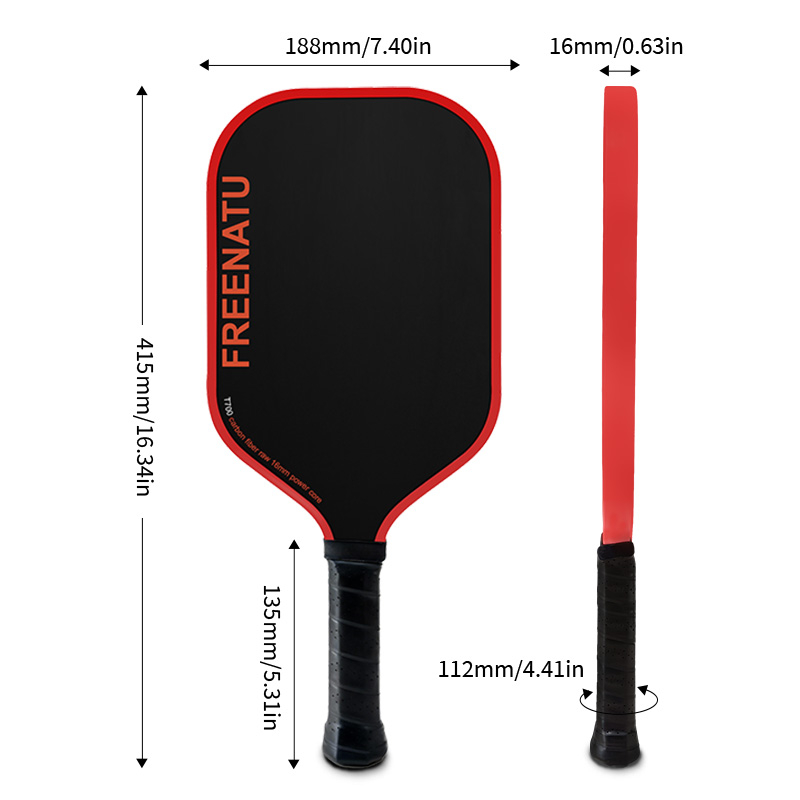
Material dimensions also drastically alter shock absorption. A premium carbon fiber paddle provides a much stiffer face than traditional fiberglass. This stiffness creates a larger, more forgiving sweet spot. It offers highly predictable vibration dampening across the entire face. Polymer honeycomb cores act as the true engine for shock absorption. Thicker cores, usually around 16mm, act like a mattress absorbing a heavy weight.
Evaluate vibration dampening technology carefully. Look for perimeter weighting. Many modern brands build shock-absorbing foam directly into the handle. These features isolate negative vibration before it ever reaches your hand.
Paddle Weight Category | Weight Range | Primary Biomechanical Benefit | Common Injury Risk if Misused |
|---|---|---|---|
Lightweight | Under 7.5 oz | Reduces shoulder fatigue and arm strain | Increases elbow stress (Tennis Elbow) |
Mid-Weight | 7.5 oz - 8.4 oz | Balances natural power and shock absorption | Requires precise grip sizing to avoid forearm tension |
Heavyweight | 8.5 oz and above | Absorbs maximum ball impact efficiently | Causes severe shoulder and rotator cuff fatigue |
Running shoes represent the ultimate biomechanical risk on a pickleball court. We see this critical error daily. Running shoes feature a high stack height. Manufacturers design them exclusively for forward motion. They possess absolutely no lateral support structures. Furthermore, running shoes utilize grippy, flared rubber edges. These outer edges easily catch the hard court surface during sideways shuffles. This mismatch directly causes severe ankle sprains, Achilles tears, and dangerous falls.
You must invest in dedicated court shoes. You have two main solution categories. Tennis shoes feature highly durable outsoles and strong lateral outriggers. They handle abrasive outdoor hard courts perfectly. Volleyball or indoor pickleball shoes offer a different approach. They provide superior indoor wood-court traction. They also feature lower heel-drop specifications. A lower heel-drop keeps your foot closer to the ground. This geometry drastically improves your proprioception and baseline ankle stability.
Be highly aware of implementation risks. Never ignore the shoe break-in period. Many players buy stiff court shoes and immediately play a three-hour tournament. This behavior leads to severe foot blistering. It can also trigger acute plantar fascia strain. The stiff midsoles need time to conform to your arch. Wear new court shoes around your house first. Transition them into your gameplay slowly over a week.
Eye protection is rarely discussed but vitally important. Kitchen line rallies easily exceed normal human reaction times. You simply cannot dodge a smash aimed directly at your face from seven feet away. We strongly frame shatterproof, ANSI-rated eyewear as an essential category of your gear setup. It is completely non-negotiable. Tinted lenses help outdoors, while clear lenses work best under indoor gym lights.
Compression and bracing play a nuanced role in daily sports injury prevention. We must clearly separate prophylactic bracing from reactive bracing. Prophylactic bracing aims to prevent trouble before it happens. Mild compression sleeves fall into this preventative category. They keep your muscles warm. They improve local blood flow during cold morning matches.
Reactive bracing addresses existing, active pain. Patellar tendon straps and rigid elbow braces act as reactive tools. They physically alter load distribution across degraded tendons. They compress the tissue to change the angle of stress. They are never permanent fixes. They simply redistribute kinetic force so you can comfortably finish a match.
We must conduct a trust and assumption check here. Braces provide temporary, mechanical relief. They do not heal torn tissue. If you rely heavily on a rigid elbow brace just to get through a single recreational game, stop playing. Consult a certified sports medicine professional immediately. Masking severe tendon pain often leads to catastrophic, season-ending ruptures.
How do you know it is time to upgrade? You must audit your current setup routinely. Look for visible signs of mechanical failure. Check your shoe treads first. If the rubber outsole is worn smooth and exposes the soft EVA foam midsole, discard them. Examine your paddle face closely. Dead spots indicate a crushed internal honeycomb core. Inspect your handle. Degrading, slippery overgrips force you to squeeze too hard.
Use this straightforward decision framework for your next purchase:
Prioritize Safety First: Budget for proper lateral court shoes and shatterproof eyewear immediately. Secure your bodily foundation before spending large amounts on a premium paddle.
Test Before Buying: Utilize local pro shop demo programs. Test various paddle weights and grip sizes in real-world match scenarios. Specifications on a webpage feel very different during an actual tournament.
Align Gear to Physical Needs: Assess your personal medical history accurately. Players experiencing elbow pain must actively filter for thicker 16mm polymer cores. Seek out paddles heavily engineered with internal shock-absorbing handles.
Taking a proactive approach to your bag ensures you stay off the injury reserve list. Equipment breaks down over time. Your awareness of these degrading materials keeps you safe.
Investing in the right setup is a highly functional strategy for extending your longevity in the sport. Upgrading your shoes prevents acute catastrophic falls. Modifying your paddle weight and core thickness directly preserves your elbow and shoulder joints. Good gear masks minor biomechanical flaws and absorbs the brutal shock of daily play.
Take immediate action before your next match. Flip your shoes over and inspect the tread wear closely. Measure your grip size using the index finger test to ensure you are not over-squeezing the handle. Buy shatterproof glasses today. Small, strategic equipment audits keep you on the court and out of the doctor's office.
A: Not always. While a lightweight racket reduces overall arm fatigue, it transmits more impact vibration directly to the elbow joint. A mid-weight paddle featuring a thick polymer core is often much better for elbow issues because it absorbs ball impact naturally.
A: No. Running shoes completely lack lateral stability. They are built for forward motion. Their high stack heights and grippy edges are a primary contributor to rolled ankles and Achilles injuries during side-to-side court movements.
A: Typically every 45–60 hours of active play. Once the outsole tread smooths out or the EVA foam midsole loses its physical rebound, the risk of slipping and joint impact increases significantly. Replace them immediately.