Views: 0 Author: Site Editor Publish Time: 2026-06-20 Origin: Site
Investing in a rooftop tent fundamentally alters your vehicle dynamics. It also transforms your standard campsite routines entirely. Unfortunately, buyers often prioritize rugged aesthetics over practical vehicle compatibility. They ignore real‑world setup realities during stressful weather conditions. This critical oversight frequently leads to rapid buyer remorse. You need an objective framework to match a reliable car camping tent to your exact vehicle limits. We developed this comprehensive guide to clarify climate requirements and accommodate your unique travel frequencies.
You will learn how to navigate complex dynamic weight ratings securely. We will explore how different shell designs impact your daily transit. Furthermore, we highlight the specific internal features driving true sleep comfort. You will discover why condensation management matters more than absolute waterproofing. This guide breaks down the critical metrics you must evaluate beforehand. Our breakdown ensures you make a fully informed, confident decision.
Weight compatibility is the baseline: Your vehicle’s dynamic roof limit dictates your options before any other feature.
Shell type defines the experience: Setup time, aerodynamics, and footprint vary drastically between soft and hard shells.
Condensation management is critical: Fabric breathability and airflow matter more than absolute waterproofing.
Transit realities: Expect an impact on fuel efficiency (MPG) and wind noise regardless of the model chosen.
You cannot bypass basic physics when mounting heavy gear to your roof. Your vehicle capacity dictates your available choices entirely. You must establish baseline compatibility before evaluating luxury features or fabric colors. Ignoring these limits compromises your road safety.
You must understand the critical difference between dynamic and static weight capacities. The dynamic weight limit represents the maximum load your vehicle handles safely while in motion. Car manufacturers set this strict constraint to prevent catastrophic failures. Driving creates massive kinetic forces during heavy braking or sharp turns. A heavy load raises your center of gravity significantly. This increases your rollover risk on uneven terrain. Your chosen shelter and your roof rack must weigh less than this dynamic limit combined.
Conversely, static weight describes the maximum load supported when your vehicle remains parked. This number is always much higher than the dynamic limit. A vehicle frame easily supports the shelter, multiple occupants, and interior gear while stationary. Never use the static weight rating to determine your driving capacity. Doing so invites severe structural damage and voids your insurance.
Standard factory crossbars rarely support overland‑grade equipment safely. Car manufacturers design factory racks for lightweight skis or aerodynamic cargo boxes. Flimsy factory setups flex violently under heavy off‑road stress. You must upgrade to robust aftermarket mounting solutions.
Heavy‑Duty Crossbars: Look for extruded aluminum bars featuring high dynamic load ratings.
Platform Racks: These flat metal trays offer superior weight distribution across the entire roof.
Gutter Mounts: Older SUVs utilize heavy‑duty gutter mounts for exceptional load transfers.
You must align the closed dimensions against your specific vehicle roofline carefully. A massive footprint creates dangerous wind lift at highway speeds. Severe overhangs extending past the windshield alter your aerodynamic profile negatively. Furthermore, an excessively long unit blocks your rear tailgate from opening completely. Measure the distance from your rear hatch hinge to your windshield trim. This specific measurement represents your absolute maximum allowable length.
The primary architectural split in the market happens between soft covers and rigid casings. Your preferred camping style dictates which design serves you best. Fast movers prefer rigid systems. Soft‑shell rooftop tents are more widely chosen for multi‑person camping scenarios thanks to their generous interior space.
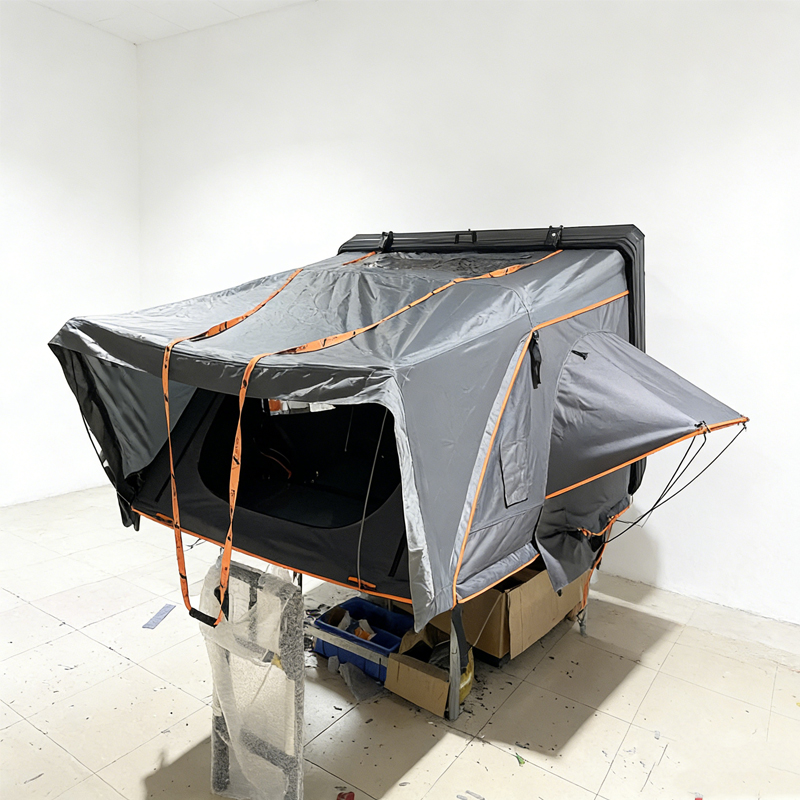
The classic soft shell design utilizes a heavy‑duty PVC cover for transit protection. You unzip this cover and unfold the floor like a massive book. A sturdy ladder acts as the main structural lever during deployment.
A quality foldable roof tent presents several distinct advantages. It usually features a much smaller closed footprint on your roof. The overall weight typically falls well below rigid alternatives. Once fully deployed, the sleeping area doubles in size. This massive footprint often extends far past the side of your vehicle. Finally, the lower price point appeals strongly to entry‑level buyers.
However, you face notable drawbacks. You experience longer setup and takedown times daily. Wrestling a cold, stiff PVC cover in freezing rain frustrates many users. The external rainfly often flaps noisily during high winds. Furthermore, the brick‑like closed shape reduces your transit aerodynamics.
Rigid enclosures dominate the premium overland market today. Buyers gladly pay for convenience and durability. We must explore the core hard shell tent features driving this popularity. The most prominent feature is the gas‑strut assisted opening mechanism. You unlatch the rear clips, and the unit essentially opens itself. The aerodynamic fiberglass or metal casing slices through highway winds smoothly.
The rugged aluminum clamshell tent represents the heavy‑duty tier. It delivers extreme puncture resistance against low‑hanging branches. You enjoy rapid 30‑second deployment at the campsite. Many models integrate accessory tracks along the outer edges. The rigid metal roof allows you to mount solar panels or traction boards directly on top.
Pop‑up models offer a different geometric approach. They raise straight up horizontally on all four corners. You gain uniform vertical headroom across the entire interior mattress. You can sit up comfortably to play cards or change clothes anywhere inside.
Consider the trade‑offs before committing. Rigid models weigh significantly more than fabric alternatives. They occupy a massive physical footprint on your rack. Your sleeping area remains strictly limited to your actual roof dimensions. Costs run considerably higher.
Feature Category | Soft Shell Foldable | Hard Shell (Pop‑up/Clamshell) |
|---|---|---|
Setup Speed | 3‑5 minutes | 30 to 60 seconds |
Aerodynamics | Poor (Boxy profile) | Excellent (Sleek casing) |
Interior Space | Massive (Folds out) | Limited (Matches roof footprint) |
Accessory Mounting | None | Excellent (Solar panels, gear) |
Survival in harsh climates requires superior fabric technology. You cannot rely on basic nylon dome materials. You need robust barriers against wind, rain, and interior moisture buildup.
Look past the flashy marketing terminology immediately. You should evaluate the poly‑cotton ripstop materials directly. GSM (Grams per Square Meter) indicates the fabric density mathematically. Denier measures the individual thread thickness accurately. High numbers generally mean tougher, heavier materials.
However, you must balance extreme UV resistance against necessary breathability. A 600D poly‑oxford fabric blocks heavy rain flawlessly. Yet, excessive waterproofing traps human moisture inside the sleeping cabin. A blend of 280g to 320g poly‑cotton offers the ideal compromise. It breathes well while shedding aggressive storms.
Internal condensation remains the most common user complaint globally. Two adults exhale significant water vapor overnight. Warm, moist air hits the freezing exterior walls rapidly. This temperature clash causes water droplets to form inside. These droplets rain down onto your sleeping bags.
You cannot stop physics, but you can manage it. An anti‑condensation mat under your mattress is a mandatory feature. Treat it as essential equipment, not an optional luxury. It creates a vital air gap beneath the foam. This gap allows trapped moisture to evaporate, keeping your mattress base perfectly dry.
Assess the specific rainfly designs positioned over the windows. Proper rainfly allow crucial rain ventilation. You can leave windows partially unzipped during downpours without getting wet. This cross‑breeze mitigates the condensation issues mentioned earlier.
Examine the structural integrity of the internal frames closely. Robust aluminum poles prevent the rainfly from collapsing during high wind gusts. Flimsy plastic joints snap under heavy lateral pressure. Look for reinforced hinge points and heavy‑duty fabric tensioners.
You upgrade to roof sleeping primarily for comfort. Sleeping off the rocky ground changes your outdoor experience completely. However, a poorly designed interior ruins this specific advantage quickly.
Do not select the thickest foam option automatically. Thickness means very little without proper support. High‑density foam outperforms standard thick, low‑density foam every time. Low‑density foam compresses completely under your body weight. You will eventually feel the hard aluminum floor pressing against your hips.
All production rooftop tents come with solid high‑density foam mattresses.
You want to close the unit effortlessly when breaking camp. Ideally, you leave your bulky sleeping bags and pillows inside permanently. This represents a critical operational feature for daily travelers. It frees up massive amounts of cargo space inside your trunk.
Pop‑ups and soft shells usually accommodate thick bedding extremely well. Clamshells often struggle here due to their ultra‑thin aerodynamic profiles. You must physically test if your chosen rooftop tent closes securely while containing your heavy winter blankets. Forced latches lead to broken hinges over time.
Cluttered sleep spaces cause immense frustration in the dark. You need dedicated places for small essentials. Evaluate the utility of built‑in boot bags hanging near the entrance. Keeping muddy shoes outside prevents interior stains.
Gear Lofts: Overhead netting keeps your extra clothing suspended safely.
Side Pockets: Small pouches keep headlamps and phones instantly accessible.
LED Lighting: Integrated USB‑powered light strips illuminate the cabin evenly.
Your daily driving experience changes the moment you hoist this gear onto your roof. You must prepare for new transit realities and mechanical responsibilities.
Traditional U‑bolts feel incredibly tedious to operate. You spend hours installing or removing them using awkward wrenches in tight spaces. You scrape your knuckles against the roof repeatedly. The process discourages users from ever removing the equipment.
Look for modern quick‑release mounting brackets instead. They lock into specialized track systems swiftly. You can secure or release the entire unit in under five minutes. This convenience allows you to reclaim your roof capacity between major trips easily.
You must establish realistic transit expectations immediately. You will see a noticeable MPG drop. You will experience increased wind noise at highway speeds. A large box disrupts the smooth airflow over your vehicle roof completely.
Sleek metal designs cut through the wind much better than folded fabric blocks. Deflectors mounted ahead of the rack help push air upward. However, you cannot avoid the fuel penalty entirely. Budget for increased gas consumption during your cross‑country overland routes.
Leaving your loaded vehicle unattended at remote trailheads causes justifiable anxiety. Criminals target expensive overland equipment routinely. You must secure your investment actively.
Evaluate lockable latches on the main casing. These prevent thieves from opening the unit to steal the mattress or stored bedding. Anti‑theft mounting hardware secures the base directly to your crossbars. These specialized tamper‑proof nuts require proprietary keys. Thieves cannot simply unbolt your setup using standard socket wrenches.
Filtering your massive array of options requires ruthless logic. Start by excluding any units exceeding your specific dynamic roof load immediately. Safety always supersedes aesthetics. Next, choose your ideal shell type based entirely on your travel pace. Let your daily camping movement dictate this choice. For multi‑person camping, soft‑shell rooftop tents are preferred for their generous interior footprints.
Do not purchase anything today based on brand popularity alone. Measure your actual roof dimensions carefully tonight. Calculate your total proposed system weight accurately. Add the shelter weight and the heavy‑duty rack weight together. Once you map these physical constraints, you can confidently select a model matching your true wilderness needs.
A: Yes, but you face specific consequences. Continuous UV exposure degrades fabric covers and exterior plastics slowly. Freezing winter moisture damages seals if ice expands inside the tracks. Furthermore, you will suffer a permanent drop in daily fuel efficiency. Most experienced users remove them during off‑season months to preserve materials and save gas money.
A: Damage only occurs if you ignore the strict dynamic weight limits. Your roof pillars support massive loads safely. However, flimsy factory crossbars buckle under overland loads. You prevent dents and frame damage by utilizing proper heavy‑duty aftermarket racks. Always distribute the weight evenly across multiple mounting points.
A: You must open the unit fully once you return home. Wipe down the aluminum floor beneath the mattress thoroughly. Let sunshine and natural air circulate inside for several hours. Mildew grows rapidly inside dark, damp casings. Packing away wet fabric guarantees foul odors and permanent fabric rot.
A: They offer excellent distance from ground critters like skunks, snakes, and raccoons. However, they are absolutely not bear‑proof. Bears climb trees effortlessly and can reach a vehicle roof in seconds. You remain vulnerable in a fabric shelter. You must follow strict bear‑country food storage protocols always.