


Views: 0 Author: Site Editor Publish Time: 2026-06-27 Origin: Site


Purchasing patio furniture based purely on aesthetics often leads to highly frustrating results. You might experience premature rust, rapid sun warping, or deeply cramped seating arrangements. The outdoor environment acts as a relentless stress test for your furniture. Constant UV radiation degrades weak plastics quickly. Moisture invasion ruins unsealed wood overnight. A solid table must withstand these local climate realities. It also needs to fit the exact functional footprint of your patio, deck, or remote campsite perfectly.
A successful purchase requires aligning three core variables carefully. First, you must determine your exact spatial dimensions before shopping. Next, you need to select climate-appropriate materials designed specifically for your region. Finally, pinpoint your primary use case to decide between stationary dining and flexible setups. You will learn how to measure your outdoor space properly. We will evaluate material durability across various climates objectively. We will also cover essential portable features and outline common buying mistakes to avoid. Following these steps guarantees lasting value and daily comfort.
Measure for movement: Always leave a minimum of 36 inches between the table edge and any wall or obstacle for chair clearance.
Match material to micro-climate: Powder-coated aluminum prevents coastal rust, while heavy teak or wrought iron resists high winds.
Define mobility needs upfront: Determine if you need a permanent architectural piece or a lightweight table outdoor setup for flexible use.
Check structural hardware: Stainless steel or brass hardware is non-negotiable to prevent joint failure from corrosion.
Determine your core lifestyle use case before browsing beautiful styles. We often see buyers jump straight into analyzing materials. However, mobility needs dictate your best structural options. You need to segment your search logically from the start.
This category works best for heavy, stationary use. You prioritize sheer weight for essential wind resistance. High seating capacity takes priority over flexible modularity. You want a massive piece anchoring your architectural space permanently. Homeowners building large custom decks usually fall into this category. The furniture acts as an extension of the house itself. You do not plan on storing these massive pieces inside a garage during winter.
This approach remains ideal for renters, RV owners, or avid tailgaters. You might move apartments frequently. Or maybe your backyard space serves multiple competing functions throughout the week. If mobility remains your top priority, focus your search on a sturdy folding outdoor table. It allows rapid setup and easy teardown. Alternatively, a portable picnic table works perfectly for spontaneous park gatherings.
You must evaluate the practical trade-off carefully here. Frame weight often competes directly against load-bearing capacity. Heavier frames definitely hold more food and heavy gear. But they strain your back terribly during transport. Make this lifestyle decision early to narrow down your options efficiently.
Eyeballing your patio dimensions often leads to cramped seating disasters. We need hard data to prevent buying disproportionately huge furniture. Measuring an empty wooden deck deceives your spatial perception completely.
You must leave a minimum of 36 inches of clearance around the entire perimeter. This applies directly from the table edge to any wall, railing, or obstacle. Why does this matter? People need physical room to slide their dining chairs backward safely. They also need space to walk casually behind seated guests. Ignoring this mathematical requirement ruins the dining experience entirely.
Round/Oval: These rounded shapes maximize traffic flow gracefully. They fit perfectly inside tight or highly asymmetrical spaces. Without sharp corners blocking the path, they encourage easier navigation. They also foster better conversational seating. Everyone faces the center naturally.
Rectangular/Square: These sharp geometry styles suit large, linear areas perfectly. They help define distinct entertainment zones clearly. You can use them to anchor a formal dining section confidently.
We highly suggest using painter's tape to block out the dimensions on the ground before purchasing. This guarantees a perfect fit.
Find your preferred furniture measurements online.
Mark those exact dimensions on your patio surface using tape.
Add a secondary tape border exactly 36 inches outward.
Walk through the taped boundaries to test physical flow.
Place actual chairs inside the lines to simulate the real seating experience.
No single material is entirely weatherproof. Every option faces natural environmental degradation. Your local climate dictates your best material choice entirely. Let us compare longevity traits objectively. We strictly avoid exaggerated claims of maintenance-free living. Finding the right outdoor table requires matching material chemistry to your exact weather patterns.
Material Category | Best Climate Fit | Durability Pros | Maintenance Reality |
|---|---|---|---|
Powder-Coated Aluminum | Rainy / Coastal Areas | Rust-proof, highly mobile, lightweight. | Low upkeep. Requires touch-up paint if deeply scratched. |
Wrought Iron / Steel | High-Wind Corridors | Extreme stability, virtually indestructible frame. | High upkeep. Needs rust-sealant checks and heavy repainting. |
Grade-A Teak Wood | Moderate / Dry Climates | Natural pest resistance, prevents rotting inherently. | Medium upkeep. Requires annual oiling to preserve warm color. |
HDPE Poly-Resin | Intense Sun / Snowy Zones | UV-resistant, moisture-proof, prevents cracking. | Zero to low upkeep. Needs simple soap and water washing. |
Aluminum remains completely rust-proof and very lightweight. It requires thorough powder-coating to prevent chalky surface oxidation. Warning: Aluminum feels far too light for high-wind areas. You will absolutely need a heavy umbrella base or physical tie-downs.
Steel and iron offer truly exceptional wind resistance. They boast extreme structural durability. However, the aggressive rust risk runs very high. You must evaluate the factory weather-resistant seal quality closely.
Teak offers naturally high oil content. This natural chemistry prevents structural rot beautifully. But you must consider the maintenance reality. Teak will turn a silvery-gray color without dedicated annual oiling.
Acacia serves as a much more budget-friendly alternative. However, it requires strict, frequent chemical sealing. Without this care, moisture warping occurs rather quickly.
Poly-resin provides extremely high resistance to intense UV degradation. It repels moisture effectively year-round. Look closely for "color-fast" or UV-stabilized indicators on the manufacturer label. This simple check ensures the bright color won't fade away. It also prevents the plastic polymers from becoming dangerously brittle over time.
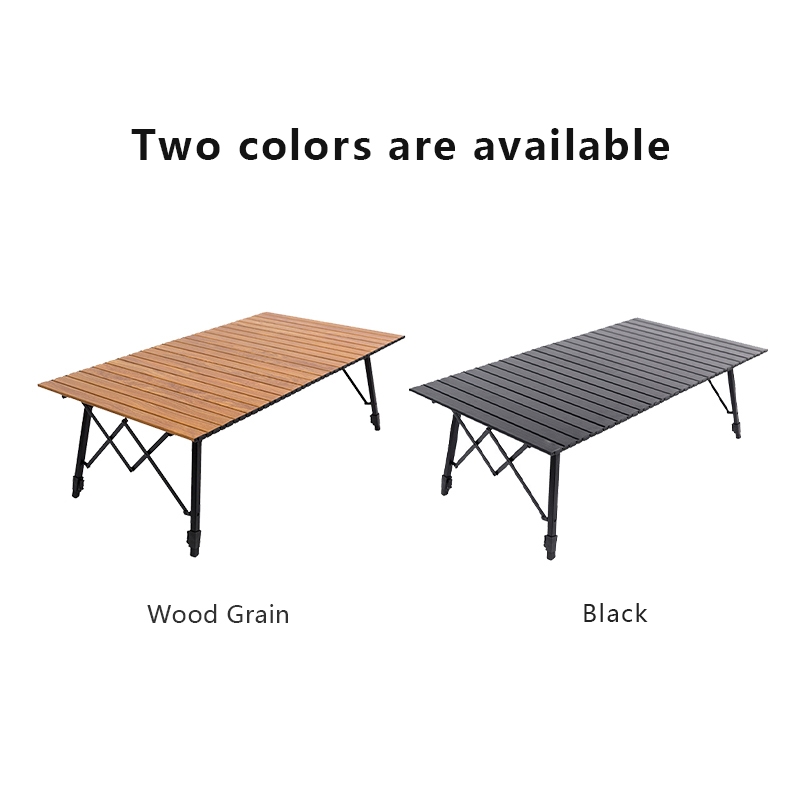
Taking your dining experience off-grid changes your functional requirements completely. You need a highly reliable temporary setup. Let us dive deep into the specific structural requirements for portable variants. Finding a dependable lightweight table outdoor setup improves camping significantly.
You must evaluate the mechanical locking mechanisms critically. Avoid cheap plastic hinges completely. They inevitably become terribly brittle in extreme freezing cold. Aluminum or steel tension locks offer vastly superior longevity. They prevent accidental collapses during heavy meal prep.
You rarely find perfectly flat ground deep outdoors. Look closely for fully adjustable legs. Telescoping legs or pivoting leveling feet are absolutely essential camping table features for uneven ground. They stop your dangerous cooking stove from sliding off into the dirt.
Aluminum roll-top surfaces offer excellent heat resistance natively. You can place red-hot camping stoves right on them safely. The metal disperses the heat fast. Conversely, canvas or tension-fabric tops remain strictly for ultra-lightweight drink holding. They literally cannot support heavy meal prep work safely.
We see well-intentioned buyers repeat the exact same errors every spring. Avoid these expert-level red flags to protect your financial investment. Building trust requires recognizing manufacturer shortcuts early.
Buyers often fixate entirely on the beautiful tabletop material. They completely ignore the underlying structural screws. Cheap zinc-plated hardware rusts remarkably quickly. It bleeds nasty orange stains right onto your expensive patio pavers within a single rainy month. Always verify the inclusion of marine-grade stainless steel or solid brass hardware.
People frequently buy ultra-light umbrella tables for narrow high-wind corridors. The umbrella acts as a giant sail. A sudden afternoon gust lifts the entire assembly and shatters glass tops easily. Always match the structural weight to your local wind conditions. Utilize heavily weighted cast-iron bases rigorously.
Retailers love claiming their furniture requires zero seasonal upkeep. Acknowledge the physical truth early. All outdoor furniture requires basic seasonal cleaning. You must buy custom covers or utilize dry winter storage. Brushing off debris and covering pieces blocks aggressive UV rays. This basic routine care guarantees maximum lifespan.
Let us recap your final decision funnel clearly. First, measure your patio space meticulously. Next, determine your exact mobility and storage needs. Then, filter potential materials strictly by your local climate realities. Finally, inspect the joint hardware for long-term rust resistance.
Your logical next step remains very simple. Go outside and measure your patio space today. Grab a measuring tape and a notepad. Document your region's primary weather threat before adding anything to your online cart. Whether it is harsh sun, coastal salt, heavy rain, or severe wind, your perfect table exists to handle it.
A: Expect a realistic range based on material quality. Poly-resin or basic aluminum options cost between $150 and $400. High-end, grade-A teak or heavy cast iron can run from $800 to over $2,000. Focus heavily on the cost-per-year-of-use concept. Spending $1,000 on a teak table lasting twenty years offers vastly superior value than replacing a cheap $150 table every two seasons.
A: The answer depends entirely on your selected material. Heavy wrought iron and thick HDPE resin handle winter freezes beautifully. Conversely, leaving softwoods exposed speeds up severe rotting. Regardless of the material, leaving furniture exposed reduces its lifespan. We highly emphasize the return on investment of buying custom-fit winter covers to protect the finish from UV rays and ice expansion.
A: A properly designed aluminum frame offers the best balance. Look specifically for models featuring rigid cross-bracing underneath. This adds structural weight without ruining portability. Alternatively, opt for a slatted tabletop design. Slats allow strong wind gusts to pass directly through the surface rather than lifting it like a sail.


