Views: 0 Author: Site Editor Publish Time: 2026-06-22 Origin: Site
Upgrading your vehicle with a sleep system is a high-ticket investment. Choosing the wrong shell type can easily lead to frustrating setups, damaged gear, or even compromised vehicle handling. Many beginners buy based on looks alone. They quickly discover the decision is much more complex. The choice hinges on your specific vehicle’s dynamic weight limits, your typical travel pace, and your expected weather exposure.
A heavy tent on a light vehicle creates dangerous off-road dynamics. Meanwhile, a slow-packing tent can ruin a fast-paced road trip. Before committing to car roof camping, you need a pragmatic look at both options. You must understand how hard and soft shell designs actually perform in real-world, off-grid conditions. In this guide, we break down the mechanics, weight constraints, and long-term realities of both styles. You will learn exactly how to choose the right shelter for your outdoor lifestyle.
Hard shell tents excel in rapid setup, aerodynamics, and severe weather resilience, but require higher upfront capital and strict vehicle weight compliance.
Soft rooftop tents offer maximum sleeping footprint per dollar and lighter base weights, making them ideal for families and vehicles with lower roof load limits.
The primary failure point for new buyers is ignoring the "wet pack-up" reality of soft shells and the off-season storage footprint of hard shells.
Your final choice should be dictated by your setup frequency (moving daily vs. basecamping) rather than budget alone.
Understanding the basic engineering behind these sleep systems is the first step in making a wise choice. The fundamental differences dictate everything from how you camp to how your vehicle drives. We must look at the specific mechanisms and materials powering each design.
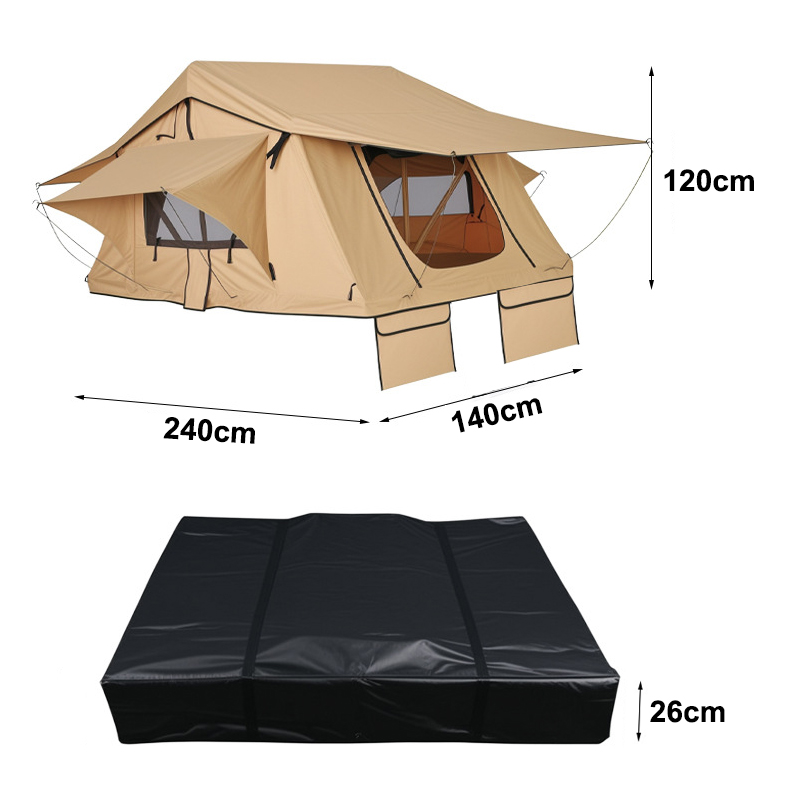
A soft rooftop tent relies on a bi-fold, hinged base. It flips open outward, usually extending over the side or the rear of your vehicle. Manufacturers construct these heavily from thick, durable canvas or a poly-cotton blend. This material provides excellent breathability. However, the tent requires an external PVC travel cover to protect it from road grime and weather during transit.
The deployment sequence generally involves these steps:
Removing the heavy-duty PVC travel cover.
Releasing the compression straps holding the tent together.
Using the integrated ladder as a lever to fold the top half outward.
Inserting metal spring rods to prop up the rainfly and window awnings.
The hard shell design prioritizes efficiency and automation. It utilizes internal gas struts to pop straight up or open into a wedge shape. The tent features a solid top and bottom casing. Manufacturers typically build these casings from aluminum, ABS plastic, or fiberglass. When closed, this solid shell completely encapsulates the canvas walls and internal mattress.
The opening process is remarkably simple. You unlatch the external buckles, give the roof a slight upward push, and the gas struts do the heavy lifting. The entire structure erects itself in seconds.
These distinct mechanical designs create unavoidable structural trade-offs. Soft shells effectively double their footprint when deployed. A tent packed into a four-foot square on your roof unfolds into an eight-foot sleeping platform. However, they pack down into a thick, brick-like square. This creates significant aerodynamic drag.
Conversely, hard shells maintain the exact footprint of their closed casing at all times. They do not fold out. They pop up. This restricts your sleeping area to the dimensions of your vehicle's roof. Yet, they pack down into a slim, aerodynamic profile. This streamlined shape cuts through the wind during highway travel.
Best Practice: Always evaluate the primary material of a hard shell casing. Aluminum resists cracking under heavy impacts, making it ideal for tight, wooded trails. ABS plastic is lighter but can become brittle in freezing temperatures.
Do not browse product catalogs until you define your specific camping habits. The ideal tent for a weekend family trip will frustrate a solo cross-country traveler. Ask yourself these three critical questions to narrow your focus.
Your travel cadence dictates your tolerance for setup times. We categorize campers into two distinct groups based on how often they move.
Daily movers (overlanders/road trippers): You drive to a new location every single day. You arrive late and leave early. You require sub-2-minute teardowns to maintain momentum. Spending fifteen minutes wrestling with a canvas cover every morning will quickly ruin your trip.
Basecampers (weekend warriors): You drive to a destination and stay parked for several days. You can easily tolerate a 10-minute setup if it yields significantly more living space. The initial setup time matters less because you only perform it once per trip.
This is the most critical safety factor in your decision. Every vehicle features a static and a dynamic roof load rating. The static rating dictates how much weight the roof can hold when parked. The dynamic rating dictates the maximum safe load while the vehicle is in motion.
An SUV roof tent setup must never exceed the dynamic rating of the roof rack and the vehicle pillars. Many hard shells push the 150lb to 180lb boundary. This weight easily disqualifies smaller crossovers or hatchbacks. Overloading your dynamic limit compromises braking, increases rollover risk, and voids vehicle warranties. Soft shells generally weigh less, making them a safer choice for lighter vehicles.
Weather dictates comfort. High winds and heavy rain demand rigid structures. A hard shell provides a solid roof that deflects rain and handles strong gusts without violently flapping. Mild, dry climates allow for the breathable, expansive nature of soft canvas. If you frequently camp in exposed, windy areas, a soft shell will subject you to severe noise disruption as the fabric whips against the frame.
We must translate specifications into real-world outcomes. Let us compare how these two systems perform across four critical outdoor categories.
Feature Category | Hard Shell Tents | Soft Shell Tents |
|---|---|---|
Setup Speed | 1–2 minutes (gas struts) | 5–15 minutes (manual unfolding) |
Sleeping Capacity | Usually 2 adults (rarely 3) | Expands to fit 3–4 people easily |
Aerodynamics | Excellent; low drag profile | Poor; blocky and wind-resistant |
Weather Protection | Solid roof blocks wind/rain | Canvas flaps; rain pools on awnings |
A hard shell tent dominates in convenience. You simply unlatch it and push. The gas struts perform all the heavy lifting. The process takes roughly one minute. Furthermore, your bedding can often remain inside when closed. You simply pop the top and climb into a fully made bed.
Soft shells demand manual labor. You must unzip a grimy PVC cover. This cover collects road dirt, dead bugs, and mud. You then leverage the ladder to fold out the heavy floor section. Finally, you walk around the vehicle inserting metal spring rods to prop open the windows. This takes 5 to 15 minutes, depending on your experience and height.
Hard shells are strictly restricted to the dimensions of your vehicle roof. They sleep two adults comfortably. A third person makes the space cramped. They cannot expand beyond their casing.
Soft shells expand beyond the vehicle. By folding out, they create massive sleeping footprints. They easily accommodate three to four people. This makes them the default choice for families. Many models also include options to zip on large ground-level annexes, creating private changing rooms or spaces for pets.
The solid roof of a hard shell acts as a shield. It blocks wind buffeting and sheds rain efficiently. You will sleep quietly even in a storm. On the road, its slim profile improves highway fuel economy and significantly reduces wind noise inside the cabin.
A soft shell behaves differently. Canvas inevitably flaps in high winds. This noise easily disrupts sleep. On the highway, the bulky, blocky travel profile catches the wind. This drastically impacts fuel economy and creates noticeable drag at higher speeds.
Hard shells require premium pricing. The complex manufacturing, gas struts, and solid materials drive up the cost. However, they offer a higher resale value due to their durable outer casings protecting the canvas from UV rot.
Soft shells offer a highly accessible entry price. You get more square footage per dollar. Yet, they suffer faster degradation. The external PVC travel cover bears the brunt of UV exposure and winter salts. You will likely need to replace this cover after a few years of heavy use.
Marketing materials rarely highlight the messy realities of outdoor gear. You must understand the practical challenges of owning these massive items before making a purchase.
This is the most common frustration for new buyers. When it rains, your tent gets wet. Folding a wet soft shell tent traps all that moisture deep inside the heavy canvas folds. You are essentially packing a damp sponge. You must open and dry it out within 48 hours. Failing to do so guarantees mold and mildew. This often means popping the tent open in your driveway upon returning home.
Hard shells handle rain beautifully. The solid roof protects the canvas during breakdown. You pack them away much drier. Even if the sides get slightly damp, the overall moisture trapped inside is significantly less.
Common Mistake: Never store your soft shell tent with damp canvas for more than two days. Mold destroys the waterproofing treatment and permanently stains the fabric.
A rooftop tent dramatically alters your vehicle height. Hard shells, while aerodynamic, are heavy and awkward. Buyers consistently fail to calculate their total vehicle clearance. You must measure your vehicle roof, add the height of the roof rack, and add the closed height of the tent. Ensure this total number safely clears your home garage door and local parking structures.
Furthermore, removing these tents is a two-to-four-person job. They weigh between 100 and 180 pounds. Off-season storage usually requires installing a dedicated ceiling hoist system in your garage.
Adding massive weight to the absolute highest point of a vehicle changes its physics. Placing 150 lbs on your roof raises your center of gravity. This alters cornering dynamics on the highway. You will experience more body roll on curved exit ramps. Off-road, this elevated weight dramatically increases the risk of a vehicle rollover when navigating off-camber trails or deep ruts.
Your decision relies on your specific camping style and vehicle limits. Use these guidelines to finalize your choice.
You move campsites daily and demand fast setups.
You travel solo or as a couple.
You frequently camp in high winds or heavy rain.
Your vehicle features a high dynamic roof load limit.
You possess a larger upfront budget.
You are outfitting a family and need maximum sleeping space.
You set up a multi-day basecamp and do not move daily.
You drive a lighter vehicle with stricter roof weight limits.
You operate on a tighter initial budget.
Stop looking at brand websites for a moment. First, locate your vehicle owner's manual. You must confirm the exact dynamic roof weight limit. Next, grab a tape measure and determine your exact garage door clearance. These two numbers will immediately eliminate half the products on the market, making your final choice much easier.
The hard shell versus soft shell debate is fundamentally a choice between convenience and capacity. Hard shells offer incredible durability, severe weather protection, and instant setups. Soft shells deliver unmatched sleeping space, lower base weights, and excellent budget accessibility.
There is no universal best tent. The perfect choice is the most compliant solution for your vehicle's specific load limits and your personal camping cadence.
Before purchasing, follow these actionable steps:
Verify your vehicle’s dynamic roof load rating.
Audit your typical trip style—determine if you move daily or basecamp.
Calculate your total height clearance to avoid garage accidents.
Plan your off-season storage solution before the tent arrives.
By aligning the mechanics of the tent with your real-world travel habits, you guarantee years of comfortable, stress-free outdoor adventures.
A: Yes. The low-profile, aerodynamic design of a hard shell creates significantly less drag than the blocky, upright profile of a closed soft shell. This streamlined shape allows air to flow smoothly over the vehicle, generally resulting in a smaller miles-per-gallon drop during highway driving.
A: No. Factory crossbars are rarely sufficient. You must install aftermarket crossbars or a specialized platform rack. These upgrades must be rated for both the dynamic weight of the tent while driving and the massive static weight of the tent plus its occupants while parked.
A: Not necessarily. While thick canvas retains some heat, hard shells often feature insulated tops and bottom casings. Additionally, the smaller internal volume of a hard shell makes it much easier to heat using trapped body warmth or a portable diesel heater.
A: While possible, continuous exposure is not ideal. UV radiation and winter road salt will rapidly degrade a soft shell's PVC cover. Hard shells fare better, but continuous mounting permanently reduces your fuel economy and exposes the weather seals to unnecessary wear. Seasonal removal is highly recommended.