Views: 0 Author: Site Editor Publish Time: 2026-06-18 Origin: Site
Traditional ground camping offers wonderful memories. It also brings intense physical exhaustion. You battle deflating air mattresses night after night. Damp sleeping bags ruin the experience. Morning backaches plague many parents. The lengthy setup process drains your remaining energy after a long drive. You want to enjoy nature alongside your children. However, the physical toll often leaves everyone feeling completely drained.
Today, a rooftop tent is marketed as the ultimate comfort upgrade. This gear promises better sleep and faster setup times. However, moving your family’s sleeping quarters six feet off the ground introduces entirely new logistical challenges. You trade ground‑level hassles for ladder management and vehicle height restrictions. It changes how you interact with your campsite.
This guide provides an objective, evidence‑based evaluation of rooftop camping. We will explore whether this upgrade genuinely improves family comfort. We will also examine if the trade‑offs outweigh the benefits. You will learn exactly what to expect. You can then make an informed gear investment for your next family adventure.
Sleep Quality: RTTs offer superior sleep comfort due to built‑in, high‑density foam mattresses and weather‑resistant elevation.
Setup Efficiency: They drastically reduce camp setup and teardown time, allowing more time for family activities.
The Mobility Trade‑off: Once deployed, you need to close the rooftop tent before driving. Quick trips to the store require packing up the tent.
Safety & Logistics: Managing toddlers on ladders and handling nighttime bathroom trips are the primary friction points for parents.
Capacity Limits: Currently available rooftop tents generally sleep 2‑4 people, suitable for 2 adults with 1 or 2 kids. Finding a proper RTT for 2‑4 person restricts your options to specific fold‑out models, requiring careful vehicle load calculations. A 5‑person rooftop tent is not achievable.
Sleeping on the ground presents unavoidable physical challenges. You must clear rocks, avoid roots, and find perfectly level soil. A rooftop tent eliminates these variables entirely. We need to contrast the sleeping experience directly. You will notice stark differences when comparing a rooftop setup to a standard family camping tent.
Mattress quality dictates your camping comfort. Traditional air pads lose pressure as overnight temperatures drop. Ground sleepers often wake up touching the cold earth. Rooftop models allow for permanent, built‑in high‑density foam mattresses. These mattresses are around 2 inches (4‑5 cm) thick. They do not deflate overnight. They resolve the primary source of camping discomfort immediately. You can even leave your sleeping bags and pillows inside when closing many models.
Climate and element control improve drastically above the ground. Elevation removes your family from rocky terrain. You stay far above mud, pooling rainwater, and crawling insects. The materials used in rooftop tents offer superior protection. They feature thicker polyester‑cotton blended fabrics. These dense fabrics retain heat much better during cold‑weather trips. Furthermore, being off the ground enhances airflow. You capture higher breezes during hot summer nights. This cross‑ventilation prevents the stuffy environment often found in ground setups.
Setup fatigue often ruins the first night of a camping trip. Arriving at a campsite in the dark causes massive stress. You must thread fiberglass poles while holding a flashlight in your mouth. Impatient children add to the anxiety. A rooftop tent provides immense psychological comfort. You park the car and deploy the tent in roughly three minutes. This rapid deployment transforms the camping experience. You spend more time relaxing around the fire. You spend less time wrestling with stakes and guylines.
Park your vehicle on flat ground to ensure a level sleeping surface.
Use heavy‑duty leveling blocks under your vehicle tires if the campsite slopes.
Leave sleeping bags unzipped during the day to air out interior moisture.
Keep the rainfly taut to prevent wind flapping and noise disruptions.
Selecting the right design determines your family's comfort level. The industry offers two primary solution categories. Each style presents unique advantages and distinct limitations. Families must weigh capacity needs against setup speed.
A soft rooftop tent opens like a book. This fold‑out design typically hangs over the side of your vehicle. It requires a ladder for structural support.
Pros: The fold‑out mechanism doubles the footprint of the tent. It creates massive interior space. This makes it the only realistic choice for families of three or four. You get a king‑sized sleeping area.
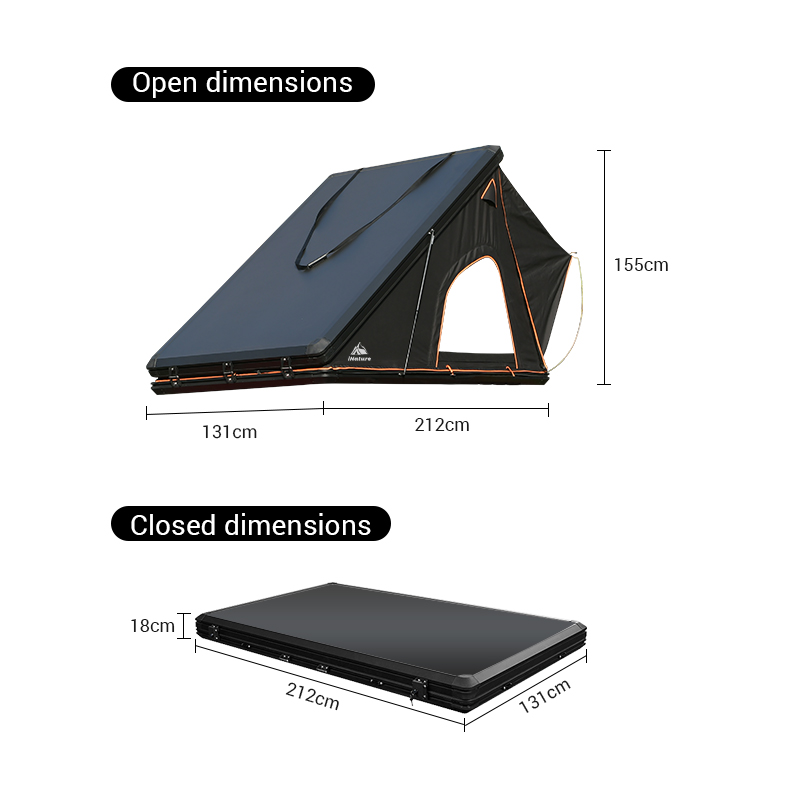
Conversely, a hard shell rooftop tent pops straight up or opens like a clamshell. It features a solid fiberglass or aluminum roof.
Pros: These units are incredibly aerodynamic on the highway. They offer lightning‑fast setup times. Gas struts open the tent in under 60 seconds. The hard roof proves highly durable in bad weather and deflects heavy rain effortlessly.
Feature | Soft Shell Models | Hard Shell Models |
|---|---|---|
Family Capacity | High (Sleeps 2‑4 people, for 2 adults plus 1‑2 children) | Low (Sleeps 2‑3 maximum) |
Setup Time | 3‑5 minutes | 30s-60s |
Aerodynamics | Bulky, reduces fuel efficiency | Sleek, better highway performance |
Weather Resistance | Good, but prone to wind flapping | Excellent, solid roof deflects storms |
Bedding Storage | Limited, often requires removal | Generous, leave pillows inside |
Purchasing a massive family tent requires strict attention to physics. You cannot simply bolt any tent to any vehicle. Addressing the technical requirements of mounting a large car roof tent safely is absolutely critical. Ignoring these limits endangers your family on the highway.
You must understand two critical load ratings. Static weight refers to the maximum load your vehicle can support while parked. Dynamic weight refers to the load your vehicle can safely handle while in motion. A parked vehicle might easily support the 600‑pound static weight of a family sleeping. However, the roof rack must handle the dynamic weight of a heavy four‑person tent while driving at highway speeds. A large tent might weigh 180 pounds. If your vehicle's dynamic roof limit is only 150 pounds, you cannot safely mount it.
Vehicle compatibility often demands rack upgrades. Factory‑installed crossbars rarely suffice for family‑sized tents. Dealership racks flex under heavy loads. Upgrading to an aftermarket heavy‑duty rack system represents a mandatory requirement for safety. You need robust steel or extruded aluminum crossbars. These systems bolt directly into the structural frame of the vehicle roof.
Follow these implementation steps to ensure safety:
Check your vehicle owner's manual for the specific dynamic roof load limit.
Subtract the weight of your aftermarket roof rack from this dynamic limit.
Use the remaining number as your maximum allowable tent weight.
Verify the static load limit can accommodate the tent plus your entire family.
Inspect all mounting bolts for tightness before every major road trip.
We must apply a skeptical, evidence‑oriented lens to family camping. Rooftop tents look incredible on social media. The daily reality involves distinct logistical challenges. Parents harbor valid reservations about moving children onto the roof. Addressing these friction points transparently helps you prepare effectively.
The ladder challenge causes the most anxiety. Navigating an aluminum ladder presents safety risks for young children under five. A slip in the middle of the night can cause serious injury. You can deploy proven mitigations to reduce this risk. Parents should carry toddlers up and down the ladder. Do not let them climb unsupervised. You can also slit pool noodles longitudinally. Slip these foam noodles over the ladder rungs. This provides softer footing for bare feet and prevents slipping.
Nighttime bathroom trips represent the biggest drawback. Climbing down a cold ladder at 2 AM is deeply unpleasant. Doing it while holding a sleepy toddler feels downright dangerous. You must plan for this inevitability. Adding a ground‑level annex room solves this problem nicely. You can place a portable camp toilet inside the enclosed annex. Alternatively, use camp urinals or dedicated pee bottles inside the tent. This eliminates the need to navigate the ladder in the dark entirely.
The trapped vehicle dilemma frustrates many families. Once you deploy the tent, you need to close the rooftop tent before you can drive. You cannot simply drive to a local trailhead. Quick trips to the grocery store require packing up the entire tent. This logistical friction alters your itinerary. You must pack all daily essentials before setting up camp. You must rely on bicycles or walking to explore the immediate area. If you forget firewood, driving to the camp store becomes a major chore.
Leaving tent windows unzipped while toddlers play inside. Always secure the mesh screens to prevent accidental falls.
Forgetting to lock the telescoping ladder pins. A collapsing ladder is incredibly dangerous.
Storing wet shoes inside the tent. Hang a shoe bag outside to keep the mattress clean.
Evaluating this gear requires shortlisting logic. You need a clear framework based on your specific camping style. A rooftop tent drastically improves certain trips. It actively hinders others. Consider your travel habits before committing to the purchase.
Buy a rooftop tent if you road‑trip frequently. It shines when you change campsites daily. The rapid setup time saves hours over a week‑long journey. You should upgrade if you camp in extreme weather or uneven terrain. It keeps you dry and level. Choose this option if you prioritize premium sleep quality over daytime vehicle mobility.
Stick to a ground tent if you set up basecamp in one spot for several days. Having to close the rooftop tent every time you drive feels restrictive. A ground tent makes more sense if you have multiple toddlers requiring frequent nighttime assistance. Managing ladders with multiple infants is exhausting. You should also stay on the ground if you travel with large dogs. Heavy dogs cannot climb ladders. Lifting an eighty‑pound dog onto the roof is impractical.
Consider the annex compromise for growing families. You do not always need a massive, heavy tent. Suggest a hybrid approach instead. Mount a smaller, three‑person tent on the roof for parents and one young child. Attach a ground‑level annex room below it. Older teenagers can sleep on cots inside the enclosed annex. This balances vehicle weight limits while providing everyone with adequate space and privacy.
A rooftop tent exponentially increases physical sleeping comfort. It removes you from harsh ground conditions and provides a premium mattress. It also delivers unmatched ease of setup after a long drive. However, this comfort does not come free. It shifts the "work" of camping from hammering stakes to logistical planning and ladder management. You must embrace these new routines to enjoy the experience fully.
Rooftop tents guarantee a flat, dry, and highly comfortable sleeping surface regardless of terrain.
Your vehicle cannot be driven until the rooftop tent is properly closed, requiring you to plan daily excursions carefully before deploying camp.
Managing young children requires strict ladder safety rules and nighttime bathroom strategies.
Always check your specific vehicle’s dynamic roof load limit before browsing tent models.
Consider an annex room for rooftop tent if you have a large family or travel with heavy pets.
Take action today by reviewing your vehicle's owner manual. Locate the dynamic roof weight rating. This single number dictates your available options. Once you know your weight limit, you can safely explore the models that fit your family's next adventure.
A: Yes, but they require strict supervision. The primary risk is falling from the elevated platform. You must keep the mesh window screens zipped up entirely when toddlers are inside. Always carry children under five up and down the ladder. Never let them play near the open doorway unattended.
A: Yes, a family of four (2 adults plus 2 children) fits comfortably in large soft‑shell fold‑out models. These specific designs open to reveal king‑sized mattresses. You must check the exact mattress dimensions carefully. Hard shell models are generally too narrow to accommodate four people.
A: Small dogs under thirty pounds are easy to carry up the ladder. Large dogs present a challenge. They cannot safely climb steep aluminum rungs. Most owners have large dogs sleep in the vehicle cabin below. Alternatively, they set up an enclosed ground annex room for the dog.
A: They are usually cooler than ground tents. Being elevated catches higher breezes. Most models feature four large windows and dual skylights. This multi‑window design creates excellent cross‑ventilation. The thick polyester‑cotton blended fabric also blocks radiant sun heat better than thin nylon ground tents.